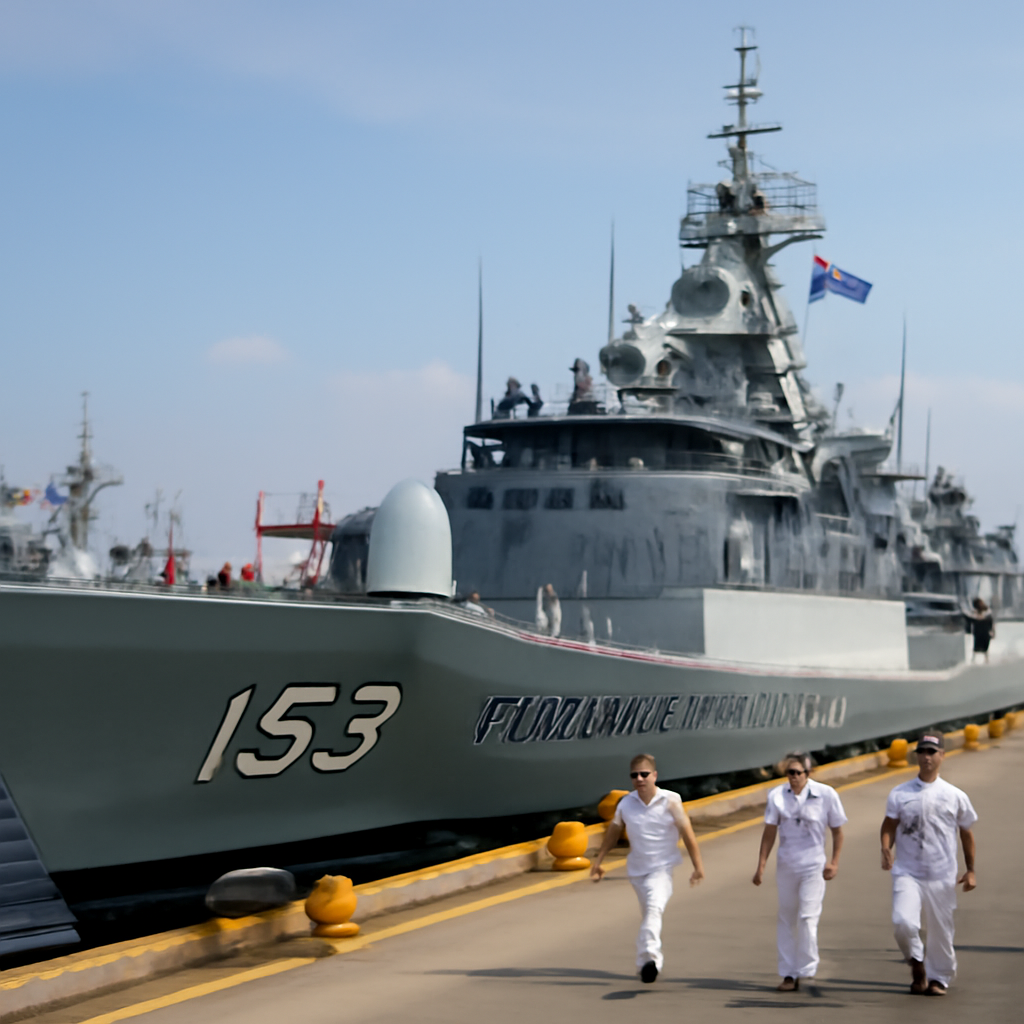
"Australia is a regional maritime power, and our regional partners have expectations of Australia to fulfil that role," the article published on The Strategist asserts.
Maritime influence beyond ship counts
The article argues that maritime power is not measured by hulls alone. It notes valid critiques — a historically small surface combatant fleet and ageing submarines — but stresses that influence also rests on relationships and reputation. Deterrence, the piece says, is fundamentally about perception: who regional partners and potential adversaries believe will act and who they will turn to in a crisis.
Exercise Kakadu, Talisman Sabre and regional training
Australia already projects influence through hosting large regional maritime exercises. The article names Exercise Kakadu and Talisman Sabre as examples and highlights the training Australia provides: junior leaders in regional navies seek out Australian courses and see attendance as a mark of prestige. In the Pacific, Australia’s support to fisheries operations and the Pacific Maritime Security Program are cited as additional ways the nation builds maritime credibility and practical cooperation.

Audit-ready is a season. It shouldn't be.
Evidence in spreadsheets, controls drifting between audits, frameworks multiplying on flat headcount. Nubivance runs continuous compliance on Rapid7 Cyber GRC - SOC 2, HIPAA, ISO 27001, PCI, CMMC.
End the scrambleIndo‑Pacific Endeavour 2.0 as a demonstration platform
The article proposes a reinvigoration of the Indo‑Pacific Endeavour task group. It points to the first iteration in 2017 — described as a task group deployment structured around a Canberra‑class landing ship — as a model that both demonstrated capability and permitted partners to join by contributing people or ships. By contrast, the piece criticises the gradual shift of Indo‑Pacific Endeavour away from a substantial naval task group toward a program dominated by teams flown in to train regional partners, calling that evolution a lost opportunity.
Training ships, historical precedent and practical steps
Australia has precedent for dedicated training vessels. The article cites HMAS Jervis Bay, operated from 1977 to 1994, and recalls a 1988 training squadron deployment of HMAS Stalwart, Jervis Bay and Stuart through Southeast Asian waters. It recommends investing in new training ships to give Royal Australian Navy sailors more time at sea while the surface combatant fleet remains small, preparing them for an expected fleet expansion in the 2030s. Those vessels could also reserve bunks for sailors and officers from regional navies, combining skill development with goodwill visits and visible partnership on deployments.
What this means for regional navies, Australian policymakers, and training establishments
- Regional navies: The article suggests they will continue to look to Australian courses and deployments as professional-development opportunities and symbols of partnership — and could be invited to join an Indo‑Pacific Endeavour task group with ships or personnel.
- Australian policymakers: The recommendation is clear — state the role openly and confidently in strategy documents and speeches, and expand exercises, training, doctrinal and maintenance support to match that declared role.
- Training establishments and fleet planners: Investing in training ships and preserving opportunities for at-sea time are presented as near-term ways to build readiness while the broader surface and submarine fleet is renewed.
The central contention is straightforward: Australia’s influence in the maritime domain already exists and is sustained by exercises, training, fisheries and security assistance — but it will be reinforced if Canberra aligns language, deployments and platforms to make that influence visible. Rebuilding hardware matters, the article allows, but so does rebuilding a maritime identity that invites partners aboard, not just across a seminar table.
Read the original article: https://www.aspistrategist.org.au/australia-is-a-regional-maritime-power-it-should-act-like-it/