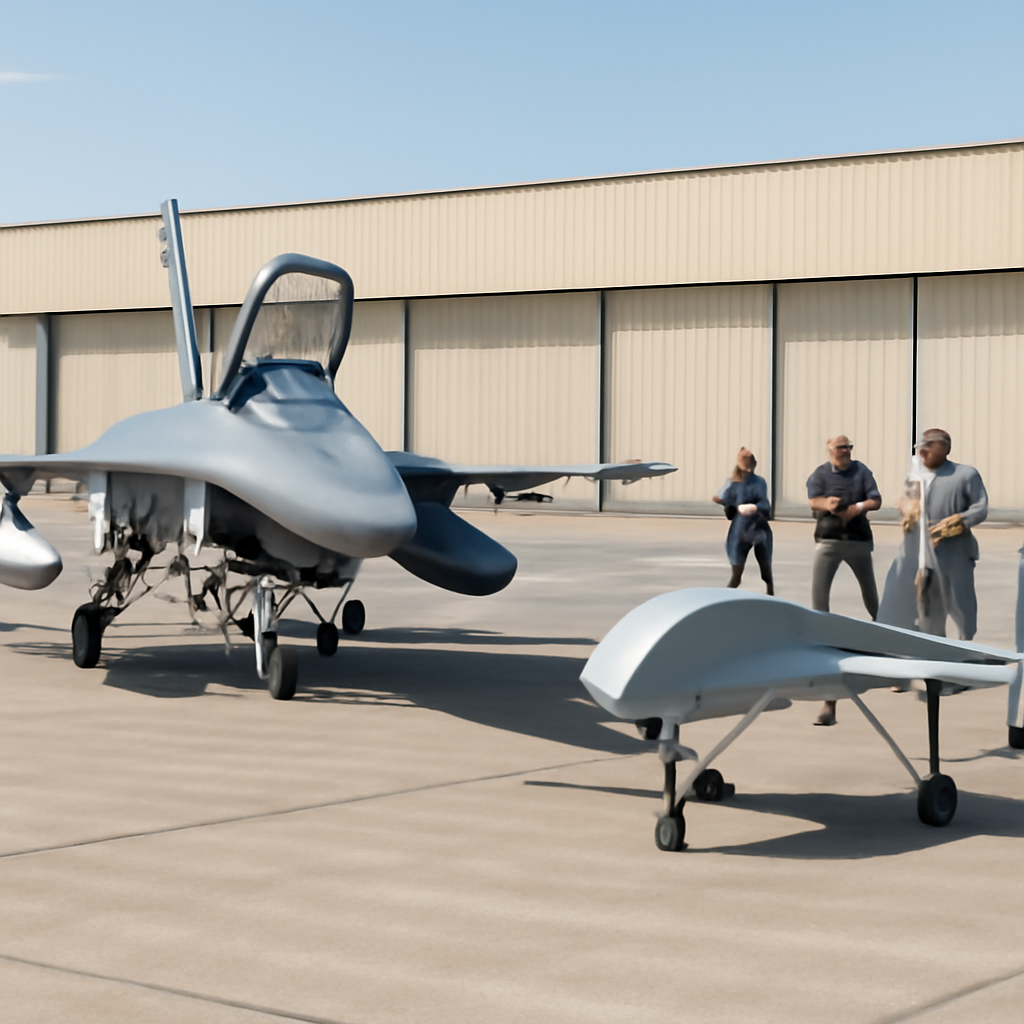
"In our final video looking at manned-unmanned teaming, we consider likely changes ahead for defense manufacturers as the US increasingly partners with drones in combat," Breaking Defense writes.
Manned-unmanned teaming as the focal point
The closing installment of this video series centers on manned-unmanned teaming. That framing places the relationship between crewed aircraft and autonomous or remotely piloted systems at the heart of the discussion. The source explicitly positions this theme as the capstone topic: the video is described as the "final" piece looking at manned-unmanned teaming, signaling an effort to synthesize earlier reporting and analysis around how humans and drones will operate together.
Defense manufacturers face likely changes
The video, according to the source, "considers likely changes ahead for defense manufacturers." Those changes are presented as a consequence of evolving operational concepts; the summary links them directly to a rise in partnered operations between the U.S. and drones in combat. The piece therefore treats defense manufacturers not as passive suppliers but as actors who will need to adapt product lines, integration approaches, or business models to support manned-unmanned teaming as it grows.

The cyber insurance questionnaire just landed. Now what?
SOC 2, HIPAA, insurance renewals - someone has to own security strategy. Nubivance provides fractional CISO leadership without the full-time salary.
Get a security leadThe U.S. increasingly partners with drones in combat
The source makes a clear, simple factual claim: the United States is "increasingly" partnering with drones in combat. That observation is the pivot for the video’s inquiry—if drones play a larger role alongside crewed platforms, the video argues, then industrial and training systems must evolve in response. The language in the source ties rising operational use directly to the question of what industry and training systems will look like as a result.
Industry and training hurdles (as identified by the video)
The title and the video’s synopsis designate two categories of obstacles: industry hurdles and training hurdles. The source does not enumerate specific technical or programmatic barriers; rather, it states that these are "the biggest" hurdles for making a drone wingman a reality. Presented together, those two labels imply that both how systems are designed and how people are prepared to use them are central concerns in the transition toward partnered operations.
What this means for defense manufacturers, training organizations, and the U.S.
- Defense manufacturers: The video’s synopsis suggests manufacturers will confront "likely changes" as the U.S. increases partnered drone use—changes that will be driven by operational demand rather than by industry preference alone.
- Training organizations: By naming "training hurdles" alongside industry hurdles, the piece indicates training entities will be central to bringing manned-unmanned teaming into practice; they will need to rethink how pilots, operators, and crews learn to operate together with drones.
- The U.S. (as the principal actor referenced): The source frames the U.S. as the actor whose increased partnering with drones creates the impetus for adaptation, making the country both the driver of change and the beneficiary or tester of new approaches to teaming and readiness.
The reporting package—summarized in a single-line description—presents a concise throughline: as the United States expands partnered combat operations with drones, the two most consequential challenges called out are industrial adaptation and training reform. That pairing implies a two-track problem set: one track addressing the design, production, and integration choices defense manufacturers will make; the other addressing how people will train, certify, and rehearse operations with unmanned systems.
Because the item is styled as a final video in a series, it reads as an effort to pull earlier threads together. The explicit linkage in the source—manned-unmanned teaming, industry and training hurdles, and U.S. operational uptick—frames the remaining work ahead as practical and organizational: refining platforms and tactics on one hand, and changing how warfighters and supporting institutions prepare to use those capabilities on the other.
The source leaves the contours of those changes at a high level: it names the problem space (manned-unmanned teaming), identifies the primary centers of friction (industry and training), and locates the driving force (the U.S. increasingly partnering with drones in combat). The final video, as described, appears intended to map those intersecting pressures for audiences following the series.
Link to the original story: https://breakingdefense.com/2026/06/the-biggest-industry-training-hurdles-for-making-drone-wingman-a-reality/