Defence will spend more than A$500 million on infrastructure between 2024 and 2029 on the islands — an investment whose survival, the source argues, depends squarely on the health of the surrounding marine environment.
Department of Defence: infrastructure, capability, and stakes
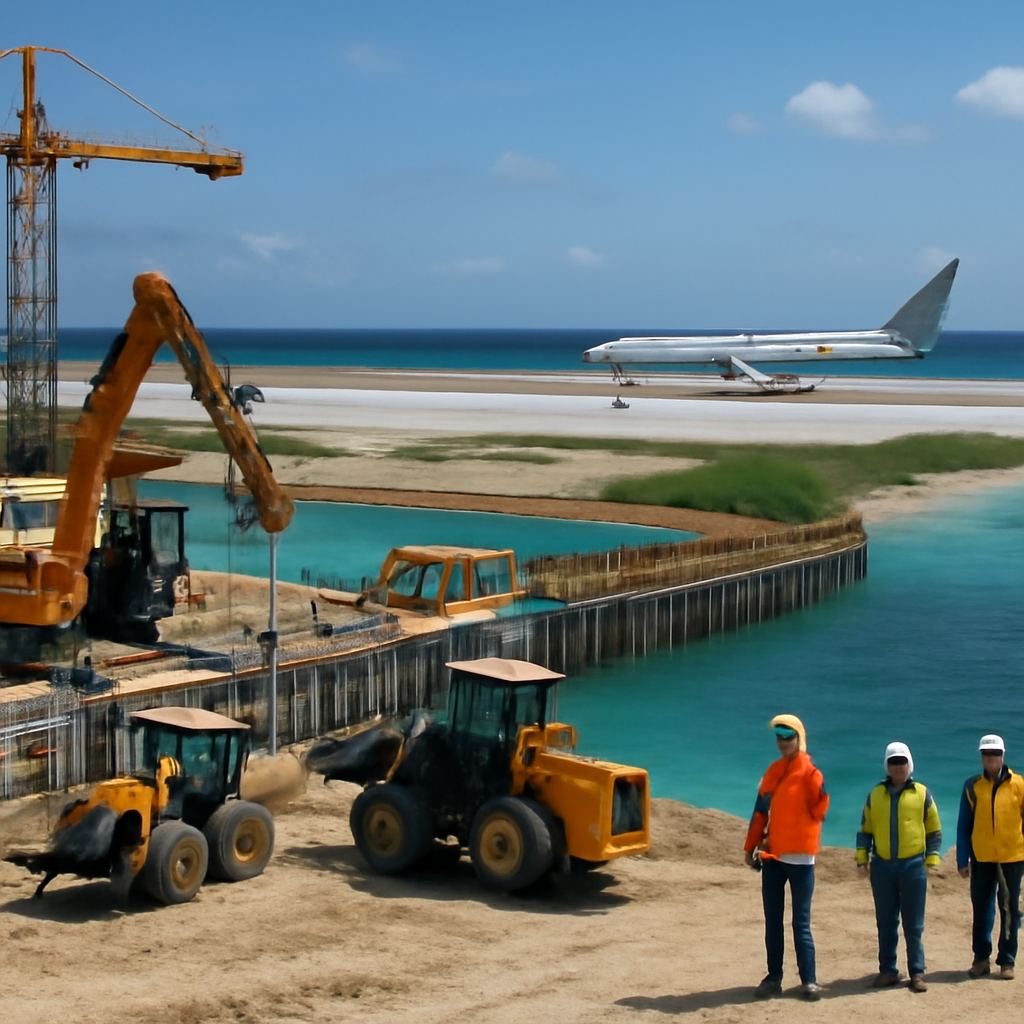
Australia’s Department of Defence is deep into a major build‑out on the Cocos (Keeling) Islands. Work on West Island includes lengthening and strengthening the runway and expanding the Rumah Baru Port Facility to support Royal Australian Air Force P-8A Poseidon and MQ-4C maritime aircraft. Expansion of the port will also facilitate importation of the building materials required for the runway program.
The new airfield facilities are intended to provide extended maritime domain awareness in a crucial sector of the northeast Indian Ocean, including Southeast Asia’s strategically important chokepoints. Given the scale of Defence’s capital commitment, the report describes Defence as a major economic stakeholder whose investments are directly exposed to coastal and marine conditions.
Coastal vulnerability: low-lying islands, erosion, and habitability risk
The Cocos (Keeling) Islands comprise only 14 square kilometres of land and have a maximum elevation of a 9‑metre sand dune. The islands are already experiencing persistent shoreline retreat and rising sea levels. The source emphasises that the physical survival of these low‑lying islands depends on the condition of adjacent marine ecosystems, and that failure to protect those ecosystems would place Defence’s investment at greater risk from coastal erosion and inundation.

This site is the portfolio.
OSINTSights runs on Cloudflare Workers, D1, R2, and Vectorize, with an AI pipeline on Hetzner ARM. Nubivance designed, built, and operates it. We do the same for clients.
See what we buildCocos (Keeling) Islands Marine Park and the role of marine science
Canberra established the Cocos (Keeling) Islands Marine Park in 2022 as part of Australia’s National Representative System of Marine Protected Areas. The piece frames MPAs not only as conservation instruments but increasingly as components of national resilience that protect coastal communities, sustain marine resources and help safeguard critical infrastructure.
Marine scientists and environmental managers are identified as essential contributors: they can supply local ecological knowledge, conduct research into coastal resilience, and develop targeted coastal adaptation measures that protect both island residents and Defence infrastructure. In short, environmental science is presented as operationally relevant to military readiness and infrastructure protection.
Integrated planning, funding and operational cooperation
The analysis calls for a whole‑of‑government approach coordinated by the Department of Defence together with Commonwealth and State agencies, environmental managers and marine scientists. Defence’s surveillance equipment, logistics capabilities and contingency planning expertise are described as resources that can complement environmental management efforts.
Practical measures the source endorses include frequent joint planning, shared maritime domain awareness, information exchange and scenario‑based exercises to align Defence, environmental managers and scientists. It also recommends integrated funding streams and combined investments that link conservation projects to defence resilience, critical infrastructure protection, disaster preparedness and supply chain security — encouraging federal and state collaboration across Defence, environment, emergency management and infrastructure agencies.
What this means for Defence, marine scientists, and island residents
- Defence: Protecting runway, port and other airfield investments requires active engagement in coastal resilience; Defence assets and planning capabilities can also support environmental protection and contingency operations on the islands.
- Marine scientists and environmental managers: There is a clear role to deliver local ecological knowledge, targeted adaptation measures and ongoing monitoring that feed directly into infrastructure protection and operational planning.
- Island residents: Research and adaptation measures are positioned as necessary to protect long‑term habitability and improve disaster relief preparedness alongside the infrastructure projects.
- Allies and partners: The report notes potential to leverage international partnerships — specifically identifying the United States and India as partners that have an interest in the islands’ strategic geography.
The central argument is straightforward: conservation and national security need not compete. Healthy coastal ecosystems are portrayed as intrinsic to the protection of critical infrastructure and to the continuity of military operations during crises. The prescription is institutional — closer collaboration between Defence, environmental and infrastructure agencies, backed by integrated funding and routine joint planning.
If implemented, the recommended approach would aim to protect residents, secure more than A$500 million in Defence infrastructure investment, and sustain Australia’s operational presence on the islands — a presence the source links directly to regional stability and to opportunities for allied investment. The practical test is whether jurisdictions, agencies and scientists will translate the conceptual case for cooperation into shared funding, procedures and exercises that keep both defence and conservation above water.