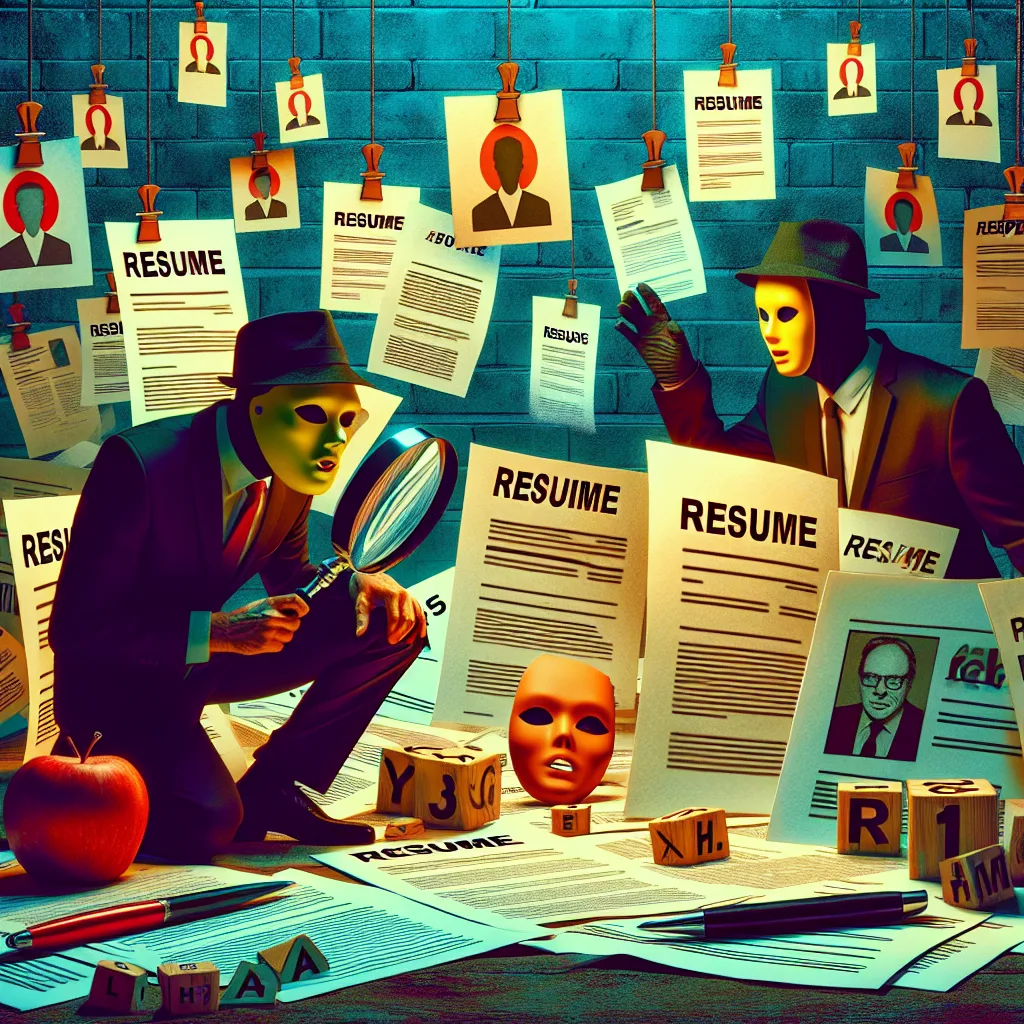
Deceptive Resumes: A Rising Threat to Human Resources
Across corporate offices and virtual boardrooms, hiring managers are coming under renewed scrutiny, not from unruly candidates or staffing shortages, but from the insidious tactics of cybercriminals. In recent weeks, a financially-motivated threat group known as Venom Spider has escalated its operations with a fresh spear-phishing campaign, employing deceptive resumes as its primary vector. This development poses a significant challenge to human resources departments, as fraudulent documents are designed to infiltrate systems, harvest corporate data, and undermine the recruitment process.
In this new twist on age-old cybercrime techniques, cyber adversaries are disguising malicious activity behind the familiar and seemingly innocuous veneer of a resume. The emails sent by Venom Spider are sophisticated and targeted, masquerading as applications or professional networking communications. By including attachments that appear to be resumes—complete with carefully tailored qualifications and professional histories—the campaign exploits vulnerabilities in both digital security protocols and the human tendency to trust documented accomplishments.
The campaign’s modus operandi is straightforward yet effective. Venom Spider crafts emails that appear legitimate to hiring managers, complete with personalized greetings and references to job listings or industry buzzwords. The attached “resume” files are laced with embedded malware or links to compromised websites. Once these attachments are opened, the payload can silently infiltrate a network, granting the threat group entry to sensitive human resources systems, databases, and confidential candidate information.
With recent cybersecurity alerts confirming the group’s activity, organizations are now faced with the critical task of reinforcing their cyber defenses. This is not merely a matter of digital security—it is a confluence of recruitment strategy, data protection, and an evolving enemy who has learned to exploit everyday business processes.
Background on this type of fraud is neither new nor isolated. Over the past decade, cybercriminals have continuously refined strategies that leverage social engineering. The use of deceptive resumes represents a confluence of digital ingenuity and unsuspecting human trust. Cybersecurity firms like FireEye and CrowdStrike have noted similar trends in historical attacks: the blending of employment-related communications with malicious intent, exploiting the expectation of receiving credible professional details in the digital age.
Historically, the recruitment process has entailed thorough verification of applicant credentials—a process that, until recently, was predominantly in the hands of HR departments and recruiting agencies. However, as organizations increasingly shift to remote hiring and digital transactions, cybersecurity vulnerabilities have multiplied. The digital transformation in recruitment, accelerated by the global pandemic, has inadvertently expanded the attack surface for cybercriminals. Venom Spider’s recent campaign is a stark reminder that even routine administrative procedures can be exploited as Trojan horses for cyber intrusion.
According to a recent statement by the cybersecurity team at the U.S. Cybersecurity and Infrastructure Security Agency (CISA), spear-phishing continues to be one of the most common and effective methods employed by threat actors. While traditional phishing attempts often cast too wide a net, spear-phishing—and in this case, a format as familiar as a resume—are targeted maneuvers designed to bypass conventional security awareness. The CISA’s guidance emphasizes that verification protocols and multi-layered authentication should serve as the first line of defense.
Current investigations have revealed several key tactics employed by Venom Spider. Analysts at cybersecurity firm Mandiant have observed that the fraudulent resumes often mimic the design language of reputable resume templates, complete with logos and contact information that appear authentic at first glance. When questioned about these trends, Mandiant’s Director of Cyber Intelligence, Dr. Jessica Hill, remarked, “The sophistication of these deceptive resumes is alarming. They are not just designed to trick the eye; they are engineered to trigger automatic processing in HR systems, reducing the chance that a human will notice the underlying threat.”
For hiring managers and IT security teams alike, immediate issues arise regarding the extent of internal risk. The potential recovery from a compromised HR system could result in significant data breaches, including personal information of candidates and employees alike. Equipment disruption and the long-term erosion of public trust are just as pressing as the financial losses incurred from data theft.
The impact on public trust cannot be understated. When organizations fall victim to these tactics, the potential reputational harm can be profound. Recent studies by the Ponemon Institute indicate that data breaches lead to a significant loss of consumer confidence, especially when personal data is involved. In an era where data privacy is a paramount concern, any perceptible erosion of security—even in a non-customer-facing department like HR—can ripple outward, affecting stakeholder perceptions and investor confidence.
Experts agree that a multi-pronged approach is crucial in addressing these threats. In addition to bolstering IT defenses, organizations are urged to integrate cybersecurity training specifically tailored for HR professionals. The convergence of data management and cyber risk underscores an essential lesson: departments traditionally siloed from IT security must now operate in a more integrated, informed manner.
- Proactive Screening: Organizations are encouraged to adopt enhanced screening measures for all incoming digital documents. This includes advanced threat detection tools and sandboxing techniques to isolate potential malware.
- Employee Training: Regular cybersecurity awareness training, specifically targeting social engineering and phishing tactics, can help empower HR departments to recognize and respond to suspicious activity.
- Multi-Factor Authentication: Strengthening login protocols across HR and recruitment platforms can limit unauthorized access, even if malicious documents slip through initial defenses.
- Vendor Collaboration: Working with cybersecurity consultants or managed security service providers ensures timely updates and patches to the systems involved in digital recruitment.
Beyond technical solutions, the human element remains central. Consider a mid-sized enterprise that recently reported a similar attack, where a hiring manager inadvertently opened what seemed to be the resume of a qualified candidate. The breach, while contained, delayed recruitment and needed a full forensic review—a process that cost both time and confidence. In such cases, the personal responsibility of every employee becomes clear: awareness and vigilance are as vital as any firewall.
Yet, it is not only the immediate financial loss that makes this campaign particularly concerning. The broader geopolitical implications of financially motivated cybercrime are stirring concern among policymakers. While there is no direct attribution linking Venom Spider to state-sponsored actions, the financial gains resulting from these cyberattacks can indirectly bolster organized crime networks, complicating international efforts to combat cyber-enabled financial crimes.
Looking at the wider cybersecurity landscape, experts like Michael Daniel, former Homeland Security Advisor and noted cybersecurity strategist, suggest that the rise of deceptive resume schemes could be a precursor to more advanced forms of social engineering targeted at other critical operational areas. “Every time cybercriminals refine their tactics, they not only exploit new vulnerabilities but also force us to rethink how basic business functions are conducted,” Dr. Daniel explained in a public panel session on cybersecurity. His comments highlight that what might initially appear as an isolated HR risk can quickly morph into an enterprise-wide challenge.
What the future holds for organizations battling these deceptive resumes is uncertain yet indicative of larger trends in cybersecurity. Analysts are predicting that as long as digital communication remains the norm for recruitment and internal processes, the threat landscape will continue to evolve. The countermeasures will need to be dynamic, involving not only constant system updates but also adaptability in the human processes that govern cybersecurity hygiene.
In addition, regulatory bodies are watching these developments closely. While there is currently no specific regulation addressing deceptive resumes in the recruitment process, the emerging pattern underscores the need for updated best practices and possibly new guidelines from authorities like the National Institute of Standards and Technology (NIST). Companies might soon be encouraged—or even mandated—to conduct regular audits of their network security measures that specifically address vulnerabilities in HR systems.
Looking ahead, companies are advised to prepare for a potentially prolonged campaign by threat actors like Venom Spider. With cybercriminals rapidly adapting their tactics, the emphasis must be on a layered defense strategy that combines technology, policy, and employee awareness. As organizations implement more rigorous cyber hygiene practices, both the technical landscape and the training culture will need to evolve in tandem.
The final question that employers and HR professionals must ask themselves is: How do we balance the efficiency of digital recruitment with the imperative of cybersecurity? The answer is not straightforward. It involves continual investment in both technology and people, ensuring that the very processes designed to streamline hiring do not become entry points for nefarious operations.
In a world where the human element is both the greatest strength and the most exploitable vulnerability, each new attack serves as a lesson. Venom Spider’s recent campaign against HR departments is a stark reminder that cybersecurity is not an isolated IT issue—it touches every facet of modern business operations. Ultimately, the challenge for organizations is to remain one step ahead, anticipating not only the next technological trick but also the evolving tactics of those who exploit trust in the digital age.
As the threat landscape shifts, one universal truth endures: in protecting the human side of the story, we must also fortify the digital infrastructure that supports it. The resilience of our institutions will depend not merely on tomorrow’s technology, but on the lessons learned from today’s deceptive resumes.



