DARPA is seeking “constellations” of drones that could number “up to 500 platforms,” stored in and managed by autonomous containers capable of launch, recovery, recharging and multi‑day sustained operations, the agency’s contracting notice says.
DARPA’s Tactical Technology Office contracting notice
DARPA’s Tactical Technology Office (TTO) began soliciting concepts in April and has updated the contracting notice several times, with “the latest version” posted online yesterday, according to the notice. The document lays out a broad, open‑ended set of requirements: Group 1–3 drones with “capabilities for fully autonomous launch, recovery, storage, organization, recharging/refueling, organization, internal logistics management, and pre/post‑flight checkout.”
The notice frames the problem this way: “Existing commercial, airborne Group 1-3 platforms are limited in endurance, payload capacity, and onboard electrical auxiliary power. When operated as constellations, they typically require substantial infrastructure and basing area [sic] for deployment and recovery.” DARPA says it has “identified an exigent need for highly deployable, versatile‑SWaP Group 1‑3 platforms, operating in autonomous constellations that are stored within, deployed from, recovered in, and managed by a fully autonomous container.” The agency has not yet given the project a name in the public notice.
Containerized launch, recovery and sustainment
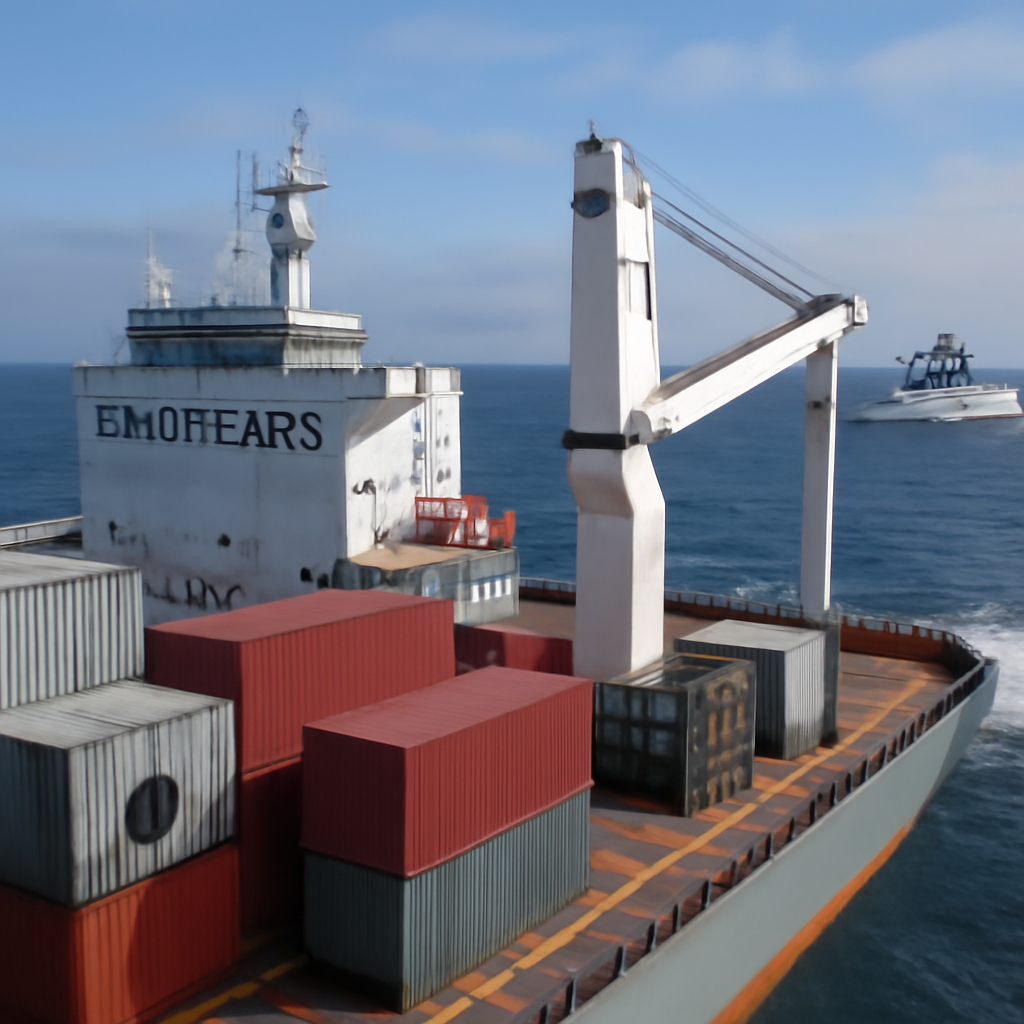
The notice envisions containers that provide “fully autonomous drone storage, logistics management, launch, recovery, and recharge/refuel,” while conforming to standardized military transport options — “e.g. Conex, 463L pallets, Tricon, ISU container, etc.” It also says DARPA will consider “innovative ideas and non‑standard containers (e.g. suitcase‑based distributed systems, box‑based systems)” so long as solutions remain compatible with current military transport capabilities.
Containers are expected to be largely self‑sufficient, with “consideration of energy storage, communication equipment, and compute capability.” DARPA is additionally interested in a remotely operated “host platform” that could carry containers to and from an area for launch and recovery, but the notice does not specify whether that host would be air, ground or maritime.
The contracting text calls out software and autonomy explicitly: “Novel configurations that enable multi‑day continuous operations with their corollary constellation management software (ideally with path optimization and collision deconfliction) … are of particular interest to DARPA.”

Audit-ready is a season. It shouldn't be.
Evidence in spreadsheets, controls drifting between audits, frameworks multiplying on flat headcount. Nubivance runs continuous compliance on Rapid7 Cyber GRC - SOC 2, HIPAA, ISO 27001, PCI, CMMC.
End the scrambleU.S. military Group 1–3 constraints and technical drivers
The notice ties the design problem to existing U.S. military drone categories. Collectively, Groups 1 and 2 can have maximum weights up to 55 pounds, fly up to 3,500 feet, and top speeds up to 250 knots. Group 3 covers designs from 56 to 1,320 pounds and up to 18,000 feet, but also with speeds of 250 knots or less. DARPA emphasizes Size Weight, Power, and Cost (SWaP‑C) as a central constraint.
Key operational aims include the ability to operate in GPS‑denied environments and to achieve “high operational availability for the combined system over multiple‑day periods.” The notice explicitly allows for constellation sizes of up to 500 platforms, “number may vary as a function of payload type,” and calls for platforms to carry varied payloads operating “in synchrony across the constellation.”
Commercial and foreign parallels: DAMODA, Operation Spiderweb, and DIU’s CADDS
The notice points to commercial developments and foreign examples as both inspiration and warning. TWZ’s past coverage noted a Chinese firm, DAMODA, which rolled out an Automated Drone Swarm Container System able to launch, recover, and recharge large numbers of small quadcopters for entertainment lightshows. TWZ cautioned that, while “designed for entertainment industry use first and foremost,” DAMODA’s system highlights how containerized swarms can “hide in plain sight.”
TWZ also cites recent operational examples: Ukrainian forces’ June 2025 covert Operation Spiderweb, which used trailer‑mounted covert launchers to strike Russian airbases and reportedly involved trailers that “self‑destructed to avoid detection or recovery,” and Israeli near‑field attacks originating from inside Iran during the opening phases of the 12 Day War. The piece notes firms in China are particularly active in containerized launcher markets, and that companies in the United States, Europe and elsewhere are developing related capabilities.
The Defense Innovation Unit’s (DIU) earlier call for Containerized Autonomous Drone Delivery System (CADDS) proposals is referenced as related work; DIU’s CADDS focused on launch‑and‑recovery components and explicitly targeted moving away from the “1:1 operator‑to‑aircraft model,” the TWZ coverage says.
What this means for the U.S. military, technologists, and adversaries
- For the U.S. military: DARPA’s notice addresses how to employ large numbers of smaller drones sustainably, a practical complement to broader efforts — like DIU’s CADDS — to increase launch capacity and reduce operator load.
- For technologists and vendors: the solicitation highlights opportunities in low‑SWaP platforms, autonomous container hardware, energy storage and compute at the edge, and constellation management software with path optimization and collision deconfliction.
- For adversaries and operators: TWZ’s examples of covert trailer launchers and commercial containerized systems underscore how the same concepts can be adapted for clandestine or dual‑use employment; DARPA’s focus on recovery and sustainment marks a shift from many existing systems that primarily emphasize launch.
Whether DARPA’s exploration becomes an operational capability remains an open question in the contracting notice itself. What is clear from the agency’s language and the recent examples TWZ documents is that the problem set — persistent, containerized, largely autonomous constellations of Group 1–3 drones — is now a concrete objective for research and contracting, and that the tools and commercial precedents to pursue it already exist.
https://www.twz.com/news-features/drone-swarms-packed-into-unassuming-containers-sought-by-darpa