"The reported vulnerabilities involve the D-Link Discovery Protocol (DDP) and certain components of the device's firmware security architecture," D-Link said.
D-Link DGS-3130 Series switches: scope and context
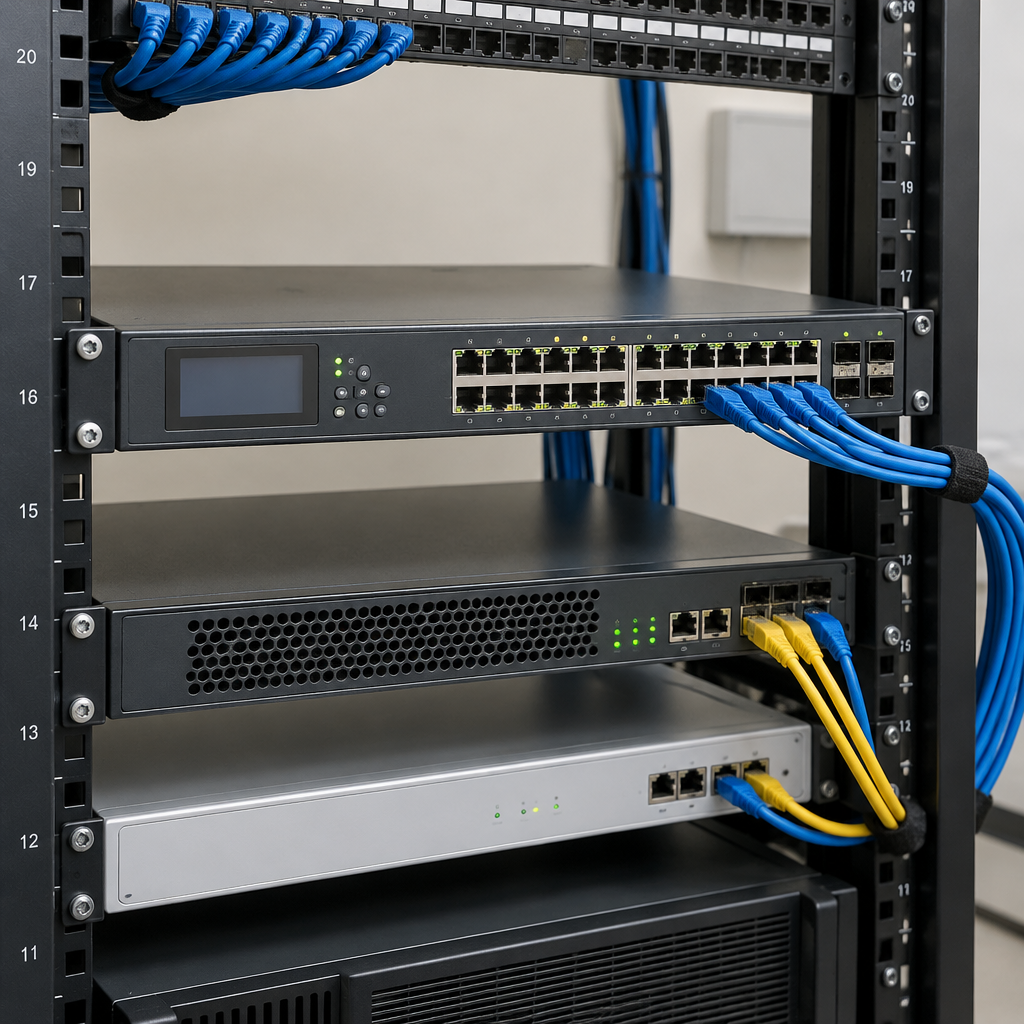
D-Link has warned of multiple unpatched security flaws in its DGS-3130 series managed Gigabit stackable switches, a family of devices marketed toward small-to-medium businesses (SMBs) and metro Ethernet deployments. The vendor said the zero-days affect multiple DGS-3130-30TS firmware versions. D-Link has not published CVE identifiers for these issues and did not disclose technical details of the vulnerabilities in its advisory.
Who found the flaws and where they lie: DDP and firmware security components
D-Link attributed the discovery to Giresh Kumar Enugu, a network engineer at Spectrum Community Solutions. According to the company and the researcher’s report, the reported problems involve the D-Link Discovery Protocol (DDP) and "certain components of the device's firmware security architecture." D-Link said it is continuing to investigate the impact on other D-Link switching platforms and on a range of firmware security mechanisms, explicitly listing SSH service security configuration, safeguards underlying operating-system credentials, and firmware encryption/embedded cryptographic keys.

The cyber insurance questionnaire just landed. Now what?
SOC 2, HIPAA, insurance renewals - someone has to own security strategy. Nubivance provides fractional CISO leadership without the full-time salary.
Get a security leadWhat successful exploitation could allow
D-Link summarized the potential effects of successful exploits. An attacker who can reach an affected network may be able to:
- obtain sensitive device information;
- perform unauthorized administrative operations and make credential or configuration changes;
- leak SNMP community strings; and
- disrupt network services or trigger device resets.
The vendor framed these outcomes as possibilities "according to the security researcher," underscoring that exploitation requires an attacker to have access to the affected network.
Mitigation steps D-Link has advised
Pending firmware updates, D-Link instructed administrators to take several immediate actions to reduce the available attack surface. The company asked admins to:
- disable DDP to remove the primary known attack vector;
- remove unnecessary or default SNMP community strings;
- restrict SSH, web UI, and SNMP access so they are reachable only from isolated management networks and designated administrative hosts;
- maintain offline switch configuration backups; and
- track device logs for unexpected configuration changes, unprompted reboots, or factory resets.
Those measures reflect short-term, network-level containment while D-Link develops firmware fixes.
How SMBs, network administrators, and security teams should react
SMBs that use DGS-3130 switches — and procurement teams that specify such devices for metro Ethernet or branch connectivity — will need to prioritize the vendor’s mitigation checklist while awaiting firmware patches. Network administrators should disable DDP where operationally feasible, verify SNMP configurations for default community strings, and ensure management interfaces are isolated from general user networks as D-Link recommended.
Security teams and incident responders should add these devices to monitoring and logging scopes: D-Link specifically advised tracking logs for unexpected configuration changes, reboots, or factory resets and keeping offline configuration backups to enable recovery if devices become unreliable or require re-provisioning.
D-Link’s advisory also referenced a separate September warning: the vendor had disclosed a maximum-severity zero-day (CVE-2026-86296) affecting legacy DIR-822A dual-band Wi‑Fi routers that had an available proof-of-concept exploit and no patch at that time. That earlier incident is part of the vendor’s recent history of disclosing high-risk, unpatched flaws.
For now, the key variables remain whether D-Link will publish CVE identifiers for the DGS-3130 issues, the timeline for firmware updates, and whether the ongoing investigation will broaden the list of affected platforms or reveal further firmware security implications. Administrators whose networks include these switches should follow the vendor’s mitigations immediately and monitor D-Link communications for patches and CVE assignments.