"The feature 'simply accepts a script, stores it, and runs it as SYSTEM,'" Symantec observed, and attackers turned that capability into a remote command channel on a domain controller.
How CyberPower PowerPanel Business was abused
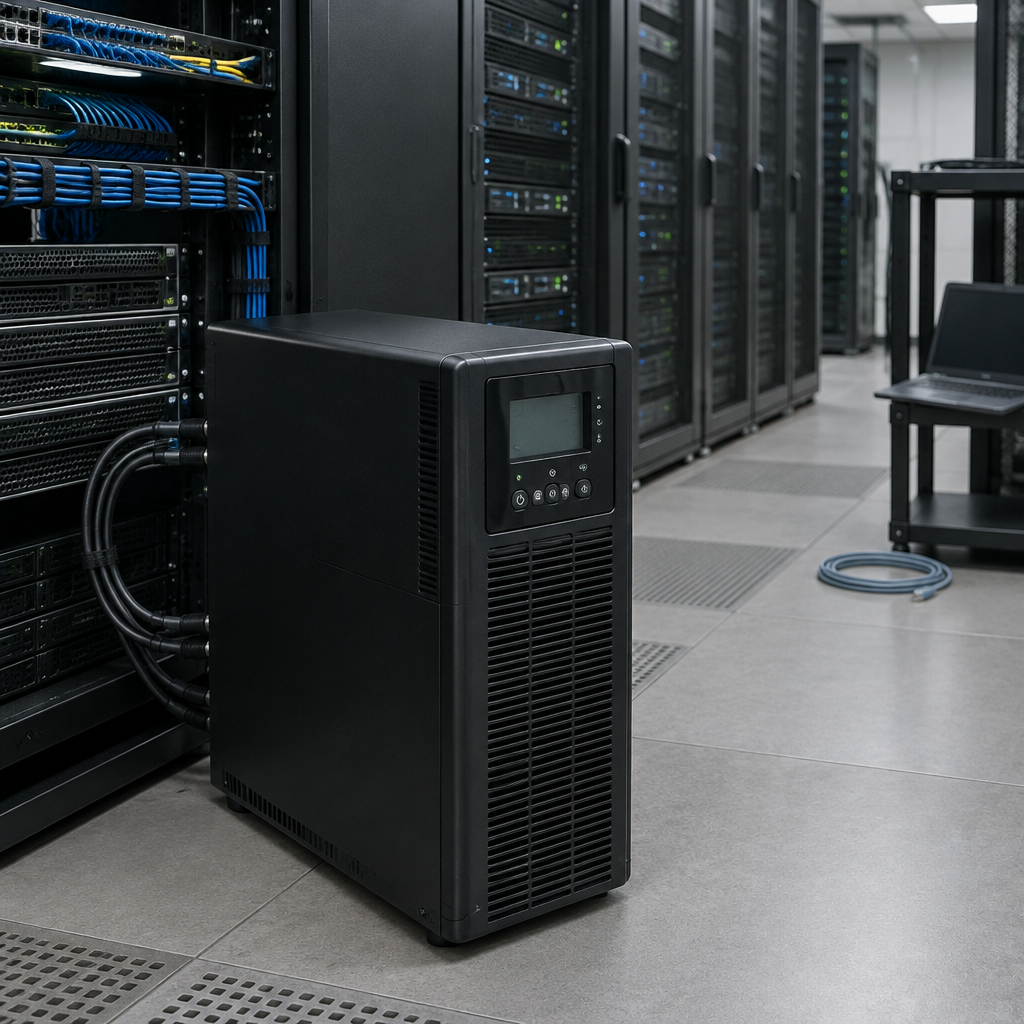
Researchers at Symantec detailed an intrusion in which CyberPower's PowerPanel Business (PBB) software — a management tool for uninterruptible power supply (UPS) battery backups — was used to execute malicious scripts on a domain controller. Administrators can configure PBB to launch a script when it detects a power problem; the PBB service executes that script with SYSTEM privileges, the highest level in Windows.
Because organizations rely on PBB to shut down servers safely, the software often runs on critical systems such as hypervisors and database and file servers. Symantec said the attacker uploaded scripts through the PBB web console, then used them to stage an antivirus killer and to copy the Active Directory database, which stores credentials for every account on the network.
The execution chain: script upload to persistent implant
Symantec lays out a short but effective chain of activity. The attacker:
- uploaded scripts via the PBB web console;
- leveraged PBB's feature that runs provided scripts as SYSTEM, allowing code execution without exploiting a software bug and without creating a service or scheduled task;
- used those scripts to deploy an antivirus-killing capability and to exfiltrate the Active Directory database;
- followed with a persistent implant loaded through DLL sideloading, in which a legitimate program is tricked into loading a malicious library.
Symantec noted the intruder relied mostly on tools that ship with Windows, and that the data-collection scripts were rewritten several times during the intrusion — read by Symantec as a sign of a human operator working live rather than a purely automated campaign.

The cyber insurance questionnaire just landed. Now what?
SOC 2, HIPAA, insurance renewals - someone has to own security strategy. Nubivance provides fractional CISO leadership without the full-time salary.
Get a security leadWhy power-management hosts become high-value targets
PBB's role — managing UPS devices and ensuring safe shutdowns — often places it on the very systems attackers prize. Symantec emphasized that because PBB can execute arbitrary scripts on those hosts with SYSTEM privileges, organizations should "treat power-management software with the same suspicion as remote administration tools." A tool intended to protect availability can become a covert channel to control or harvest data from the network.
Checks and mitigations Symantec recommends
Symantec did not describe how the attacker initially gained access to the network or to the PBB console. It listed possible routes to the console, including stolen administrator credentials and previously disclosed product weaknesses such as a default administrator password, hard-coded credentials and a file upload flaw.
Its defensive advice is concrete and actionable:
- Limit PBB console access to specific administrator machines.
- Keep the console off the internet.
- Replace the default administrator password and remove or fix hard-coded credentials.
- Stay patched and address known product flaws.
- Check the folders from which PBB runs scripts and assume unfamiliar scripts are malicious.
- If indicators are found, reset Active Directory credentials and protect power-management hosts as high-value systems.
What this means for technologists, procurement leaders, and incident responders
- Technologists and security teams: Treat PBB hosts as high-value systems and inspect the directories PBB uses to store and run scripts; look for DLL sideloading and the use of built-in Windows tools combined with scripts that have been repeatedly modified.
- Procurement and IT asset owners: Avoid exposing management consoles to the internet, enforce replacement of default credentials, and require timely patching to close previously disclosed issues such as file upload weaknesses and hard-coded credentials.
- Incident responders: If indicators tied to PBB activity are discovered, Symantec recommends resetting Active Directory credentials and searching for artifacts consistent with AV-killer staging, Active Directory database copies, and DLL sideloading persistence.
Symantec did not identify the victim, did not link the activity to any known group, and observed no data theft or ransomware — leaving the attackers' motives unclear. The core fact is stark and specific: a power-management feature designed to preserve uptime became a privileged remote command channel when its script-execution behavior was abused. Organizations that run PowerPanel Business on critical infrastructure now have a short, prioritized set of checks and configuration changes that directly respond to how this intrusion unfolded.
Source: https://www.infosecurity-magazine.com/news/ups-software-abused-domain/