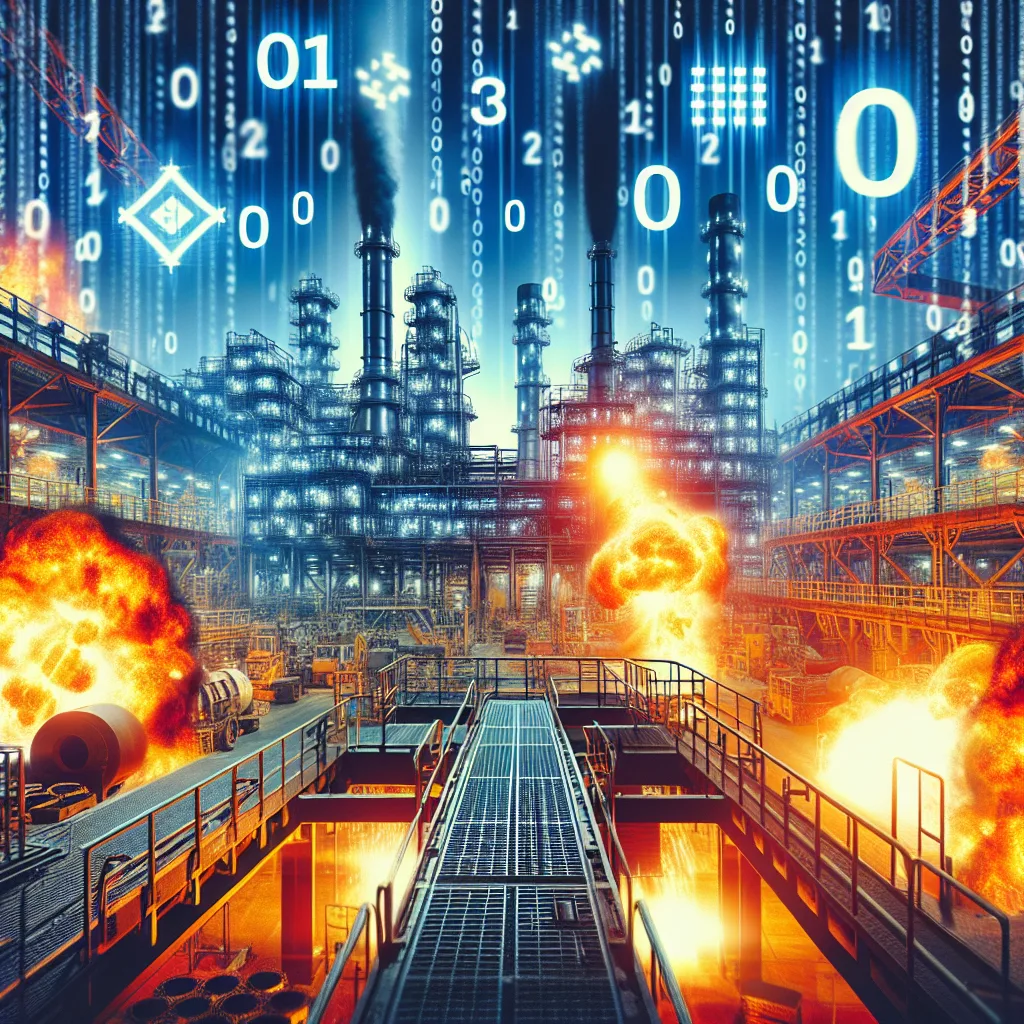
Industrial Titans Under Siege: Nucor’s Production Halt Signals New Cybersecurity Battlefront
In an unsettling turn of events for the U.S. manufacturing sector, Nucor, the nation’s largest steel producer, has abruptly ceased operations following a breach on its servers. The incident, which may represent either a sophisticated ransomware attack or an intrusion aimed squarely at the facility’s critical infrastructure, has left both industry insiders and cybersecurity experts in cautious disquiet.
On a day that carried the ominous undercurrents of cyber conflict, Nucor’s leadership confirmed that production lines were halted after anomalous network activity was detected within its servers. Although the company has been reticent in disclosing specific details—a stance not unusual in cases involving potential security breaches—the lack of immediate clarity has fueled both speculation and concern regarding the operational resiliency of critical manufacturing infrastructure.
The backdrop to this incident is fraught with broader challenges. In recent years, the intersection of digital technology and industrial operations has offered tremendous efficiency gains, yet it has simultaneously exposed legacy systems and production environments to a rapidly evolving threat landscape. Government agencies, private security firms, and industry regulators have repeatedly warned that the convergence of operational technology and information systems represents a veritable playing field for cyber adversaries, a warning that has now acquired a distressing immediacy.
While officials from Nucor have maintained a measured silence—cautiously outlining that an investigation is underway and urging stakeholders to remain patient—the incident has already stirred echoes of previous high-profile attacks. Experts point to past examples in critical infrastructure sectors—the Colonial Pipeline breach and several water system hacks—as harbingers of a new era in which cyberattacks can reverberate through the lifeblood of national industry.
According to cybersecurity analyst Richard Bejtlich of the threat intelligence community, “Industrial production facilities have historically been designed for efficiency, not cybersecurity. When a company like Nucor is forced to shut down, it’s symptomatic of broader systemic vulnerabilities that need immediate attention.” Although Mr. Bejtlich’s insight reflects the general consensus among professionals in the field, concrete information remains sparse as investigators meticulously piece together the vectors of the assault.
What we do know is that the economic implications are multifaceted. Beyond the immediate financial hit to one of the country’s leading metal producers, there is a ripple effect that threatens supply chains extending to construction, automotive manufacturing, and consumer goods sectors. The steel industry not only underpins the national infrastructure but also plays a crucial role in supporting secondary markets; a disruption here signals potential setbacks far beyond the factory floors.
The incident also invites a broader reflection on policies designed to guard against cyber intrusions in vital industrial sectors. U.S. authorities, from the Department of Homeland Security to the Federal Bureau of Investigation, have in recent months pledged new investments in cybersecurity for critical infrastructure. Yet, this proactive rhetoric is now being tested by an increasingly emboldened cadre of cyber adversaries who seem determined to press their advantage.
Several points are worth noting as this story unfolds:
- Security vs. Productivity: The need for uninterrupted production in large-scale manufacturing facilities often competes with the necessity to adopt robust, sometimes cumbersome, cybersecurity measures.
- Supply Chain Vulnerabilities: A disruption at one node in the production chain can induce cascading effects across a myriad of interconnected industries.
- Regulatory and Policy Implications: Incidents like this underscore the urgency for comprehensive cybersecurity policies tailored to protect critical infrastructure without stifling operational efficiency.
Looking forward, industry watchers are likely to scrutinize not just the technical fallout but also the broader implications for national industrial policy. Stakeholders from multiple sectors—from government regulators to private investors—are calling for a reassessment of current cyber defense protocols. The silence from Nucor, while perhaps a deliberate measure to prevent undue alarm, leaves room for probing questions about how prepared the country is to face such incursions in the future.
The coming weeks will prove pivotal. Investigations will seek to determine whether the breach was, in fact, a ransomware operation designed to extract a financial settlement or a calculated strike aimed at crippling production capabilities. Meanwhile, the incident has already set the stage for policymakers to intensify efforts in securing the nation’s industrial backbone.
In this era of digital transformation, the Nucor incident is more than a news story; it is a clarion call. As society increasingly relies on interconnected systems to power both our economic and physical infrastructures, the question lingers: Can we fortify the industrial juggernauts of today against the cyber threats of tomorrow?



