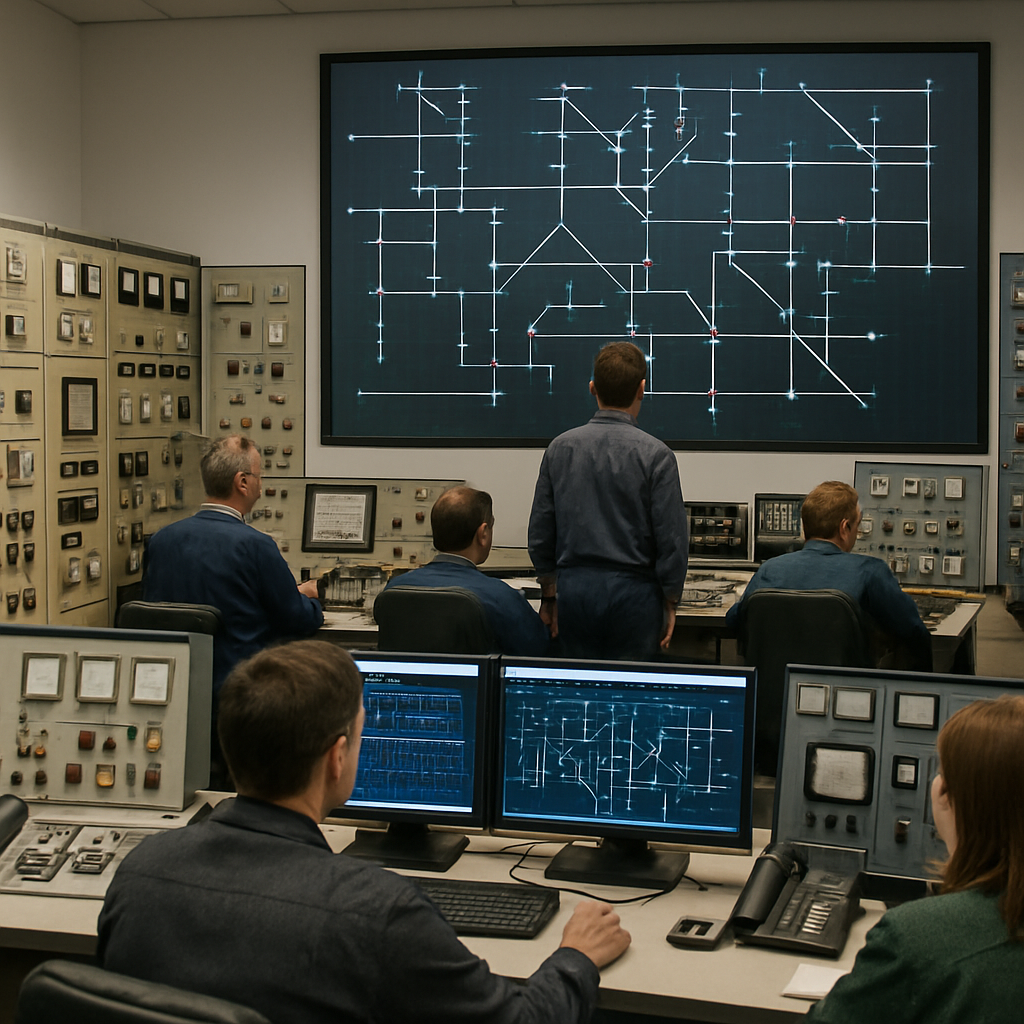
"CI Fortify is timely, actionable guidance that helps organizations protect their networks and critical services from cyber threat actors that aim to degrade or disrupt infrastructure," CISA Acting Director Nick Andersen said.
CISA launches CI Fortify as a planning framework
The U.S. Cybersecurity and Infrastructure Security Agency (CISA) on Tuesday launched CI Fortify, a planning framework aimed at critical infrastructure sectors including water, energy, transportation and communications. CISA framed the initiative around a worst-case scenario in which telecommunications, internet, vendors and upstream service providers cannot be trusted and threat actors already have a foothold in the operational technology (OT) network.
Isolation as an emergency planning objective
CISA set isolation as one of two core planning goals for operators. The agency urged operators to plan for the ability to proactively cut OT systems off from third-party and business networks to prevent impacts from spreading and to keep essential services running in a degraded communications environment. Specifically, CISA recommended that operators identify their critical customers — including military and lifeline services — set service delivery targets and update business continuity plans to enable safe operations in isolation for weeks or months at a time.

Audit-ready is a season. It shouldn't be.
Evidence in spreadsheets, controls drifting between audits, frameworks multiplying on flat headcount. Nubivance runs continuous compliance on Rapid7 Cyber GRC - SOC 2, HIPAA, ISO 27001, PCI, CMMC.
End the scrambleRecovery: documentation, backups and rehearsed transitions
The second core goal is recovery. CISA advised operators to document systems, back up critical files and rehearse the replacement of components or a transition to manual operations if isolation fails. The guidance also asked operators to share the CI Fortify recommendations with managed service providers, system integrators and vendors so that communications dependencies and practical workarounds can be mapped out in advance.
Industry reaction and the limits of disconnection
Industry voices welcomed the emphasis on continuity but cautioned that disconnection alone would not stop an active intruder. Duncan Greatwood, CEO of Xage Security, said attackers frequently moved through trusted connections, third parties or compromised credentials well before any crisis response began. "If organizations don't have control within the environment, then isolation on its own is not enough," he said. Greatwood added that the most prepared operators would be those that layered control and containment into their environments, building on the direction set out in CISA's earlier zero-trust guidance for OT.
CISA highlighted a parallel benefit of the CI Fortify approach: operators who invest in the recommended capabilities "end up with infrastructure that is easier to defend across all disruptions, from cyber-attacks to weather events and routine component failures."
What this means for water, energy, transportation and communications operators, and for their suppliers
- Water, energy, transportation and communications operators: CISA's guidance asks these operators to plan for sustained isolated operation, to set service delivery targets for critical customers (including military and lifeline services), and to rehearse manual or component-level recovery for weeks or months if required.
- Managed service providers, system integrators and vendors: The agency explicitly asked operators to share the guidance with these suppliers to map communications dependencies and workable contingencies ahead of an incident.
- Critical customers (military and lifeline services): The guidance places these customers at the center of continuity planning by asking operators to identify them and set service delivery targets designed to preserve essential functions even during prolonged isolation.
CISA's message is both practical and pointed: plan now for operating disconnected from untrusted telecommunications, internet and upstream services, and rehearse the recovery steps you would need if isolation does not stop an adversary. As CISA Acting Director Nick Andersen put it, the agency "strongly encourage[s] organizations to review this guidance, implement the recommended actions and collaborate with CISA to strengthen CI defenses against opportunistic threat actors."