“How close is too close when two military aircraft meet above international waters?” This pressing question emerges from a recent incident in the East China Sea, where Chinese JH-7 fighter-bombers intercepted a Japanese reconnaissance plane at an unusually close range, underscoring escalating tensions in a region fraught with geopolitical complexity and military posturing.
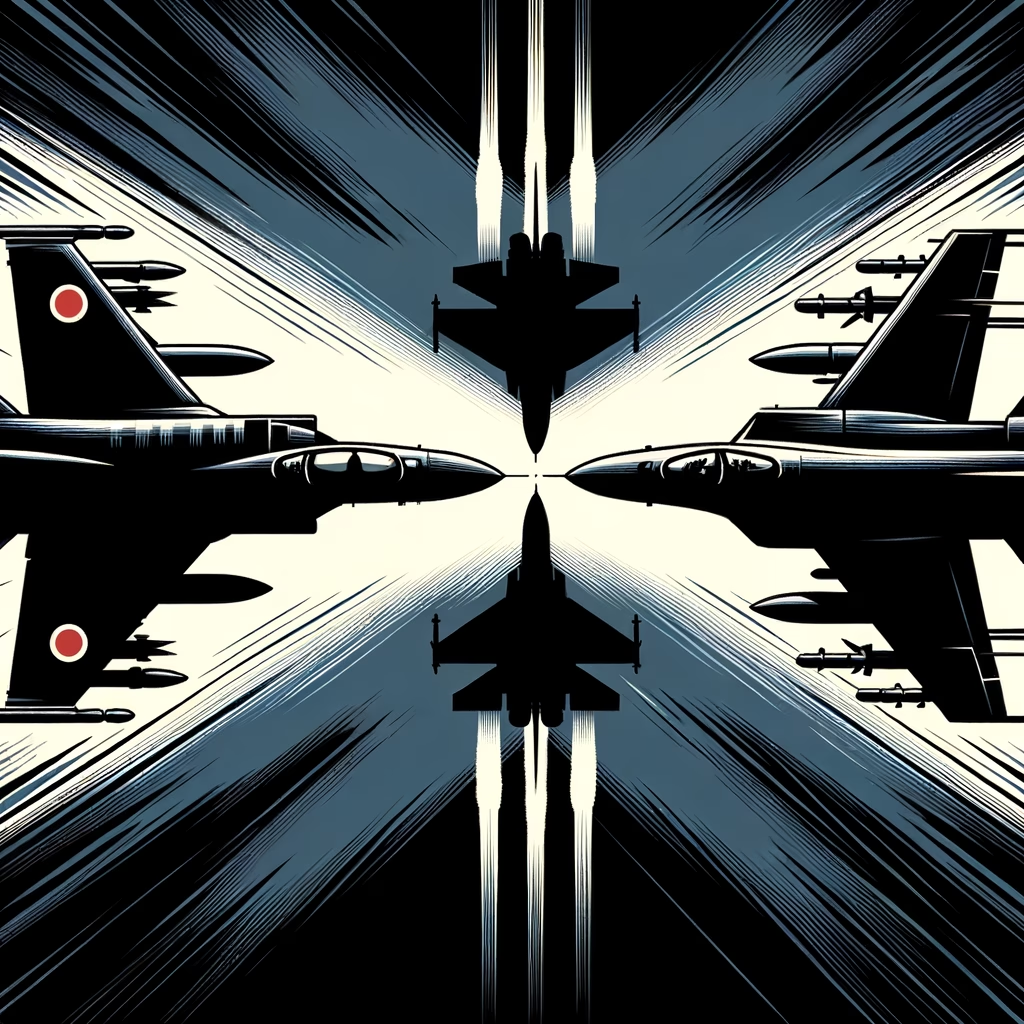
On Wednesday, Japan’s Ministry of Defense reported that a Japan Air Self-Defense Force (JASDF) YS-11EB electronic intelligence aircraft was approached twice by Chinese military aircraft—identified as JH-7s—while conducting routine reconnaissance operations over international waters. The ministry expressed concern over the “dangerous proximity” of these intercepts, highlighting the heightened risk of accidental collision between state military forces operating in increasingly crowded airspace.
To appreciate the gravity of the encounter, it is essential to understand the roles of the aircraft involved. The YS-11EB serves as an electronic intelligence (ELINT) platform, equipped to gather signals and radar information critical for Japan’s situational awareness in the volatile East China Sea region. The JH-7, meanwhile, is a supersonic fighter-bomber deployed by the Chinese People’s Liberation Army Navy Air Force, known for its strike capabilities as well as escort and interception duties.
According to the Ministry of Defense, the JH-7 jets closed to a dangerously close range—though specific distances have not been publicly disclosed—which is significant considering that international aviation safety protocols demand clear separations to minimize collision risks. This incident marks a departure from standard intercepts, where aircraft typically maintain a prudent distance while signaling their presence. Instead, the aggressive maneuver reportedly involved rapid approaches, creating a fraught atmosphere in a region already characterized by territorial disputes and maritime sovereignty claims.
The East China Sea, where the encounter occurred, remains a flashpoint in Sino-Japanese relations. The area includes the contested Senkaku Islands, claimed by both nations but controlled by Japan. Both countries regularly deploy reconnaissance and patrol flights to assert their presence and gather intelligence, sometimes prompting confrontations that can escalate if not carefully managed. Analysts point out that the current encounter reflects a broader pattern of increasingly assertive Chinese air activity near Japan’s borders—a trend that has intensified over the last decade.
From a strategic standpoint, this episode reveals several troubling dynamics:
/ The use of electronic intelligence aircraft like the YS-11EB underscores Japan’s effort to monitor Chinese military developments closely, particularly advances in naval and missile capabilities.
/ Chinese JH-7 jets’ close interception tactics may be intended to signal deterrence and challenge Japanese reconnaissance efforts, demonstrating operational boldness.
/ The near-miss nature of the encounter elevates the risk of accidental incidents with potentially severe diplomatic and military consequences, especially given the heightened nationalistic sentiments on both sides.
Military experts emphasize that while intercepts are a recognized element of air force operations globally, the manner in which they are conducted matters significantly. Colonel Takashi Yamada, a retired Japan Air Self-Defense Force officer and defense analyst, noted in a recent interview, “Safe distances and clear communications are paramount to avoid misunderstandings. When one side adopts aggressive tactics, it risks spiraling into unintended conflict.”
Chinese authorities have not publicly commented on this specific encounter, though state media have previously framed similar operations as legitimate measures to protect national sovereignty against what Beijing labels as “provocative” surveillance flights. Such narrative framing supports China’s position that it is enforcing its air defense identification zone (ADIZ) and responding to incursions that threaten its territorial integrity.
Policymakers in Tokyo face a challenging balancing act. On one hand, they must assert Japan’s rights to conduct surveillance and protect its territorial claims; on the other, they seek to avoid escalation that could destabilize regional security. Diplomatic channels and military hotlines, while established, have shown limits in preventing these tense encounters.
For international observers and technologists alike, the incident signals the increasing complexity of aerial operations amid a crowded and contested maritime environment. The technological race between reconnaissance platforms and interceptors is matched by the need for robust protocols to prevent miscalculations. Enhanced communication systems, better identification technologies, and clear rules of engagement are often cited as crucial tools to mitigate risk.
Ultimately, this recent encounter between Chinese JH-7 jets and a Japanese YS-11EB reconnaissance plane underscores a sobering reality: as great powers probe each other’s defenses in shared spaces, the margin for error shrinks. The question that remains is whether diplomatic prudence and military restraint can keep pace with the strategic ambitions that drive such risky aerial encounters—or if the next close call might trigger a crisis neither side desires.