A free-flight moment: what the new footage shows
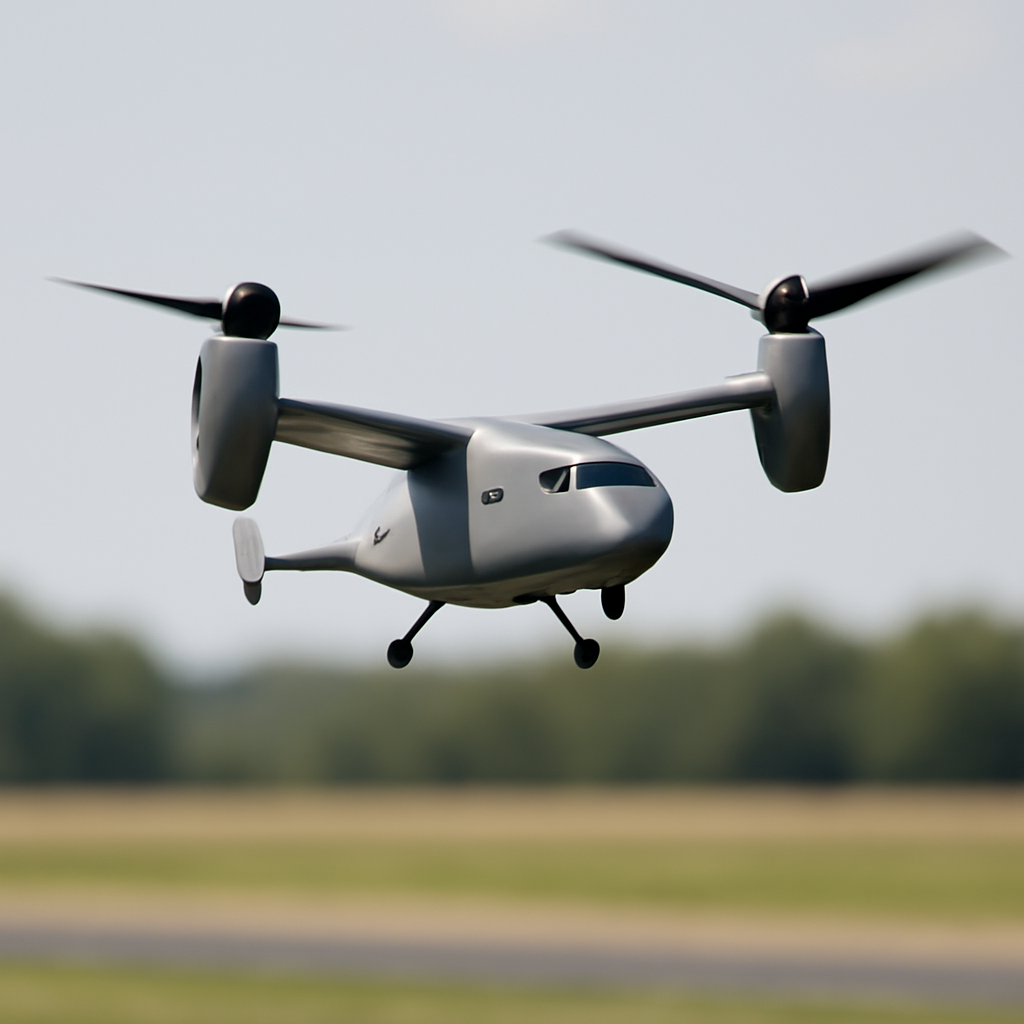
The footage that first appeared on Chinese social media captures the R6000 uncrewed tiltrotor in what appears to be sustained, untethered flight: a vertical hover, a pedal turn (rotation about the vertical axis while hovering), and sustained forward flight with both proprotors fully tilted. Earlier publicly shared imagery had been limited to tethered hover evaluations; the transition to free-flight testing is a clear technical milestone in any tiltrotor program.
R6000 design: fixed engine nacelles with hinged proprotors, and the Bell MV-75A comparison
The R6000’s layout—fixed engine nacelles with hinged proprotors—matches the second‑generation tiltrotor approach rather than the first‑generation architecture that pivots the entire nacelle. The design has drawn attention for its similarity to Bell’s MV-75A Cheyenne II. In the footage and previous images the R6000’s engines are unshrouded and the streamlined fairings have been removed, showing the powerplants and support structure during testing.

The cyber insurance questionnaire just landed. Now what?
SOC 2, HIPAA, insurance renewals - someone has to own security strategy. Nubivance provides fractional CISO leadership without the full-time salary.
Get a security leadUnited Aircraft, naming and development milestones
Developed by United Aircraft, the program is referred to in company materials as the R6000 and UR6000 and has been given the name Zhang Ying (translated as Steel Shadow). United Aircraft presented crewed and uncrewed versions of the design when it unveiled the aircraft at the 2024 Singapore Airshow. A first completed prototype was photographed in October 2024 at the Wuhu United Aircraft Production Workshop in Anhui province, and tethered hover testing publicly surfaced in November of that year. The new untethered footage represents a distinct step forward in the test sequence.
Potential missions: civilian roles, naval operations and military applications for the PLA
United Aircraft has officially pitched the R6000 for civilian roles such as logistics, disaster relief, and offshore support—missions that benefit from vertical takeoff and landing combined with the speed and range of fixed‑wing flight. The platform’s size and payload capacity also open broader possibilities: United Aircraft imagery shows at least one UR6000 in People’s Liberation Army markings, and analysts have noted potential military uses.
Specifically, the aircraft could help sustain island bases in the South China Sea, support isolated installations across the Pacific and remote border regions, and extend the reach of China’s amphibious ships. The R6000 is described as particularly well suited to operating from large amphibious assault ships—United Aircraft and observers point to the Type 076 class (China’s first super‑sized Type 076 ship, the Sichuan, is pictured in company materials) as a potential shipboard partner. Beyond logistics, the R6000’s payload capacity could accommodate intelligence, surveillance and reconnaissance (ISR) sensors, electronic‑warfare and communications relay systems, or potentially precision‑strike weapons; similar mission expansions are already being explored by Bell for its tiltrotor concepts.
What this means for the People’s Liberation Army, United Aircraft, and civilian operators
- The People’s Liberation Army: will likely assess how an aircraft with vertical‑lift speed and fixed‑wing range could change sustainment and force projection, particularly for littoral operations, island garrisons, and amphibious task groups.
- United Aircraft: gains a technical milestone to demonstrate in testing—sustained untethered flight—while retaining a range of marketing angles (civilian logistics, crewed and uncrewed variants, and military applications) to pursue in parallel.
- Civilian operators and disaster response planners: have a potential new transport asset that, if developed for non‑military use, could reach areas without prepared runways and support offshore and humanitarian missions.
Sustained, untethered flight is a clear technical inflection point for any tiltrotor program because of the aerodynamic and flight‑control complexity involved. The R6000’s new flight footage moves the program beyond basic hover validation and into a phase where the aircraft’s useful speed, range, payload, and shipboard compatibility can begin to be assessed in earnest. For observers tracking China’s expanding vertical‑lift and uncrewed aviation efforts, the R6000 will now be judged less on concept art and tethered demonstrations and more on what its flight tests reveal about operational capability.