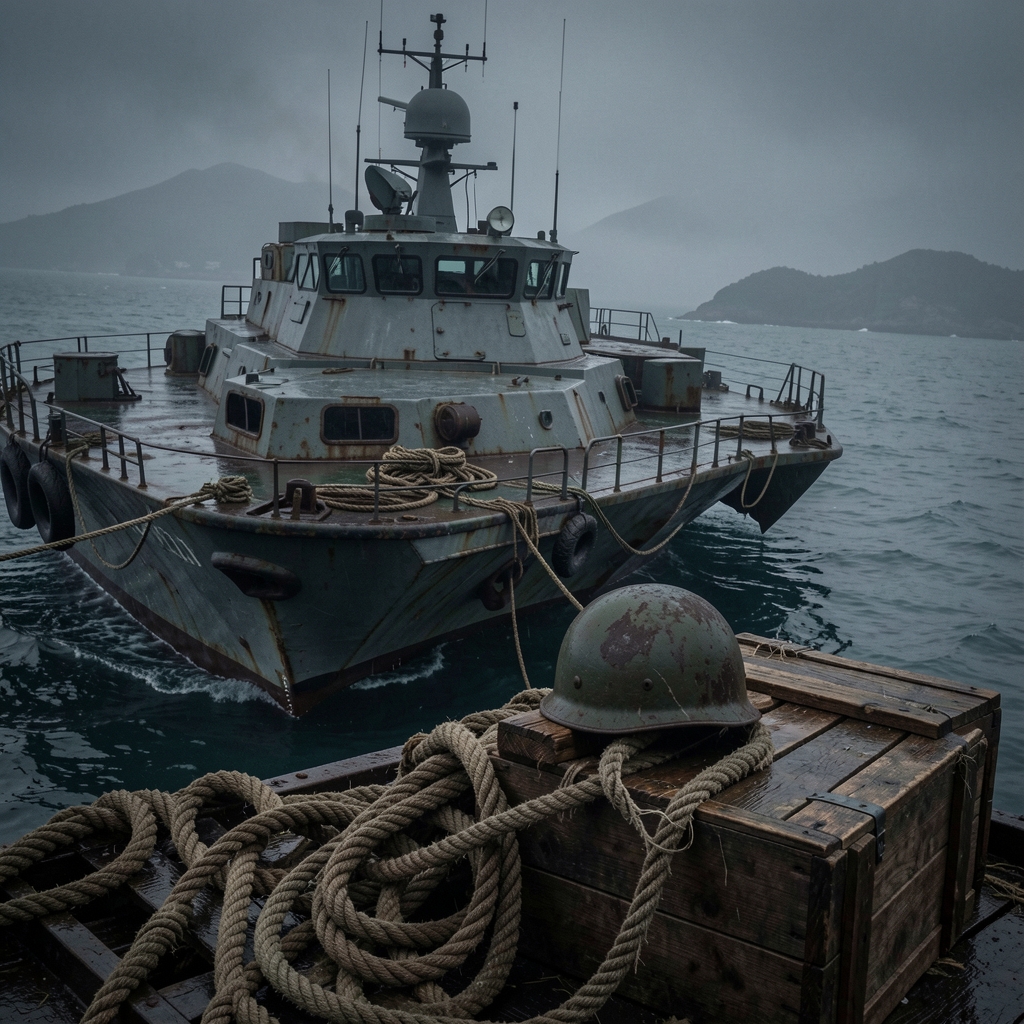
What role does a workaday, slow‑moving ship play when it looks, on paper, like an easy target? The question nags because the People’s Liberation Army Navy’s Landing Ship Tanks — the plain, boxy LSTs — are described in stark, unadorned terms: simple, low‑tech vessels with minimal self‑defense, usually just a 30 mm cannon, often without modern fire‑control systems, and in older batches, even manually operated.
What these LSTs are — and are not
The core facts are few and plain. These LSTs carry minimal self‑defense, typically a single 30 mm gun. Many lack modern fire‑control systems; older examples may still rely on manually operated weapons. Propulsion is provided by twin diesel engines that push the ships to about 15 knots. Those concrete details are the basis for any fuller judgment.
Current situation in context
Set alongside the PLAN’s more recent programs, these LSTs are described as noticeably different. The reporting explicitly contrasts them with newer 071 and 075 classes and an upcoming 076 class, underscoring that these LSTs occupy a different place in the fleet’s inventory. Beyond that contrast, the published description focuses on the LSTs’ modest speed, basic armament, and limited sensor or fire‑control sophistication.

Audit-ready is a season. It shouldn't be.
Evidence in spreadsheets, controls drifting between audits, frameworks multiplying on flat headcount. Nubivance runs continuous compliance on Rapid7 Cyber GRC - SOC 2, HIPAA, ISO 27001, PCI, CMMC.
End the scrambleWhy that matters — different perspectives
- Technologists: From an engineering viewpoint, the platforms’ simplicity and manually operated systems present clear upgrade opportunities — for example, modern fire‑control integration or improved sensors — though the source does not describe any such projects.
- Policymakers and planners: The ships’ attributes — slow speed, limited defensive fit, and basic weapons — frame them as assets with constraints that must be weighed against mission needs and broader force structure, especially given the existence of newer classes mentioned in the reporting.
- Crew and operators: Sailors aboard vessels with manual gun mounts and without modern fire control may face different operational demands than those on more modern platforms, including closer‑in defensive tactics and heavier reliance on basic seamanship at modest speeds.
- Adversaries and observers: The plainly described limitations — minimal armament and basic systems — could shape how other actors assess risk and opportunity, though the source itself does not report on any operational outcomes or reactions.
Conclusion
Simple facts can yield complex questions. When a navy fields vessels that are slow, lightly armed, and technologically modest — while also building newer classes — decisionmakers, operators, and analysts must ask whether to upgrade, retire, or repurpose those ships. The answer will hinge on strategy, budget, and the roles these vessels are expected to fulfill; the published description leaves that work to planners, not the ships themselves. In the end, does a fleet’s utility rest with its flashiest new classes, or with the little LST that, by virtue of numbers and availability, keeps the dockyard lights on?
https://china-defense.blogspot.com/2026/04/the-little-lst-that-could.html



