China reportedly paid around US$150 million for 24 Sikorsky S‑70C Black Hawks in 1984 — a sum that, the source argues, bought far more than airframes.
US$150 million for 24 Sikorsky S‑70C Black Hawks (1984 purchase)
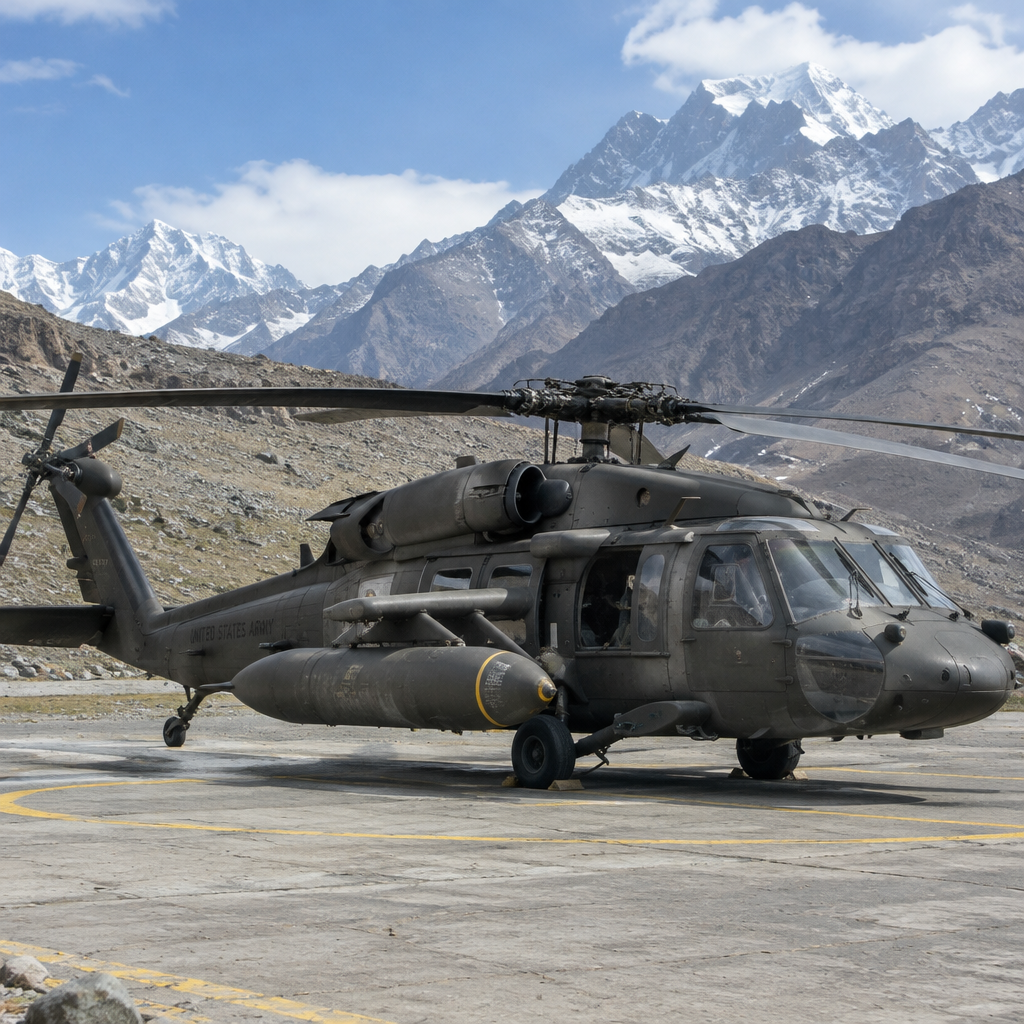
The procurement of 24 Sikorsky S‑70C Black Hawks in 1984 appears to have been a deliberate, targeted investment. The purchase included a custom S‑70C‑2 variant fitted with four external auxiliary fuel tank pylons and upgrades specific to high-altitude operations. The source frames this not as a one-off hardware buy, but as an early step in a planned, longer-term program of capability development.
The S‑70C‑2’s high‑altitude capability and missions
According to the information provided, the S‑70C‑2 variant delivered to China came with 1,690‑hp T700‑GE‑701A engines, a 3,400‑hp Seahawk gearbox, high‑altitude weather radar, and long‑range VLF/Omega navigation. Those features enabled missions the PLA’s contemporaneous helicopters could not perform: 4,500‑meter rescues, supply runs to remote Tibetan border posts, and operational ceilings reported to reach 21,000 feet. The Black Hawks were employed in search and rescue, troop transport, cargo lift, medical evacuation, and public demonstrations — practical uses that exposed the PLA to modern helicopter employment across multiple roles.

This site is the portfolio.
OSINTSights runs on Cloudflare Workers, D1, R2, and Vectorize, with an AI pipeline on Hetzner ARM. Nubivance designed, built, and operates it. We do the same for clients.
See what we buildBuying experience: doctrine, training, maintenance — a flying classroom
The source emphasizes that the Black Hawks’ value to the PLA lay less in quantity and more in function: doctrine, training, operational experience, maintenance knowledge, and organizational lessons. The purchase is described as effectively buying “a flying classroom.” Over decades of operation in demanding terrain, the PLA learned what reliable vertical mobility at high altitude actually required, and built doctrine and organizations around those lessons rather than relying solely on off‑the‑shelf performance figures.
From Black Hawk to Z‑20: lineage of ideas, not a direct copy
Viewed from the present, the source traces a lineage from the Black Hawks to China’s own Z‑20 helicopter. It cautions against simplistic labels such as “copy,” instead arguing that the PLA identified a working platform, absorbed lessons from long‑term operation, and eventually developed an indigenous aircraft to fulfill similar requirements within a domestic support ecosystem. The Black Hawk is presented as an initial node in a pattern: a small foreign purchase, exhaustive study, doctrinal adaptation, and eventual indigenization.
What this means for the PLA, procurement leaders, and emergency responders
- The PLA: The Black Hawk episode illustrates a procurement approach that prioritizes filling operational requirements and absorbing institutional lessons. Small numbers of foreign platforms become testbeds for doctrine and organization, particularly where high‑altitude capability is concerned.
- Procurement leaders: The pattern described suggests a roadmap mentality — targeted, limited foreign buys that feed decades of development leading to indigenous solutions. Budgeting and program design can thus be oriented toward long rides of capability maturation rather than one‑time acquisitions.
- Emergency responders and the public: The source notes a concrete, painful lesson that reinforced the value of helicopter mobility — during the May 12, 2008 Sichuan earthquake, helicopters provided the only access to isolated mountain towns, evacuating survivors and moving supplies when roads were destroyed. That experience is cited as a stark confirmation of why high‑altitude vertical lift mattered.
Across the account, the recurring theme is clear: requirement first, platform second. The Black Hawk purchase of the 1980s is presented as a case study in long‑game procurement — a deliberate purchase of experience that seeded doctrine, organizational change, and later indigenous platforms. Whether measured in dollars, hours flown in difficult air, or the institutional knowledge accrued, the lesson the source draws is unmistakable: small steps, sustained learning, and patient indigenization can turn a modest foreign buy into the foundation for much larger domestic capability.