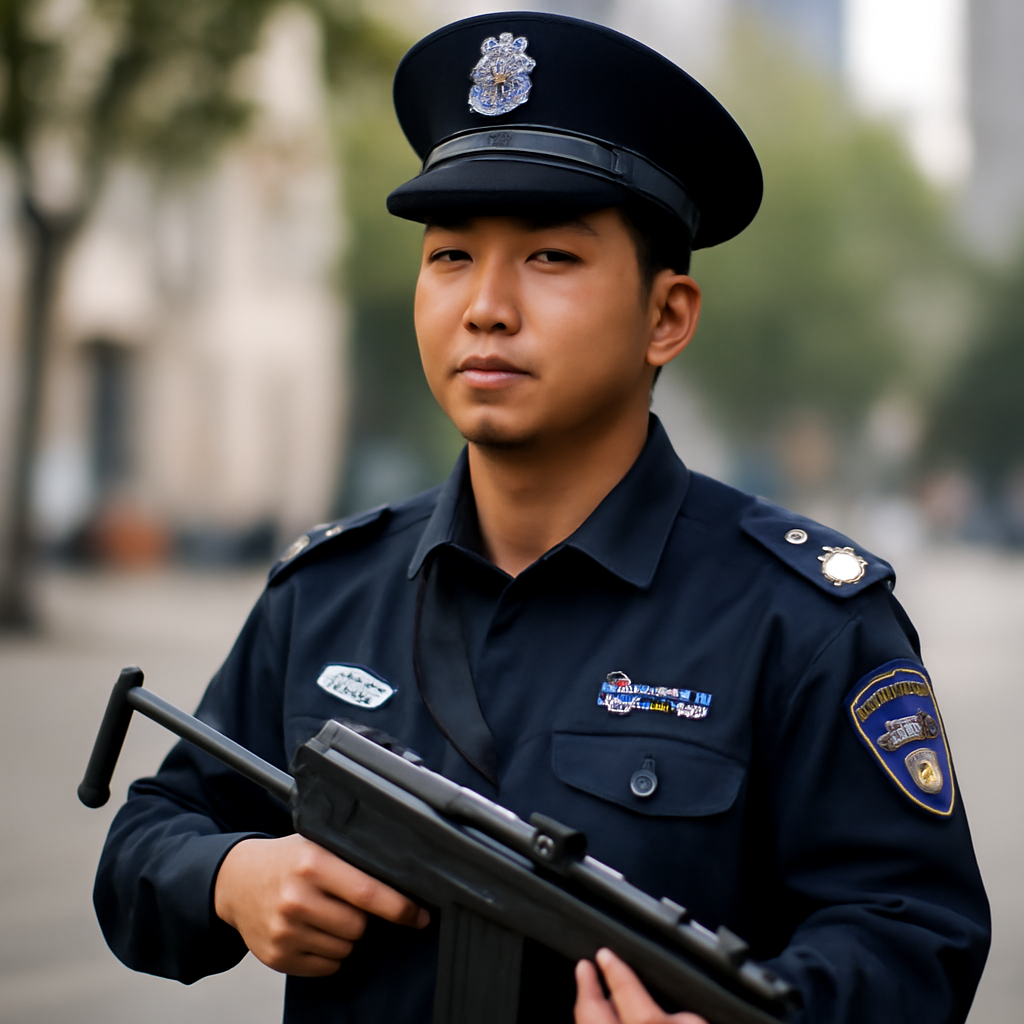
Currently, the PAP operates five known helicopter squadrons.
People's Armed Police aviation inventory
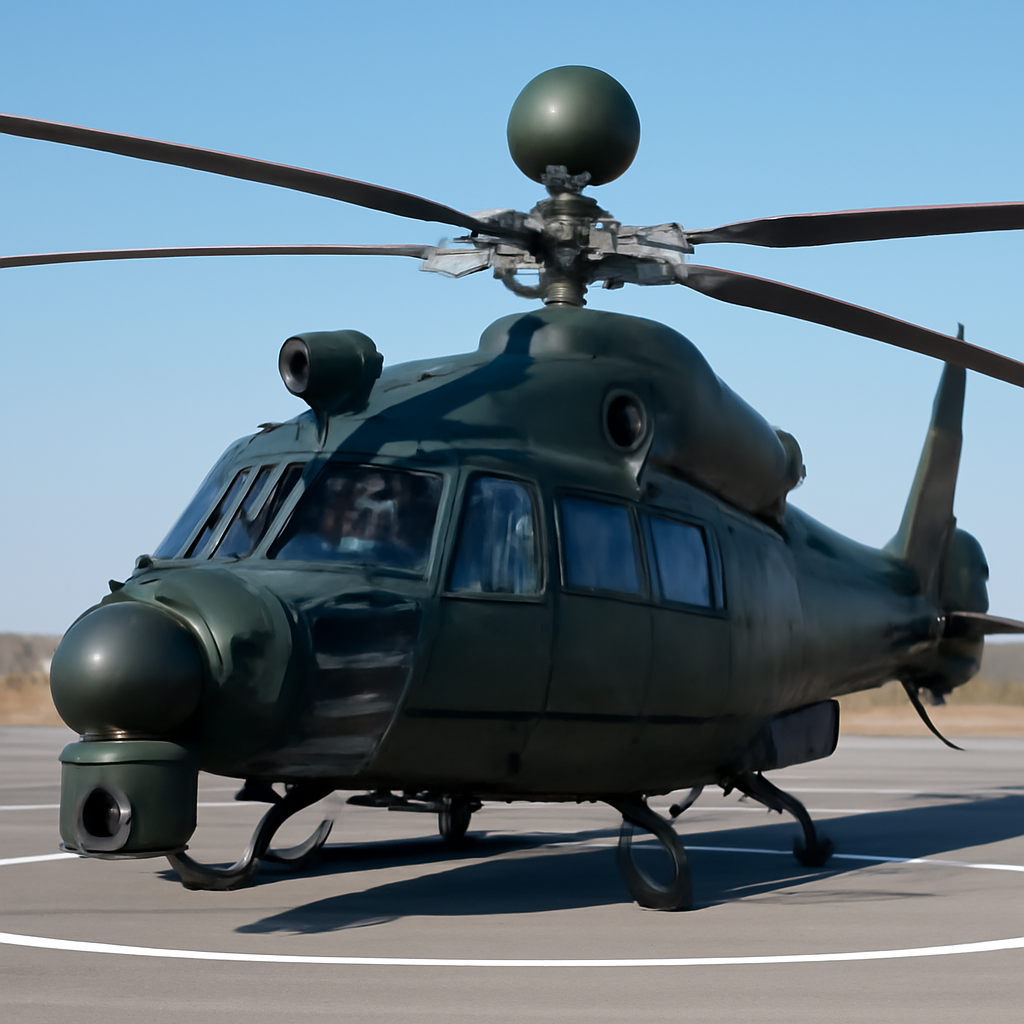
The People's Armed Police (PAP) operates a mixed helicopter fleet that the source identifies by model: Z-20, Z-8, Mi-171 and Z-9WA. Photographs cited in the reporting show these aircraft painted in the PAP's distinctive dark green color scheme. The write-up contrasts this fleet with what one would expect from a typical civilian police aviation unit, describing an aviation component that "often looks less like a conventional police air support unit and more like a military helicopter force wearing a police badge."
Mast‑Mounted Sights, FLIR, and apparent weapon carriage
Several PAP helicopters are reported as fitted with nose‑mounted FLIR systems and, in some examples, a Mast‑Mounted Sight (MMS). The source notes that an MMS is the kind of sensor "typically associated with armed reconnaissance, target acquisition, artillery spotting, and guiding precision‑guided weapons." The blog further states that, for the PAP, the helicopter overhead "may also be carrying AKD‑10 air‑to‑ground missiles guided through that MMS."

The cyber insurance questionnaire just landed. Now what?
SOC 2, HIPAA, insurance renewals - someone has to own security strategy. Nubivance provides fractional CISO leadership without the full-time salary.
Get a security leadPAP Mobile Corps organization and unit notes
The published order-of-battle details two mobile corps and their organic aviation units: the 1st PAP Mobile Corps, which lists a 1st, 2nd and 3rd Squadron; and the 2nd PAP Mobile Corps, which lists a 1st and 2nd Squadron. Separate dated entries in the source record regional developments: on Saturday, July 26, 2014, Ningxia People's Armed Police commissioned its first helicopter battalion; the same day a PAP Shanxi helicopter battalion (Taiyuan) was reported with a total of 12 birds expected. Entries on Sunday, May 17, 2020 and Monday, July 20, 2020 reference Xinjing PAP formations and training activity.
Operations: civilian air support roles versus PAP practice
The piece contrasts standard civilian police aviation missions — "patrol and crime prevention, suspect pursuit, search and rescue (SAR), traffic monitoring, emergency response, and general surveillance" — with how the PAP employs helicopters. Beyond tracking suspects or locating missing people, the report emphasizes that PAP aviation includes organic heliborne special operations capability: a May 17, 2020 entry states "Xinjing PAP 2nd Mobile Corps now has an organic heliborne SpOps," and notes that "Xinjing PAP 1st Mobile Corp operates a similar fleet of Z‑8 helicopters" and might also command a SpOs team. Another entry records PAP elements travelling to a training center in Xinjiang for an "anti terror" drill over "1000 KM" away.
What this means for policymakers, the public, and procurement leaders
- Policymakers: The reporting highlights a gap between the label "civilian law enforcement" and the equipment and organization on display; models such as MMS and reported AKD‑10 carriage raise a clear distinction between conventional police aviation roles and capabilities associated with armed reconnaissance and precision strike.
- The public: Residents under PAP air patrols will see aircraft painted in a police color scheme but fitted with sensors and, according to the account, weapon systems that exceed routine civilian policing needs — a factual contrast the source draws repeatedly.
- Procurement leaders: The PAP example demonstrates an organizational choice to field multi‑role rotorcraft (Z‑20, Z‑8, Mi‑171, Z‑9WA) with advanced electro‑optical sensors and modular payloads; the documented unit structures and regional battalion commissions (Ningxia, Shanxi) illustrate a programmatic build‑out rather than ad hoc acquisition.
The record provided by the source is straightforward: a police‑badged aviation force built from heavy and medium helicopters, fitted with FLIR and MMS sensors, organized into named PAP mobile corps and squadrons, and — in the reporting — associated with the capability to employ AKD‑10 air‑to‑ground missiles guided through those sensors. The combination of aircraft types, sensors, unitization, and dated unit commissions and exercises frames the PAP aviation component as something other than a routine municipal air support unit.
Read the original report: https://china-defense.blogspot.com/2026/10/chinese-police-helicopters-but-make.html