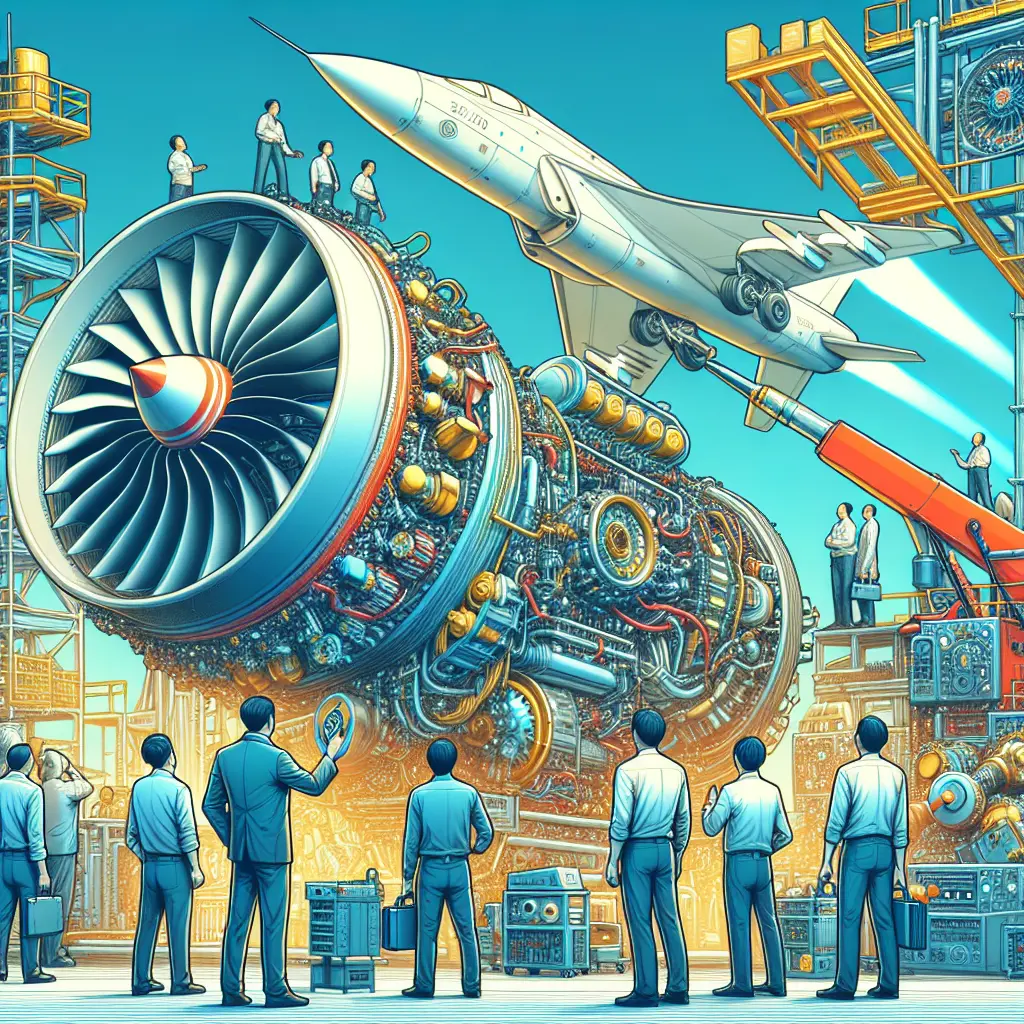
China’s Leap Forward: The First Flight of a 3D-Printed Turbojet Engine
In a significant advancement for aerospace engineering, China has successfully conducted the first flight test of a domestically developed 3D-printed turbojet engine. The test, carried out on Tuesday in Inner Mongolia, not only marks a technological milestone but also raises important questions about the implications for global defense and aviation sectors.
The flight showcased the engine’s capabilities at an altitude of 4,000 meters, with officials from the Aero Engine Corporation of China (AECC) proclaiming its operational reliability and stability under real-world conditions. But beyond this achievement lies a complex web of geopolitical considerations and competitive dynamics that merit scrutiny.
The journey to this point is steeped in both ambition and necessity. China’s focus on developing advanced military technology has been intensifying over recent years, driven by a desire for self-sufficiency in critical defense capabilities. This drive can be traced back to the reforms initiated in the late 20th century, where reliance on foreign technologies became increasingly seen as a liability rather than an asset. The advent of 3D printing technology in manufacturing processes symbolizes not just innovation but a strategic pivot towards autonomy in production methods.
This latest success story follows years of investment in research and development within China’s aerospace sector. According to AECC, the innovative approach to utilizing additive manufacturing techniques—commonly known as 3D printing—has yielded significant reductions in weight while maintaining strength and functionality. This could have far-reaching implications not only for military applications but also for civilian aviation, where efficiency and performance are paramount.
Presently, this achievement positions China as a serious player in the global aerospace arena. Reports indicate that countries worldwide are closely monitoring developments like these as they could potentially reshape international defense partnerships and supply chains. Furthermore, as nations grapple with the burgeoning field of additive manufacturing, the competitive landscape may undergo a seismic shift.
What makes this development particularly noteworthy is its timing against the backdrop of escalating tensions in various global theaters—be it economic rivalries or territorial disputes in Asia-Pacific regions. The ability to produce advanced military engines quickly and effectively could provide China with an edge in power projection capabilities. Additionally, policymakers around the world must consider how such advancements impact security calculations among allied nations.
To provide further perspective on this technological leap, experts point out that China’s advances in 3D printing technology align with broader trends towards autonomous systems and unmanned aerial vehicles (UAVs). Dr. Liu Jianming, an aerospace engineer at Tsinghua University, notes that “the integration of lightweight materials through 3D printing allows for new design possibilities that were previously constrained by traditional manufacturing methods.” This insight not only encapsulates the benefits but also hints at potential vulnerabilities that adversaries may seek to exploit.
Looking ahead, there are several key areas to watch closely. Firstly, how will China leverage this technology for both military modernization and economic gain? Secondly, what response will come from international competitors who feel threatened by these advancements? Lastly, policymakers must consider regulatory frameworks that may need adjustment as countries respond to rapid technological changes.
The successful test flight signifies more than just another technological milestone; it underscores an urgent need for stakeholders across industries to recalibrate their strategies in light of emerging capabilities from powerful nations like China. As we witness these developments unfold, one cannot help but ponder: How will these advancements redefine the balance of power not just within Asia but globally?



