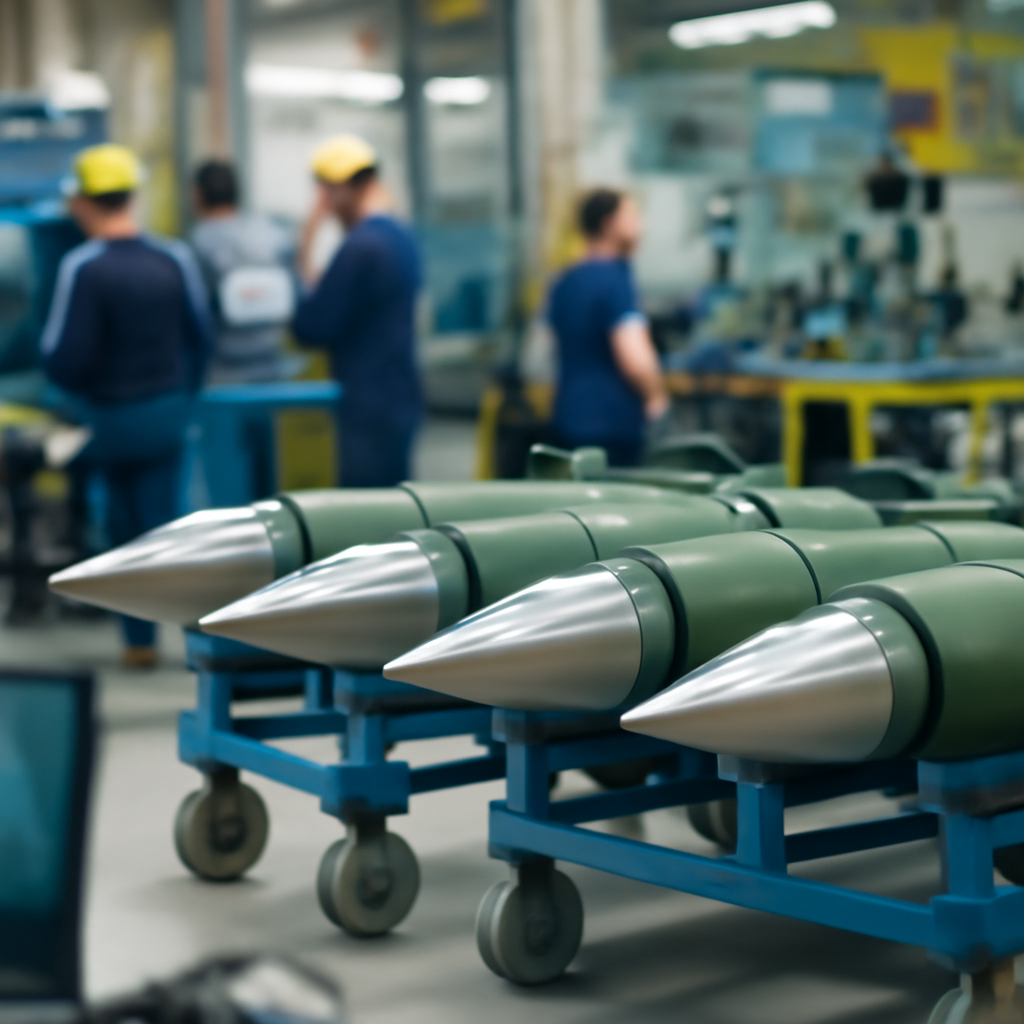
"The Arsenal of Freedom of the 21st Century requires doing business differently," said Michael Duffey, the Under Secretary of War for Acquisition and Sustainment, as the Pentagon finalized new production frameworks for low-cost cruise missiles on 15 July 2026. The agreements give three suppliers — Anduril Industries, CoAspire, and Zone 5 Technologies — a planning basis for multi-year runs of Family of Affordable Mass Missiles (FAMM) while leaving each round of production subject to separate contracts.
Framework terms: multiyear, firm‑fixed‑price deals with minimum quantity floors
Signed 15 July 2026, the three FAMM production framework agreements are structured as multi‑year arrangements of up to seven years, subject to congressional appropriations. Each uses firm‑fixed‑price terms and includes minimum quantity floors. The frameworks do not themselves award production contracts; they set the conditions under which the Department of War will issue individual contracts, providing vendors and their suppliers with greater visibility to plan longer production runs. The Department framed the move as part of its Acquisition Transformation Strategy and folded the lugged and palletized FAMM variants into a single combined competition that includes production incentives for vendors that meet or beat delivery schedules.
Procurement plan, budget and unit cost targets
The Air Force’s fiscal 2027 budget documents publicly outline the first program of record for FAMM: nearly 28,000 rounds over five years at a projected program cost of $12.6 billion. Procurement begins modestly in the Future Years Defense Program, with annual buys rising from roughly 1,000 rounds to nearly 8,000 by 2031. For fiscal year 2027 the Air Force requested $300 million in reconciliation funds to buy 1,000 rounds, plus a separate $55 million in base funding for an extended‑range variant.
Cost is central to the program’s rationale. The Air Force is targeting roughly $218,000 per FAMM round, compared with more than $1.3 million for a Joint Air‑to‑Surface Standoff Missile (JASSM) in the cited estimates. The fiscal year 2026 National Defense Authorization Act provided authority for five‑year FAMM production deals; the Air Force is seeking seven‑year multi‑year procurement authority in the fiscal 2027 NDAA.

Audit-ready is a season. It shouldn't be.
Evidence in spreadsheets, controls drifting between audits, frameworks multiplying on flat headcount. Nubivance runs continuous compliance on Rapid7 Cyber GRC - SOC 2, HIPAA, ISO 27001, PCI, CMMC.
End the scrambleThe contenders and the FAMM variants: Barracuda‑500, RAACM and Rusty Dagger
FAMM covers two distinct variants: FAMM‑P, a palletized munition designed to be dropped from cargo aircraft, and FAMM‑L, a "lugged" version carried by fighters and bombers. The program traces to a Defense Innovation Unit (DIU) Enterprise Test Vehicle (ETV) effort that developed a palletized munition launched from cargo aircraft. Air Force Chief of Staff General Kenneth Wilsbach said the first FAMM munitions are on track to begin production this fall.
The three framework suppliers and their designs are named explicitly: Zone 5 Technologies fields the Rusty Dagger, a design traced to the Air Force’s earlier Extended Range Attack Munition (ERAM) program; CoAspire offers the Rapidly Adaptable Affordable Cruise Missile (RAACM), which also originated under ERAM; and Anduril’s entrant is the Barracuda‑500. Separately, Anduril signed a framework on 15 July with the Department of War for an air‑launched version of the Barracuda‑500.
How FAMM sits inside a wider Pentagon missile buildout
The FAMM frameworks follow a related May 2026 Pentagon agreement for the Low‑Cost Containerized Missiles (LCCM) program, under which Anduril, CoAspire, Leidos and Zone 5 were included. LCCM targets more than 10,000 missiles over three years, with test rounds fielded from mid‑2026 and production beginning in 2027. Under LCCM, Anduril offered a surface‑launched Barracuda‑500M at a minimum of 1,000 rounds a year and Leidos planned the AGM‑190A at 3,000 units. In May 2026 the Pentagon also signed a framework with Castelion covering its Blackbeard hypersonic missile with a minimum annual order of 500 missiles once testing is complete.
Corporate movements are visible in the supplier set: Zone 5 Technologies was acquired by Norway’s Kongsberg Defence & Aerospace in December 2025. On 14 July a senior Army acquisitions official named Anduril, Castelion and Ursa Major as potential suppliers for a separate, high/low‑mix long‑range hypersonic missile requirement — a neighboring effort to the same broader missile expansion.
What this means for the Air Force, Anduril, and Congress
- For the Air Force and the Department of War: the frameworks provide a mechanism to accelerate acquisition while keeping production decisions tied to annual appropriations and specific contracts. The combined competition and schedule incentives are intended to compress lead times and reduce per‑round costs.
- For Anduril, CoAspire and Zone 5 (and their suppliers): the agreements supply a predictable planning baseline — up to seven years of potential production — enabling longer supplier commitments and manufacturing investments, subject to the minimum floors and firm‑fixed‑price terms.
- For Congress and appropriators: the program depends on continuing and expanded multi‑year procurement authority and funding. The FY2026 NDAA granted five‑year authority; the Air Force is seeking seven‑year authority in the FY2027 NDAA and has specific fiscal year 2027 budget requests tied to initial buys and an extended‑range variant.
These framework agreements mark a transition from prototype and test phases to an organized, cost‑focused procurement posture for affordable cruise missiles. Individual contracts remain required, production is expected to begin this fall, and the Air Force is pressing for broader multi‑year authority — concrete steps that will determine whether the $218,000 per‑round target and the nearly 28,000‑round program of record hold together in practice.
Source: Quwa — Pentagon Signs Multiyear FAMM Framework Deals with Anduril, CoAspire and Zone 5