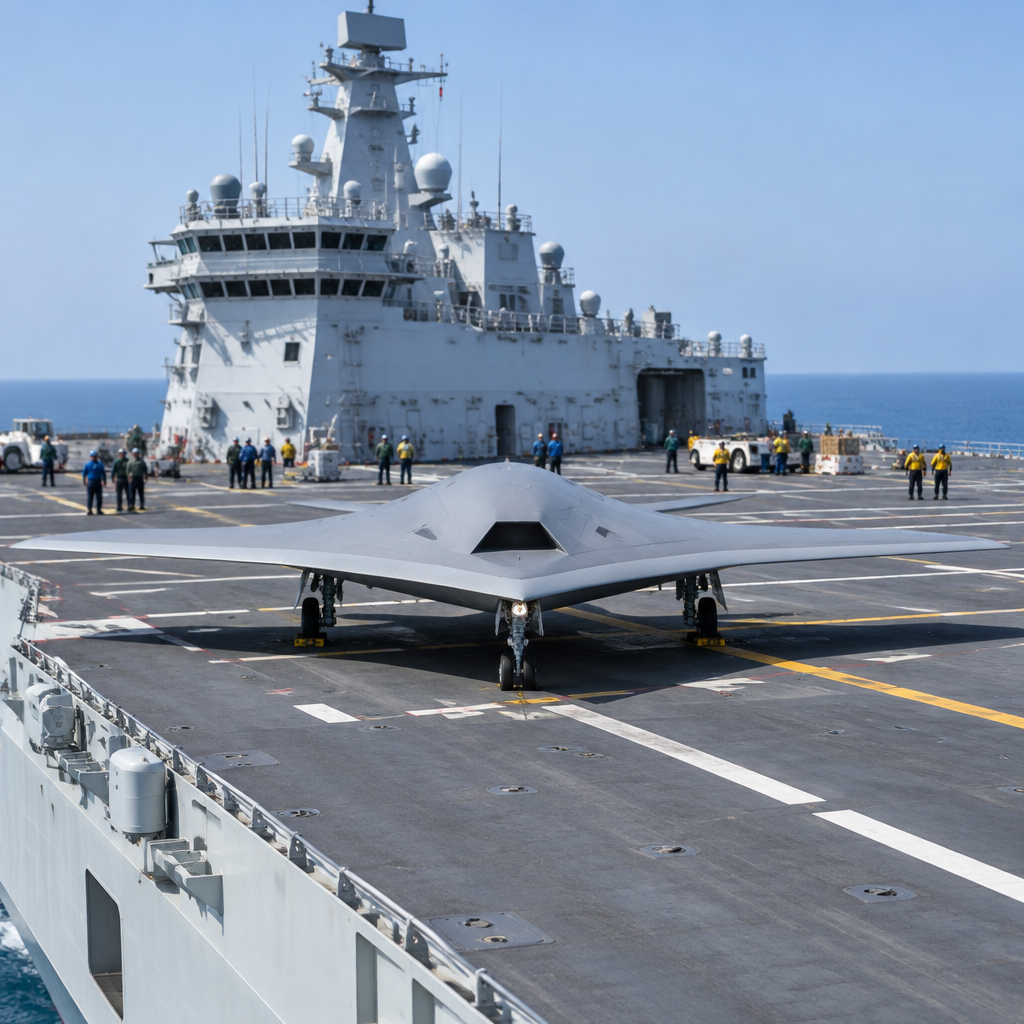
The claim marks the latest public assertion that a flying‑wing uncrewed combat air vehicle (UCAV) — the GJ-21 — has been launched from and recovered aboard the Type 076 amphibious assault ship Sichuan. At the time of the announcement, neither the People’s Liberation Army (PLA) nor Chinese state media provided photos, video, dates, locations, or counts of launches and recoveries. Independent visual confirmation of the launch-and-recovery milestone has not yet appeared.
China Military Bugle announcement and the available graphics
The PLA mouthpiece posted a graphic alongside its statement showing the GJ-21 and the Type 076 with depicted arresting cables. The account framed the milestone as "another significant breakthrough" and said the development indicated that the Chinese Navy now has the capability to operate fixed‑wing stealth drones from large maritime combat platforms. Beyond that statement and the accompanying graphic, no operational details were supplied.
Type 076 Sichuan: catapult trials, deck fittings, and satellite imagery
The Sichuan is fitted with an electromagnetic catapult and has been the subject of stepped‑up preparations consistent with carrier‑style flight operations. Publicly available images and video from October 2025 show a red, weighted test cart on the ship’s flight deck — a conventional method for catapult testing. More recent satellite imagery published by commercial providers shows the Sichuan at its usual Hudong‑Zhonghua berth in Shanghai on October 13 and absent four days later; open‑source review indicates the ship did not appear to return until October 26. A Vantor image from October 30 shows the Sichuan alongside the pier and depicts now‑visible fittings for three arresting cables on the deck.
Mockups or actual GJ‑21 airframes have been present on the pier and, in February 2026, were photographed on the ship’s flight deck and being moved on a port‑side elevator to the hangar — evidence of deck‑handling trials. Those deck markings, cart tests, elevator movements, and the newly visible arresting gear are the concrete, observable steps that preceded the PLA’s announcement.

This site is the portfolio.
OSINTSights runs on Cloudflare Workers, D1, R2, and Vectorize, with an AI pipeline on Hetzner ARM. Nubivance designed, built, and operates it. We do the same for clients.
See what we buildGJ‑21 and the GJ‑11 family: design, display, and earlier testing
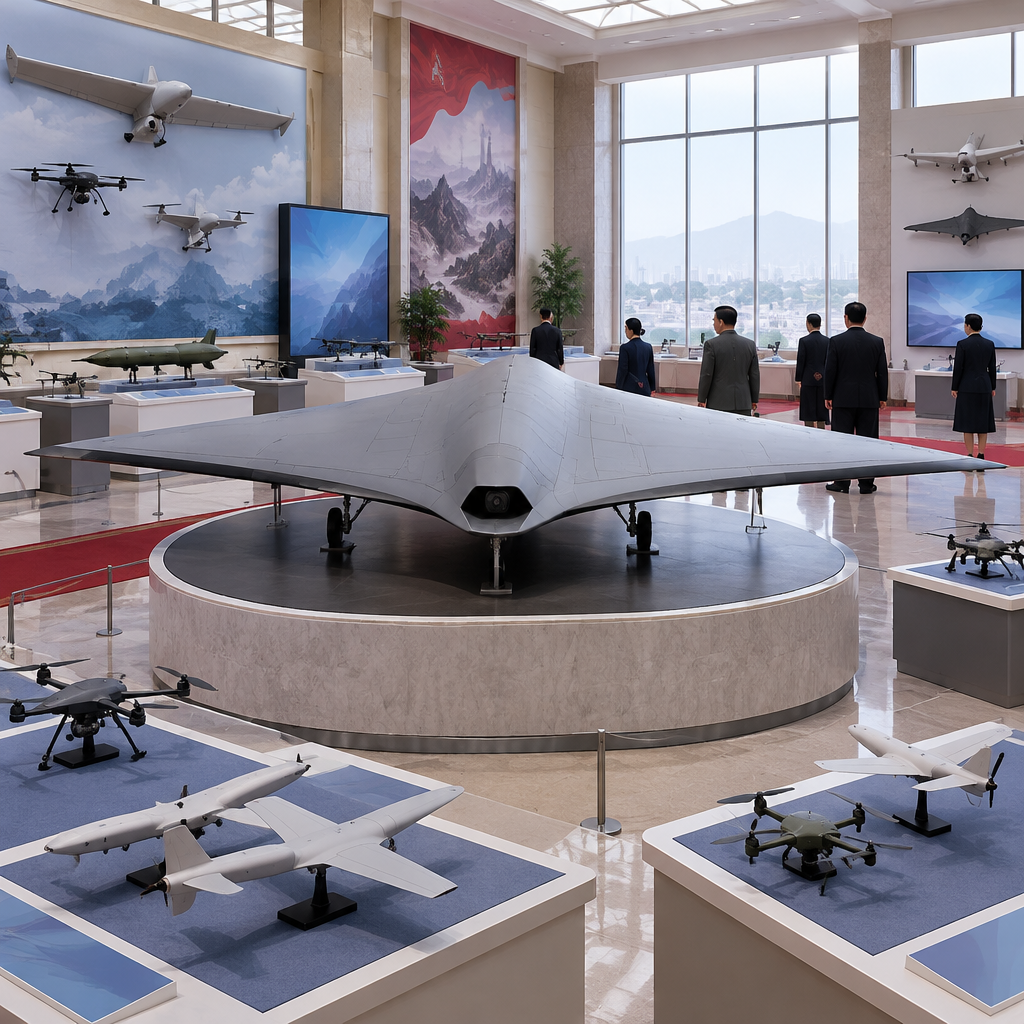
The GJ‑21 is described as a stealthy flying‑wing UCAV related to the land‑based GJ‑11 "Mysterious Dragon." One visible difference noted in open sources is a catapult bar on the GJ‑21’s nose landing gear strut that distinguishes it from the GJ‑11. Two GJ‑21 aircraft were shown at a victory parade in September 2025 and were reported by aviation experts to have entered People’s Liberation Army Navy (PLAN) service in mid‑2025. By late 2025, several GJ‑21 airframes were reported to be undergoing simulated electromagnetic aircraft launch system (EMALS) launches and arrested landings at the PLAN’s land‑based facility at Huangdicun.
The broader GJ‑11 program has also progressed: the PLA confirmed last year that the GJ‑11 had entered at least limited operational service, and satellite and video evidence documented a steady ramp‑up in testing, including near‑daily flights at Malan Air Base and sightings at an operational base in the Tibet Autonomous Region.
What this means for the PLA Navy, the U.S. military, and maritime observers
- The PLA Navy: The China Military Bugle framed the event as a capability milestone — operating fixed‑wing stealth drones from a large amphibious assault ship. The Sichuan’s combination of electromagnetic catapult, arresting gear fittings, and space for mixed air wings suggests the Type 076 is being prepared to carry both uncrewed platforms like the GJ‑21 and crewed helicopters, expanding the ship’s operational options for ISR, maritime strike, and deck‑based aviation support.
- The U.S. military: The source contrasts these developments with the U.S. military’s public absence from the flying‑wing UCAV space, noting that several earlier U.S. efforts were abandoned and that the U.S. Navy pivoted from a carrier‑based UCAV to an uncrewed tanker in the late 2010s. The reporting also notes there are "some signs" the service may be reconsidering capabilities it previously set aside.
- Maritime observers and regional security analysts: Analysts cited in the reporting have long assessed that a Type 076 fleet able to operate large numbers of UCAVs could provide additional naval aviation capacity for amphibious operations, regional air power projection, and a range of missions from ISR to strike — including missions closer to the mainland, operations relating to Taiwan and the South China Sea, and peacetime humanitarian assistance and disaster relief.
The PLA’s announcement, combined with months of observable preparatory activity — red cart catapult trials, mockups and handling drills, pier‑side airframes, and new arresting gear fittings — make the claim plausible on its face. The milestone still awaits independent visual confirmation and technical details about how many sorties were flown, where the trials took place, and how reliably the ship and drone performed launch and recovery cycles. The next concrete indicators likely to settle that question would be official imagery or additional data corroborated by independent satellite or open‑source evidence.