"Enhancing practical military cooperation" and "promoting regional peace and stability," Beijing said — a pair of phrases that frame China’s description of the new facility at Ban Keun Airport near Vientiane.
Ban Keun: Beijing’s first openly acknowledged overseas installation
In a September announcement by the Ministry of National Defense in Beijing, China and Laos described a joint support and training facility at Ban Keun Airport. The declaration is notable because, as the source reports, it is the first overseas military facility that China has openly acknowledged. China has presented the site as a training hub for Lao air force pilots.
What satellite imagery shows
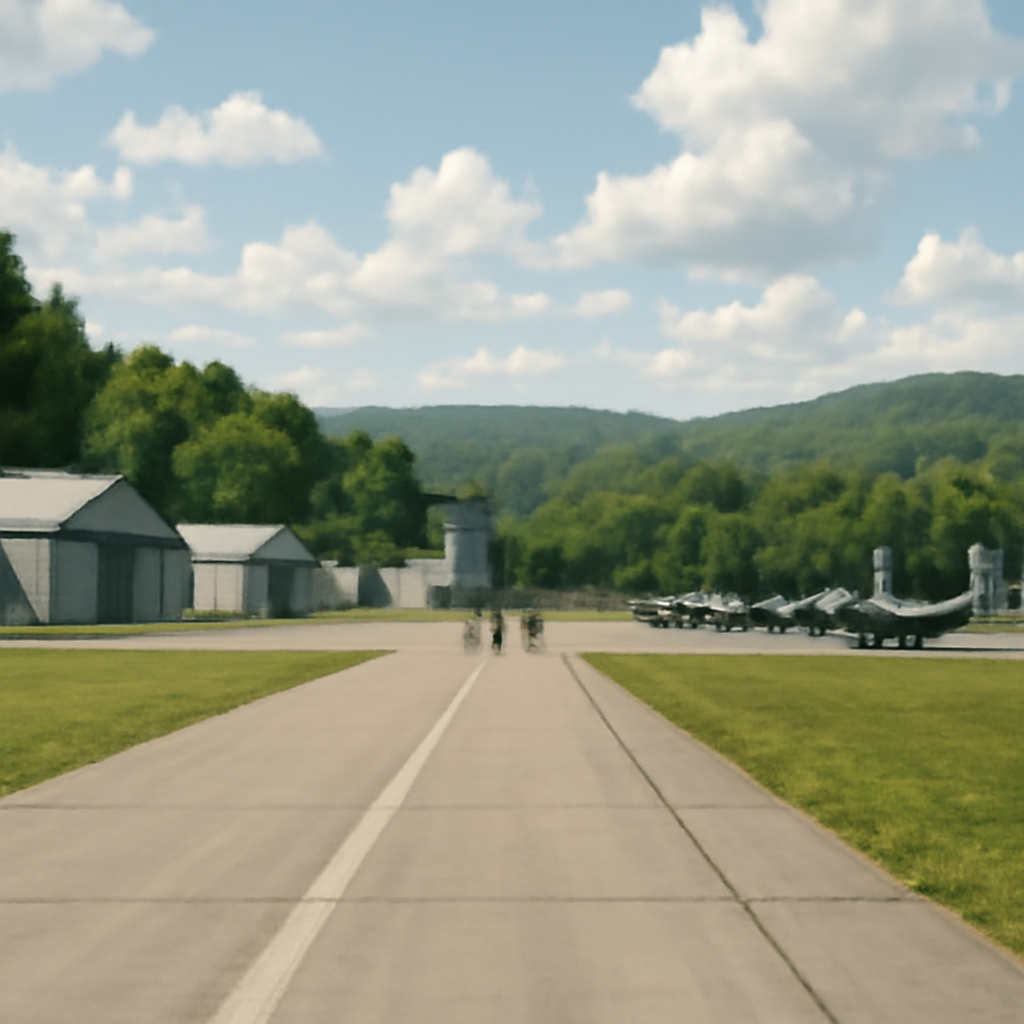
Satellite imagery procured and analysed by CNN shows a 2,000‑metre runway, a taxiway and a parking apron sized for 22 aircraft. CNN also reported rapid construction at the site. Other media reports cite satellite photographs showing eight aircraft — likely Chinese‑Pakistani Hongdu JL‑8 training and light attack jets (K‑8s) — and more than two dozen support vehicles. The reporting notes that Laos is known to own this type of aircraft, but reportedly has fewer than the eight observed; the extra jets could be additional Lao purchases or Chinese assets stationed at Ban Keun.

Audit-ready is a season. It shouldn't be.
Evidence in spreadsheets, controls drifting between audits, frameworks multiplying on flat headcount. Nubivance runs continuous compliance on Rapid7 Cyber GRC - SOC 2, HIPAA, ISO 27001, PCI, CMMC.
End the scrambleBan Keun in the pattern of China’s external facilities: Djibouti and Ream
Ban Keun follows earlier Chinese overseas access arrangements. China established a facility in Djibouti in 2017, which Beijing has described as a logistical site; that base sits astride the waters overlooking the Bab al‑Mandab strait leading to the Red Sea. A Washington Post story in 2022 reported upgrades to Cambodia’s Ream Naval Base and that the Chinese military had been given "exclusive use" of parts of it. China and Cambodia initially denied that report, but, the source says, they formally inaugurated the Ream facility last year. Warships from both countries subsequently visited Ream and conducted joint military drills. With Ream and Ban Keun, China now has both naval and aviation logistics hubs in the region.
Assured access by another name: training, disaster relief, and strategic effect
The Laos facility illustrates a basing model Beijing appears to favour: secure access packaged as joint training, disaster relief or humanitarian support. That approach, the source notes, delivers a lasting presence while avoiding the diplomatic and political costs that a traditional Western‑style base can trigger. As ASPI senior analyst Rachel Vandenbrink told Reuters, China’s move at Ban Keun was "more about a target of opportunity than filling an obvious operational need." The source also highlights a tension: China has been a vocal critic of global US military presence, even as it expands its own overseas access in new forms.
What this means for Vietnam, Laos, and Southeast Asian hedging
- For Vietnam: Ban Keun sits to the west of Vietnam and — the source argues — provides China with an additional pressure point on a country that combines close economic ties with China and significant territorial disputes.
- For Laos: Beijing portrays the installation as a training hub for Lao pilots. Yet the observed mix of aircraft and support vehicles suggests that the facility could host non‑Lao assets, or reflect new Lao acquisitions; either scenario increases China's practical footprint in Lao airspace.
- For Southeast Asian hedging strategies: the source warns that a ratcheting up of military pressure strains the region’s traditional hedging — integrating economically with China while balancing with American military power. Regional governments, the source says, will need to assess how long such hedging remains sustainable as Chinese military presence grows.
The arrival of Ban Keun shifts the arithmetic in two clear ways identified in the reporting: it adds an air‑power dimension to China’s foreign basing activity — the two earlier facilities noted were naval — and it establishes an easy, low‑cost route for Beijing to create the strategic effects of a base without declaring one. The source also notes an explicit operational implication to watch: China "can be expected to later extend the runway to support Chinese surveillance aircraft or bombers," and Laos’s long, narrow geography offers a potentially useful site for monitoring activity across Southeast Asia.
If the source’s account is a guide, the immediate indicators to monitor are concrete: any runway extension at Ban Keun, the pattern of aircraft rotations and support‑vehicle deployments, and continued visits and drills at Ream. Those developments will show whether Beijing’s training‑and‑relief rationale translates into enduring operational reach in the heart of mainland Southeast Asia.