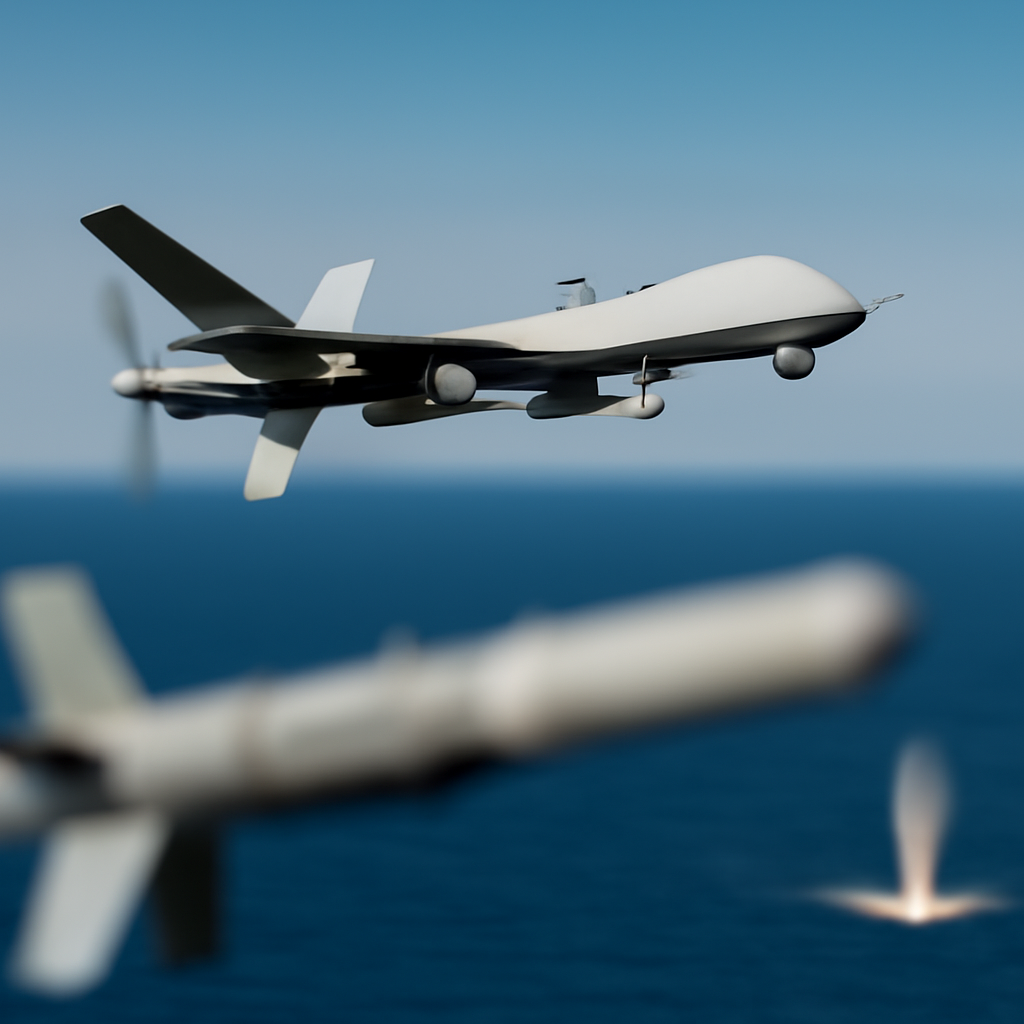
Established in January 2026, Indonesia’s air force space unit exists on paper and in organisation charts — but it has no statute giving it a clear mandate and no dedicated funding to build the infrastructure it needs.
January 2026: a unit without a legal mission
The air force space unit was set up in January 2026 to support space-based surveillance and to back terrestrial military operations with intelligence, surveillance and communications. Yet parliament has not legislated a mandate for space operations, leaving the unit unable to act with clear legal authority. The president’s policy recognises outer space “as a source of military and non-military threats,” but the Defence White Book — the Ministry of Defence’s 2015 strategic guidelines — still classifies space technology as a non-military defence element and places it with agencies outside the defence sector. The ministry has issued no new edition since 2015, producing a doctrinal gap between presidential policy and defence doctrine.
Legal history: laws that shifted responsibility
That gap reflects a sequence of legal changes. The 1982 Basic Provisions of State Defence assigned the Air Force to defend the national dirgantara, which covers both airspace and outer space. The 2002 State Defence Law repealed the 1982 law and removed that explicit assignment. The 2004 Indonesian Armed Forces Law — and its amended 2025 version — set out duties for each military branch but did not restore the air force’s explicit responsibility for outer space. In short: organisation exists, statutory footing does not.

Audit-ready is a season. It shouldn't be.
Evidence in spreadsheets, controls drifting between audits, frameworks multiplying on flat headcount. Nubivance runs continuous compliance on Rapid7 Cyber GRC - SOC 2, HIPAA, ISO 27001, PCI, CMMC.
End the scrambleMoney, organisation and operational limits
Operationally, the space unit sits under the National Air Operations Command and will receive its initial budget allocation through that command. The source is clear: that allocation will be insufficient to build the costly infrastructure and human capital required for sustained space operations. Space-based defence capabilities demand satellites, ground segments and years of specialist training in imagery analysis, orbital operations, space domain awareness and ground-segment engineering — skills that cannot be created by fiat or covered by a token line-item inside an air operations budget.
Why a satellite matters for tracking 'dark' vessels
One concrete capability the unit could provide — and which the source recommends as an early priority — is tracking vessels that “switch off their transmitters and go dark.” Indonesia’s archipelagic waters are hard to patrol by surface vessels and are used for transit and resupply on routes towards Australia; people smugglers use them, and on several occasions Chinese survey vessels entered Indonesian archipelagic waters and went dark, a move that the United Nations Convention on the Law of the Sea treats as breaching coastal states’ consent requirements for maritime scientific research.
But there is an operational point of principle: foreign or commercial data arrive according to the provider’s schedule and priorities; the space unit cannot task a sensor it does not own. Tracking dark vessels requires repeated, timely coverage of specific waters — a capability best secured by a dedicated satellite the unit controls. Equally important, a satellite without analysts merely produces data; the unit needs trained personnel to turn imagery and sensor products into actionable intelligence.
Models and partners: Australia and Canada
The source points to existing cooperative models. Canada and the Philippines signed an arrangement in October 2023 giving the Philippine National Coast Watch Center free access to Canada’s Dark Vessel Detection system — a working example of how an external partner’s capability can be shared to monitor dark activity. The Australia-Indonesia Treaty on Common Security (the Jakarta Treaty) already commits both parties to cooperative security activities in areas they identify. The suggested model: Indonesia task its own satellite and analyse the data through the space unit; Australia contribute radio-frequency monitoring data (as it does through the Quad’s Indo-Pacific Partnership for Maritime Domain Awareness) and provide analyst training. Canberra has offered to embed a senior Indonesian officer in the Australian Defence Force, which the source identifies as a possible channel for training and knowledge transfer.
Three policy steps the source recommends
- Parliament should place space operations explicitly into defence legislation so the unit obtains a clear legal mandate.
- The government should fund a dedicated surveillance satellite and a training pipeline to build the unit’s analyst and orbital-operations capacity.
- Canberra should offer training and cooperation in space security, including radio-frequency monitoring and embedded-officer programs, to help jump-start Indonesia’s human capacity.
Without those three elements — law, money and trained people — the space unit will remain organisational potential rather than operational capability. If Jakarta moves first on statute and funding, and if Canberra and other partners provide training and complementary data, the unit could become a practical tool for policing Indonesia’s archipelagic waters and for giving both countries better visibility of vessels that go dark. If those steps are delayed, the unit will keep existing in structure but not in effect — and the waters it is meant to help secure will remain harder to monitor.