
Infrastructure

GhostRedirector: Exclusive Dangerous IIS Backdoor Revealed
Researchers uncovered GhostRedirector, a previously undocumented campaign that’s hit at least 65 Windows web servers in Brazil, Thailand and Vietnam by installing a C++ backdoor called Rungan plus a native IIS module to stealthily intercept or redirect traffic. If you run IIS, now’s the time to audit loaded modules, hunt for Rungan indicators, and lock down your servers before attackers turn your site into a covert gateway.

Cisco vulnerability: Stunning, Risky Threat to Grid
A $10 million reward for tips about alleged Russian operatives sheds light on a startling reality: a seven‑year‑old Cisco flaw — still unpatched in many legacy systems — is giving attackers a persistent backdoor into critical U.S. infrastructure. It’s a wake‑up call for operators and policymakers to finally prioritize upgrades, patching, and smarter defenses before the next outage or worse.

GPS jamming: Stunningly Dangerous Threat to Europe
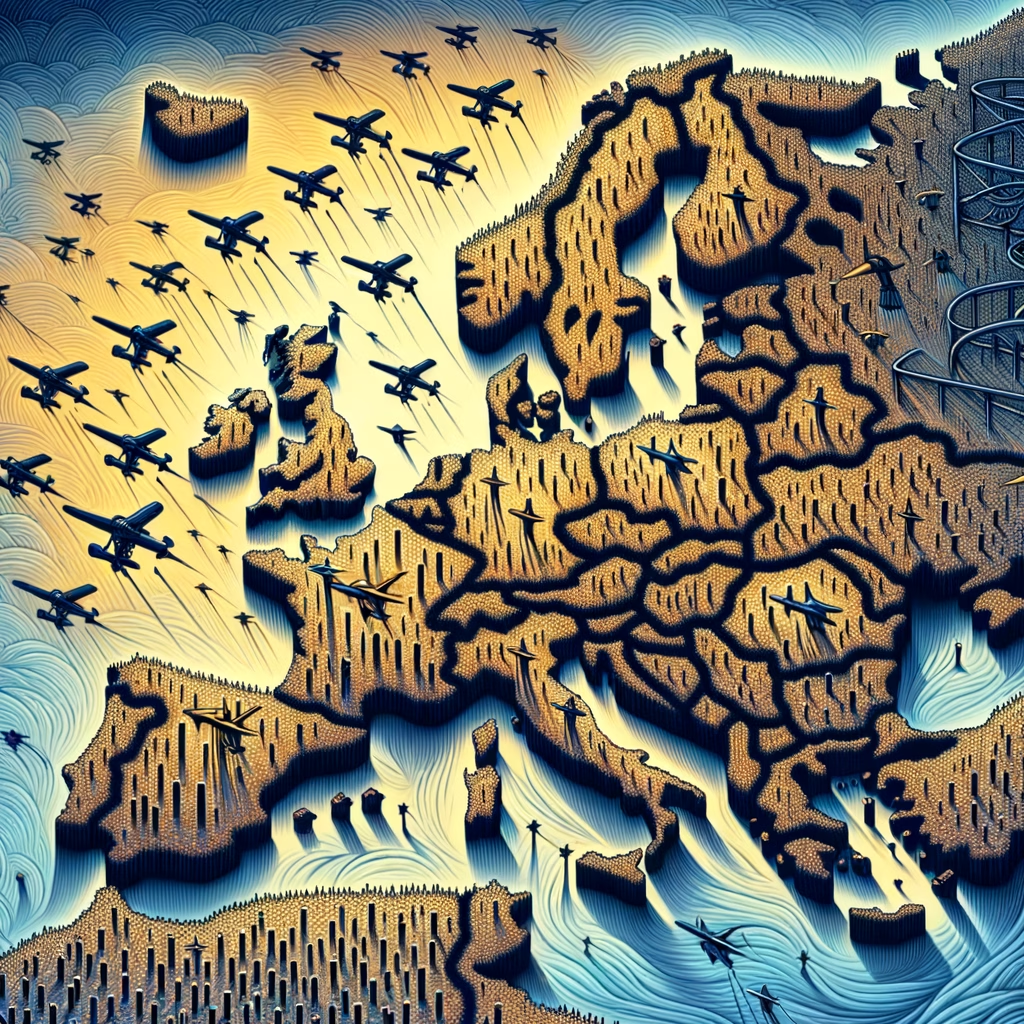
When GPS signals were deliberately jammed over southeastern Europe, even the plane carrying EU Commission President von der Leyen had to fly without satellite guidance — a stark reminder that our reliance on GNSS leaves aviation, infrastructure and economies vulnerable to cheap, deniable interference. Europe’s push to harden Galileo, boost anti‑jamming tools and speed up detection shows this isn’t hypothetical: GPS jamming is a present, systemic threat that needs urgent action.

DDoS attacks: Must-Have Defenses for Best Protection
When a small-town hospital’s patient portal or a county election website goes dark from a DDoS attack, the fallout can be disastrous — yet these digital sieges are often overlooked despite becoming cheaper, more frequent, and more damaging. It’s time to stop treating DDoS as a nuisance and start taking it seriously to protect healthcare, elections, and everyday businesses.

government domains: Shocking Security Risks
New ISOC research shows traffic to government websites often crosses borders, rides a handful of links, and sometimes travels unencrypted — putting privacy, sovereignty, and service reliability at risk. Governments should enforce HTTPS, diversify routing, and be more transparent so citizens’ data and access aren’t left vulnerable to interception or outages.

counter-unmanned aircraft capabilities: Must-Have, Best Tool
Could a $300 drone shut down a city? DHS is asking Congress for $100 million to field sensors, jammers and other tools to detect, track and stop hostile drones — a necessary but imperfect step to protect events, infrastructure and borders while balancing privacy and legal limits.

cyber incident: Maryland’s Stunning, Risky Wake-Up
Maryland has confirmed a cyber incident affecting parts of its transportation system, but officials say all scheduled trips this week will be honored while investigators work to determine the scope. Commuters should stay alert for updates as authorities probe the issue and protect essential services.

Smart-city infrastructure: Must-Have Best Strategies
Cities can build smart, connected services without breaking the bank by reusing assets, phasing deployments, and partnering creatively—delivering safer streets, smoother transit, and fairer access while protecting privacy and security.

OT security taxonomy: Must-Have, Best Defense Framework
Imagine industrial control systems finally speaking the same security language — the US and five partners unveiled a unified OT taxonomy and common asset inventory to cut through confusion, speed incident response, and make cross-border coordination far easier. If widely adopted, this shared framework could turn fragmented asset lists into actionable data, helping operators and defenders act faster when it matters most.

speed enforcement: Stunning Security Risk Exposed
When a cyberattack crippled the Dutch Public Prosecution Service this summer, it didn’t just freeze servers — it shut down speed cameras nationwide, leaving drivers temporarily off the hook and exposing how fragile modern traffic enforcement really is. The incident lays bare a stark trade-off between preserving legal integrity and keeping roads safe, and shows why justice systems need stronger cyber defenses.

open source alternatives: Must-Have Best Path for UK
Should the UK lock in a £9bn deal with Microsoft or reinvest that money into open-source options that could boost resilience, competition and the domestic tech sector — even if transitions carry costs and risks? A pragmatic path of pilots, open standards and skills investment could protect services, cut long-term costs and reclaim digital sovereignty.

Industrial control systems: Must-Have Best Practices
CISA is urging operators of power grids, water plants, and factories to stop treating industrial control systems like IT checkboxes and finally harden OT with layered defenses and cross‑functional programs. Patchwork fixes and convenient remote connections are leaving critical infrastructure exposed — it’s time to lock the front door before someone walks in.

Russian-linked cyber actors: Stunning Critical Threat
Allegations tying Moscow-linked hackers to a months-long breach of U.S. federal court files and a hacking attempt that manipulated a Norwegian dam’s controls have exposed just how fragile our courts and critical infrastructure can be. The incidents raise urgent questions about who’s really protecting the systems we rely on—and what must be fixed now.

TETRA Radio Encryption Flaws: Shocking Risk to Police
Researchers have uncovered critical flaws in TETRA’s end-to-end encryption—dubbed 2TETRA:2BURST—that could let attackers eavesdrop on or manipulate emergency radio traffic, putting officers and the public at risk. It’s a wake-up call for law enforcement and policymakers to urgently patch systems and rethink how we secure critical communications.

Water security hackers: Must-Have Best Defense
As cyberattacks on water systems rise, ethical hackers are stepping in with successful pilot programs across four states to help utilities find and fix vulnerabilities—offering a hopeful, if carefully overseen, path to safer community water supplies.

DEF CON hackers: Stunning, Risky Water Defenders
When DEF CON hackers swap notoriety for expertise, five pilot projects across four states are already shoring up America’s vulnerable water systems—proving that the very people we fear might be the ones who can keep our taps safe. It’s a hopeful, urgent reminder that with the right collaboration and investment, unconventional allies could be the key to protecting public safety.

US Federal Judiciary Boosts Security Amid Rising Cyber Threats
As digital threats escalate, the U.S. Federal Judiciary is stepping up to safeguard justice and public trust, unveiling new cybersecurity measures after significant breaches exposed vulnerabilities. With cyberattacks surging nearly 300%, the call for enhanced protection of sensitive court information has never been more urgent!

CISA Alerts on Critical ICS Vulnerabilities Across Sectors
As twilight descends, the security of our vital infrastructures is more pressing than ever, especially with CISAs recent alerts highlighting critical vulnerabilities in Industrial Control Systems that could jeopardize essential services. Its time for all of us—policymakers, technologists, and operators—to step up our game and safeguard our nations backbone!

Salt Typhoon Breaches National Guard Systems: What You Need to Know
The recent breach of National Guard systems by the hacker group Salt Typhoon raises alarming questions about our cybersecurity readiness—how safe are we really in protecting sensitive military information? With threats evolving and intertwining with our daily lives, its time to take this digital arms race seriously.

Salt Typhoon Breach: How it Compromised National Guard Systems
The recent Salt Typhoon breach of the National Guard Systems serves as a stark reminder that our digital defenses are just as vital as the ones on the battlefield—highlighting urgent questions about our national security and the resilience of military operations. As experts call for enhanced cybersecurity measures, its clear that safeguarding our nation in the digital age is more crucial than ever!

The Critical Role of Maritime Security in Protecting Ports and Vessels
As the sun sets over busy harbors, the crucial question arises: how safe are our gateways to global trade? With 90% of the worlds goods traveling by sea, the importance of robust maritime security is undeniable—especially as cyber threats and piracy loom ever closer.

Hacktivism on the Rise: Threats to Critical Infrastructure
As the lights flicker off in hospitals and data centers scramble, we find ourselves grappling with a chilling new reality: hacktivism is on the rise, targeting the very infrastructure that keeps our society running. With attacks skyrocketing by over 50% in just a year, the line between civil disobedience and life-threatening threats has never been blurrier.

The Rise of Train Hacking: Threats and Solutions Explained
As technology races forward, our once invulnerable rail systems face unexpected vulnerabilities that could threaten both passenger safety and freight reliability. Join us as we delve into the urgent concerns raised by cybersecurity experts about the risks of train hacking and what must be done to safeguard our critical infrastructure.

Strengthening Digital Citizen Services with Embedded Security
What happens when a citys connection to its residents is suddenly cut off? Hoboken, NJ, learned the hard way last Thanksgiving when a ransomware attack halted essential services, reminding us all that as we embrace digital convenience, security must remain at the forefront. Join us as we explore how embedding security into our digital frameworks is crucial for a resilient future!