Cybersecurity
General cybersecurity news and analysis

USB-borne campaign: Critical, Risky Cryptominer Threat
A new global USB-borne campaign turns everyday thumb drives into stealthy cryptomining engines by chaining DLL hijacking with PowerShell — quietly draining CPU/GPU power and sidestepping network defenses. Treat unknown USBs as hostile: disable autorun, use scanned maintenance drives, and harden endpoints to block this low‑tech delivery of high‑tech abuse.

CRM platform Risky Breach: Stunning Contact Exposure
Workday says its core systems were untouched, but a third-party CRM was breached — exposing business contacts that could fuel phishing, BEC and credential-stuffing attacks. Treat contact data as compromised: tighten MFA, audit integrations, and warn teams to watch for targeted social engineering.

optimizing cloud use: Must-Have Best Federal Resilience
Moving to the cloud was just the beginning — federal agencies are now optimizing configurations, identity controls, and automation to boost security, lower costs, and keep critical services running during outages or attacks. Treating resilience as an ongoing practice helps isolate failures faster, speed recovery, and better protect citizens.

NFC fraud: Must-Have Defenses Against Costly Attacks
Security rarely breaks in a single blast — it seeps away. This week’s roundup shows how NFC fraud, N‑able exploits, and malicious Docker images quietly erode trust and widen blast radii when small oversights go unpatched.

Taiwanese web hosting Exclusive: Critical Espionage Risk
Imagine an invisible enemy living inside the servers that power your websites and email — Cisco Talos found a Chinese‑linked APT using a Taiwanese web host to intercept traffic, harvest credentials and stage persistent espionage. This supply‑chain breach is a wake‑up call: treat hosts as critical infrastructure and demand stronger controls, logging and incident guarantees now.

mechanical vibration: Stunning Privacy Risk Revealed
Imagine the buzz in your pocket could betray your words—researchers have shown radar can pick up tiny phone vibrations and, while still imperfect and lab-bound, even reconstruct speech, forcing us to rethink privacy, device design, and the laws that protect our conversations.

sniff 5G traffic: Stunning Risky toolkit exposed
Researchers unveiled Sni5Gect, an open-source toolkit that exploits timing gaps in 5G handshakes to sniff uplink and downlink traffic and force connection downgrades — all without deploying fake masts — raising fresh privacy and security alarms; its release underscores the urgent need for faster patches, stronger handshake protections, and layered defenses like end-to-end encryption.

ChatGPT queries: Stunningly Risky Privacy Leak
Think your private chat with an AI stays private? Not always — companies log, analyze and sometimes share prompts to improve models or run services, which can let sensitive queries leak into public searches. Check your privacy settings, consider paid privacy options, and avoid sharing identifying details if you don’t want your questions to become public.

mass account breach: Stunning 20-Month Sentence, Risky
A recent 20-month prison sentence for Al-Tahery Al-Mashriky after a mass account breach forces a sharp rethink of where digital protest ends and criminal harm begins. The case highlights tough questions about cybersecurity, proportional justice, and the real-world fallout for ordinary users caught in online activism.

Workday CRM breach: Stunning Critical Risk Revealed
Workday says attackers accessed vendor-run CRM tools that support its customers, potentially exposing contact and support data — a stark reminder that even trusted platforms can be vulnerable through third-party integrations. If you use Workday, assume elevated risk, tighten vendor controls, and watch for suspicious communications while the investigation continues.

election workers Must-Have Shield Against Dire Threats
Election workers warn federal protections that once shielded them from harassment and disinformation are fraying just as threats escalate. With fewer resources and rising intimidation, understaffed counties are struggling to recruit staff and safeguard the vote.

Taiwanese web host Critical: Exclusive Must-Have Fixes
A suspected Chinese state-backed crew quietly breached a Taiwanese web host, stealing credentials and planting backdoors to maintain months-long access — a stark reminder that compromising one trusted provider can expose dozens of downstream victims. Strengthening access controls, adopting zero-trust segmentation, and rotating credentials aren’t optional — they’re the best way to stop a single breach from becoming a widespread supply-chain disaster.

Secure Firewall Management Center: Critical Must-Have Patch
Cisco just released emergency patches after a rare CVSS 10.0 remote code execution in Secure Firewall Management Center that lets unauthenticated attackers run shell commands — if you manage FMC, inventory, patch or isolate it now to avoid full-blown compromise. This flaw lets attackers alter firewall rules and pivot into networks, so prioritize updates and tight access controls immediately.

OT security taxonomy: Must-Have, Best Defense Framework
Imagine industrial control systems finally speaking the same security language — the US and five partners unveiled a unified OT taxonomy and common asset inventory to cut through confusion, speed incident response, and make cross-border coordination far easier. If widely adopted, this shared framework could turn fragmented asset lists into actionable data, helping operators and defenders act faster when it matters most.

speed enforcement: Stunning Security Risk Exposed
When a cyberattack crippled the Dutch Public Prosecution Service this summer, it didn’t just freeze servers — it shut down speed cameras nationwide, leaving drivers temporarily off the hook and exposing how fragile modern traffic enforcement really is. The incident lays bare a stark trade-off between preserving legal integrity and keeping roads safe, and shows why justice systems need stronger cyber defenses.

Cisco firewall management Critical Risk: Must-Harden
Cisco just released a patch for a critical unauthenticated RCE in its firewall management interface—if left unpatched, attackers could run shell commands as the service. Patch immediately, restrict access to management ports, and watch your logs for signs of compromise.

cyber incident: Urgent Recovery Guide for Best Resilience
Colt has taken key systems offline after a cyber incident, leaving customers without access to portals and Voice APIs while it investigates and works to restore services. The outage underscores how much businesses depend on third-party networks and why clear communication, contingency plans, and rapid remediation are crucial.

AI-generated code: Risky Threats & Must-Have Fixes
A new Checkmarx study reveals a surprising and worrying trend: AI-generated code now makes up over 60% of some codebases—and much of it contains known vulnerabilities—so the same tools that speed development can also widen your attack surface. Treat AI suggestions like draft work: add automated scans, clear guardrails, and reviewer sign-off to keep convenience from turning into a systemic security risk.

system prompts Dangerous: Must-Have Fixes for Data Risk
Researchers warn that a simple tweak to an AI assistant’s system prompt can turn a helpful chatbot into a persistent data-harvesting agent, letting minimally skilled attackers coax, cross-reference, and exfiltrate sensitive information at scale. The fix will take better engineering, clearer rules, and smarter oversight—before convenience becomes a privacy crisis.

open source alternatives: Must-Have Best Path for UK
Should the UK lock in a £9bn deal with Microsoft or reinvest that money into open-source options that could boost resilience, competition and the domestic tech sector — even if transitions carry costs and risks? A pragmatic path of pilots, open standards and skills investment could protect services, cut long-term costs and reclaim digital sovereignty.

government email credentials: Exclusive Risky Threat
Imagine someone buying access to a government inbox for less than the price of dinner — and using it to intercept investigations, impersonate officials, or fuel disinformation. With law-enforcement emails reportedly selling for about $40 on underground markets, stronger credential hygiene, MFA, and coordinated policy action aren’t optional — they’re urgent.

MadeYouReset: Must-Have Fix for Risky HTTP/2 Flaw
A newly disclosed “MadeYouReset” flaw lets attackers weaponize HTTP/2’s reset and control frames to exhaust server resources and cause DoS across many vendors—so operators should prioritize patches, rate limits and monitoring now to keep sites fast and reliable.

Industrial control systems: Must-Have Best Practices
CISA is urging operators of power grids, water plants, and factories to stop treating industrial control systems like IT checkboxes and finally harden OT with layered defenses and cross‑functional programs. Patchwork fixes and convenient remote connections are leaving critical infrastructure exposed — it’s time to lock the front door before someone walks in.
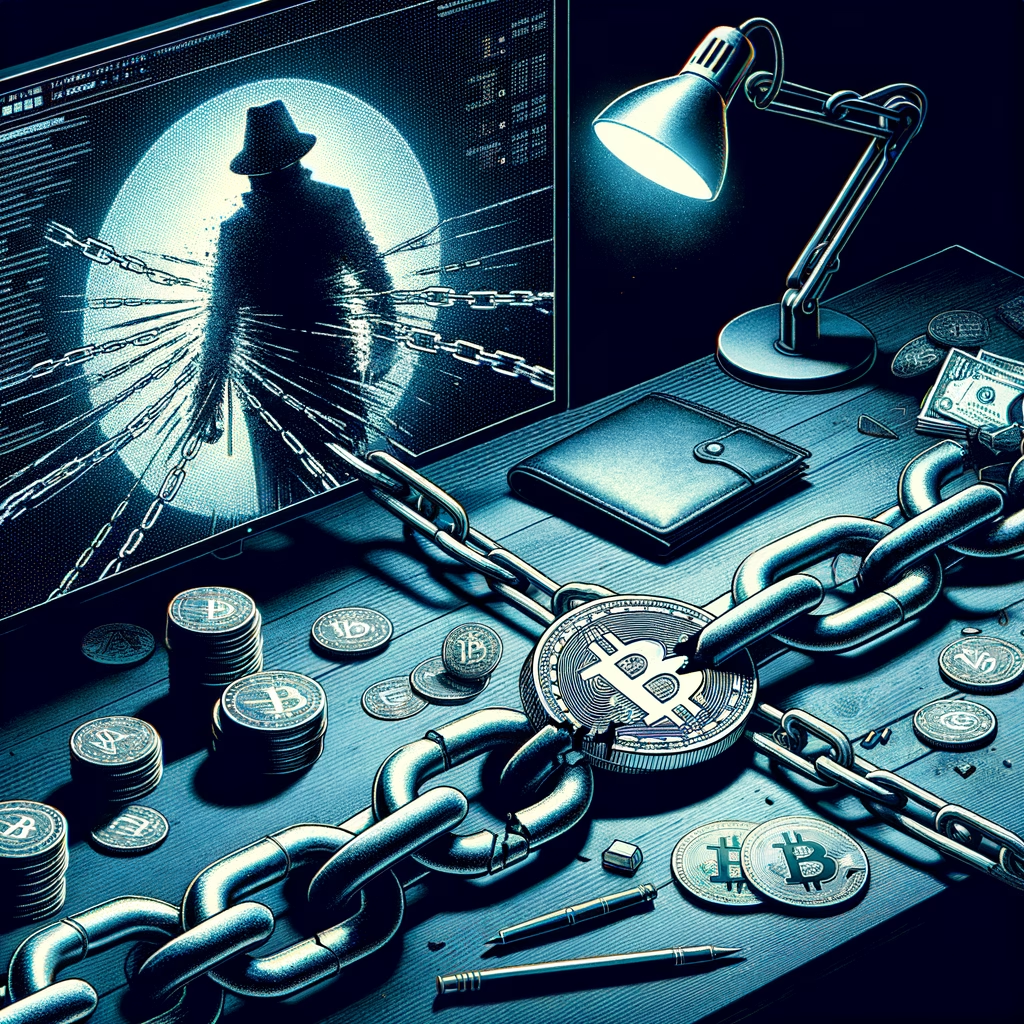
hot wallets Risky: Stunning $49M BtcTurk Heist Fallout
BtcTurk has paused deposits and withdrawals after alleging attackers drained about $49 million from its hot wallets, leaving customers locked out and scrambling for answers. As investigators trace the breach, the incident raises fresh questions about custody risks and whether convenience is worth the trade-off in crypto security.