[SPONSOREDNUBIVANCE]
Rapid7 deployed right the first time.
Full-platform Rapid7 rollouts - InsightVM, InsightIDR, event sources, agents, tuning - by a Registered Partner who has done it at state-agency scale, including OT/SCADA.
Talk deploymentGeneral cybersecurity news and analysis

Google just flipped the switch on Device Bound Session Credentials (DBSC) for Chrome users on Windows, giving millions a major security boost against session hijacking - but what does it mean for you? This game-changing update ties your credentials to your device, making it much harder for hackers to get hold of your online sessions.

As AI pilot projects evolve into autonomous systems operating across entire corporations, the stakes are rising - and so are the security risks. The era of experimentation is over; now it's time to face the bills and take control of enterprise AI risks, responsibilities, and responses.

Google Chrome just got a major security boost with the introduction of Device Bound Session Credentials (DBSC) protection, designed to block info-stealing malware from harvesting session cookies and putting your online credentials at risk. This move is a key step in the ongoing cat-and-mouse game between defenders and cyber threats.

A scathing government review has revealed that Microsoft's cloud security documentation is woefully inadequate, leaving evaluators with a disturbing lack of confidence in the system's overall security posture. This shocking finding raises serious concerns about the reliability of one of Microsoft's largest cloud offerings.

A scathing internal government review of Microsoft's cloud security offering revealed alarming gaps in protection, with evaluators unable to determine whether sensitive information was safe as it moved across servers. The review team was left frustrated by a lack of proper detailed security documentation.

Imagine being a leading open-source developer, only to be suddenly and silently locked out of your Microsoft developer account, with no warning, no emails, and no human contact - just automated blocks and a lengthy appeal wait. This is what recently happened to the creators of VeraCrypt and WireGuard, leaving their critical projects in limbo.

In a world where stolen credentials can turn authentication systems against us, traditional multifactor authentication can become just another vulnerability to exploit. Biometric authentication offers a powerful solution, fortifying defenses against stolen credential attacks by making it virtually impossible for hackers to replicate your unique identity.

Security researchers have discovered a vulnerability in Apple Intelligence, allowing hackers to manipulate the AI system into producing malicious output, including profanity, through a technique called prompt injection. This raises serious concerns about user safety and the effectiveness of current security safeguards.
Full-platform Rapid7 rollouts - InsightVM, InsightIDR, event sources, agents, tuning - by a Registered Partner who has done it at state-agency scale, including OT/SCADA.
Talk deploymentAs AI assistants and automation services increasingly seep into everyday use, employers are faced with a daunting question: are productivity gains worth the risk of losing control? Employees are quietly adopting unsanctioned AI tools, often blurring the lines between efficiency and security.

The machines are catching up - a staggering 76% surge in non-human identities, driven by AI agents acting on our behalf, is raising critical questions about governance and control. As these machine-driven identities multiply, gaps in oversight are emerging, threatening to upend traditional operational and policy domains.

A recent security mishap at a gym serves as a stark reminder of the importance of safeguarding sensitive information, as a technician's careless mistake - stapling configuration details to a cupboard - left fitness equipment vulnerable to exploitation by mischief makers. This embarrassing blunder highlights the need for vigilance in protecting security credentials.

As threats from small aerial systems escalate, the Pentagon is rapidly ramping up its counter-unmanned aircraft systems (C-UAS) efforts to stay ahead of the curve. With hypersonic flight and AI-powered shipbuilding also on the agenda, the question is: how do you prioritize across these three rapidly converging and game-changing fields?
Anthropic's latest AI model, Claude Mythos Preview, has made a groundbreaking discovery, identifying vulnerabilities in every major operating system and web browser, sparking attention from intelligence agencies and a crucial debate on managing powerful tools. This revelation raises important questions about the dual role of AI in exposing and potentially enabling exploitation of critical software.

Imagine a service designed to help users having unrestricted access to sensitive data - that's what Unit 42 discovered in Amazon Bedrock's AgentCore, where a flaw allowed for privilege escalation and data exfiltration due to overly broad permissions. This "Agent God Mode" vulnerability highlights the risks of systemic misconfiguration.

A critical vulnerability in the popular Ninja Forms plugin has been discovered, allowing hackers to upload and execute malicious code on WordPress sites without needing login credentials. If you're using Ninja Forms, update to version 3.3.27 immediately to protect your site from remote code execution attacks.

As artificial intelligence revolutionizes software security, the operational technology cybersecurity sector is sounding the alarm: will experts who safeguard factories, grids, and industrial sites be left behind? Pure-play OT security firms are pushing for a seat at the table, fearing they may be sidelined by the latest AI-driven initiatives.
No IT department, no security budget, real exposure. Nubivance builds right-sized security foundations for small companies. Send them this.
Send it along
Imagine a super-smart AI tool that can uncover thousands of hidden software flaws that nobody knew existed - and what happens when that powerful technology falls into the wrong hands? A new AI model from Anthropic has raised the stakes, leaving cybersecurity experts worried about a surge in zero-day vulnerabilities.

A critical security flaw in Apache ActiveMQ Classic, hidden for over 13 years, allows remote code execution, putting vulnerable systems at risk of arbitrary command execution. This long-undetected vulnerability highlights the importance of staying vigilant and proactive in identifying and addressing potential security threats.

As cyber threats escalate, state, local, tribal, and territorial governments and education institutions face a pressing challenge: defending against increasingly sophisticated attacks with limited personnel and budgets. Managed Detection Response (MDR) offers a vital lifeline, bolstering cyber defenses without adding headcount or complexity.

You don't need to break the bank on cutting-edge AI hardware to crack weak passwords - a recent study found that a $30,000 GPU doesn't outperform readily available consumer cards, proving that attackers can succeed with everyday tech.
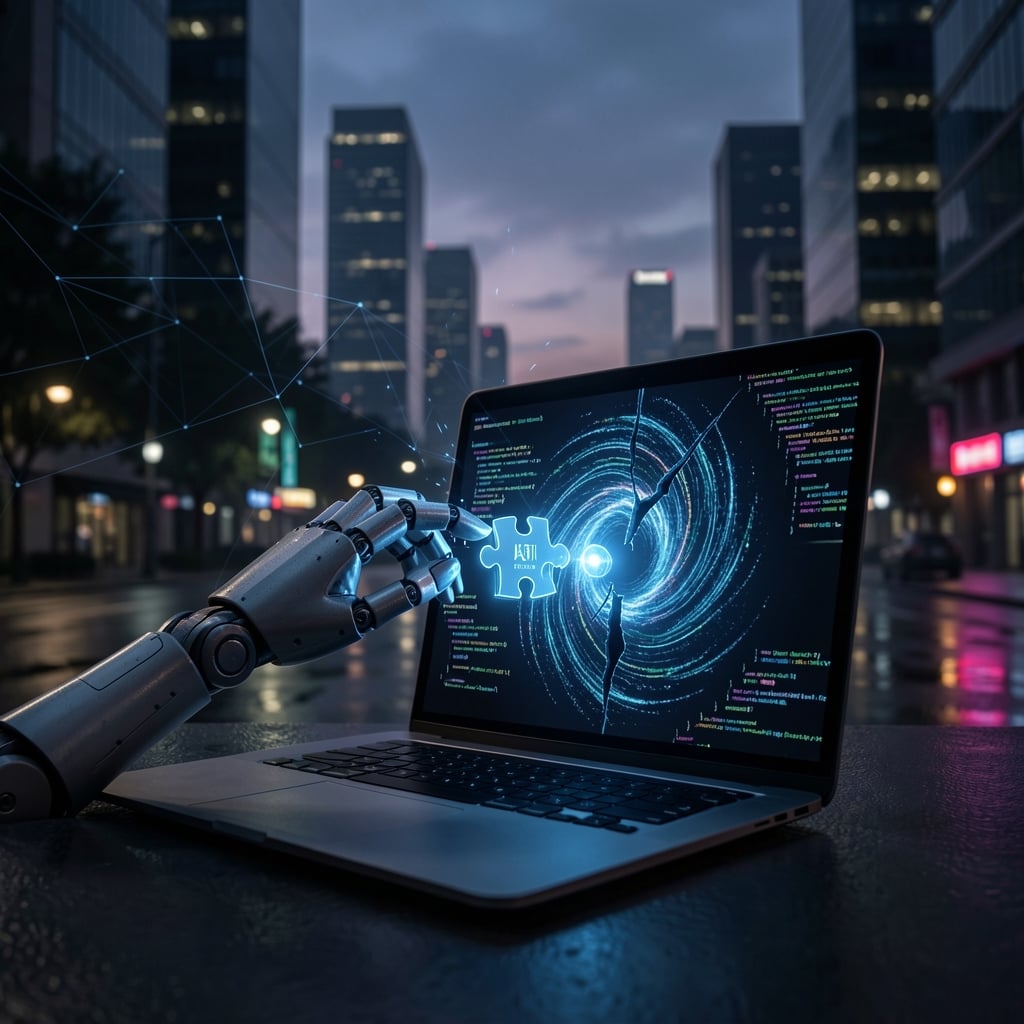
Imagine an AI that can proactively hunt down and fix hidden software vulnerabilities in critical systems before hackers can exploit them - Anthropic's new Project Glasswing is making this a reality with its cutting-edge AI model, Claude Mythos Preview. This groundbreaking initiative has the potential to revolutionize cybersecurity, but also raises intriguing questions about its capabilities and implications.

As organizations scale, identities are scattering across apps, teams, and systems, creating a blind spot in centralized view and giving rise to what The Hacker News calls Identity Dark Matter. This fragmented state of modern enterprise identity is pushing IAM to the breaking point, exposing growing security risks that demand attention.

Meet the AI that just uncovered a 13-year-old secret: Anthropic's Claude helped researchers discover a long-hidden vulnerability in Apache ActiveMQ Classic, a flaw that had been quietly lurking for over a decade. This groundbreaking find is a testament to the power of AI-assisted research in uncovering even the most elusive bugs.

Microsoft has swiftly deployed a server-side fix to resolve a frustrating issue that left some Windows 11 23H2 users unable to access the Start Menu search feature. This quick action means you should now be able to search with ease again.