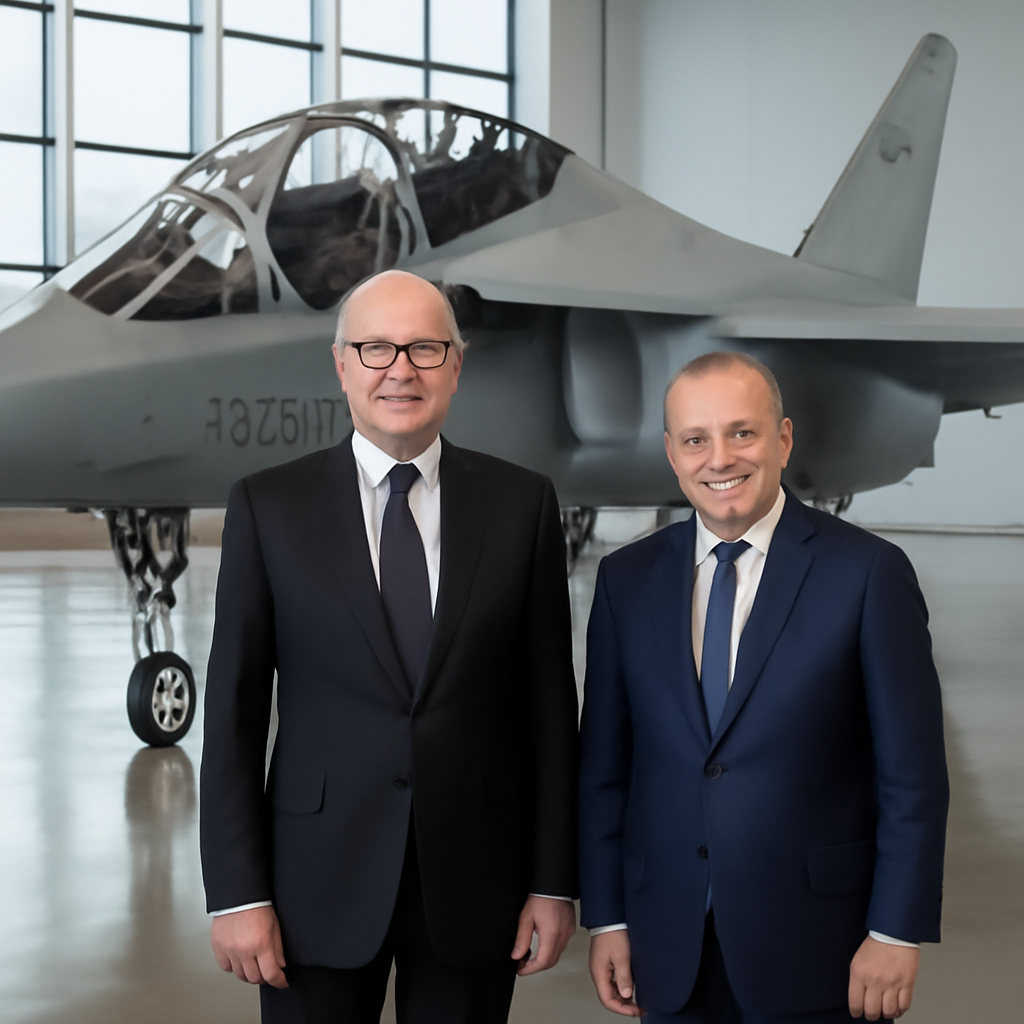
“Canada and Italy are becoming increasingly close in defence and security. To that end, the leaders were pleased to launch negotiations for Canada’s purchase of M-346 advanced jet trainer aircraft designed and produced by Leonardo, one of Italy’s largest aerospace companies,” the Prime Minister’s office said in a readout of a meeting between Prime Minister Mark Carney and Prime Minister of Italy Giorgia Meloni.
Prime Minister Mark Carney’s statement launches formal negotiations
The Canadian government has begun negotiations to acquire the Leonardo-made M-346 advanced jet trainer, the Prime Minister’s office announced in a readout of the bilateral meeting. The statement framed the move as part of broader defence and security cooperation with Italy and tied it explicitly to Ottawa’s stated procurement posture: the deal “fits into the ‘Build-Partner-Buy approach building at home and partnering with reliable allies.’” Beyond the announcement that negotiations have been opened, no specifics on quantity, price or timeline were released.
Leonardo and the M-346: claims, customers, and corporate reaction
Leonardo, identified in the Canadian statement as “one of Italy’s largest aerospace companies,” manufactures the M-346. The company says the aircraft has been sold more than 160 times globally and is in use by over 20 countries for pilot training. A spokesperson for Leonardo responded to the Canadian announcement by saying the company “Welcomes the Canadian Government’s statement on the M-346.”

The cyber insurance questionnaire just landed. Now what?
SOC 2, HIPAA, insurance renewals - someone has to own security strategy. Nubivance provides fractional CISO leadership without the full-time salary.
Get a security leadHow Canada currently trains on the M-346 and the role of flight schools
Although the M-346 is in use by many nations, the statement noted that several countries, including Canada, typically train on the type by sending pilots to Italy’s International Flight Training School (IFTS) rather than buying their own fleets. Separately, the International Test Pilots School (ITPS), a private pilot training facility in Canada, announced in March that it would purchase six M-346s for its students; ITPS expects those aircraft to enter service in 2029. That planned ITPS purchase is a distinct commercial transaction from the government negotiations launched by Ottawa.
Procurement context: the F‑35, Saab Gripen and a possible mixed fleet
The M-346 announcement comes amid an ongoing national debate over Canada’s future fighter procurement. The statement arrives as Ottawa considers whether to finalize a large purchase of F-35 Joint Strike Fighters or to add Saab-made Gripen jets to its inventory. The CBC reported on June 6 that Canada may be looking at a mixed fleet that would total over 100 aircraft. The statement also noted that the M-346 has been used to train pilots destined for both the F-35 and the Gripen, underscoring the trainer’s relevance regardless of which combat aircraft configuration Ottawa ultimately pursues.
What this means for the Royal Canadian Air Force, Leonardo, and ITPS
- Royal Canadian Air Force: The government’s statement says the agreement will “enable the Royal Canadian Air Force to train in state-of-the-art equipment and build sovereign training capability.” If negotiations lead to a domestic fleet, the RCAF could shift some training from overseas to in-country assets — but the government released no details about how or when that change would be implemented.
- Leonardo: The company stands to benefit from an expanded customer relationship with Canada; its spokesperson welcomed the announcement. Leonardo’s claimed catalog of over 160 M-346 sales and use by more than 20 countries provides a basis for the company’s commercial pitch in negotiations.
- International Test Pilots School (ITPS): ITPS’s March announcement that it plans to buy six M-346s for delivery into service in 2029 remains a separate, private-sector purchase. That transaction could overlap with or complement any government training capability depending on the results of Ottawa’s negotiations.
Canada has publicly opened the door to buying the M-346, but the crucial particulars that would translate a negotiation into capability — numbers of aircraft, price, delivery schedule and the relationship to existing training arrangements at IFTS and ITPS — remain unstated. The next concrete public milestone will be whether Ottawa releases procurement details or finalizes a purchase agreement that specifies quantity, cost and timeline.