Block 3 aerodynamic and propulsion changes
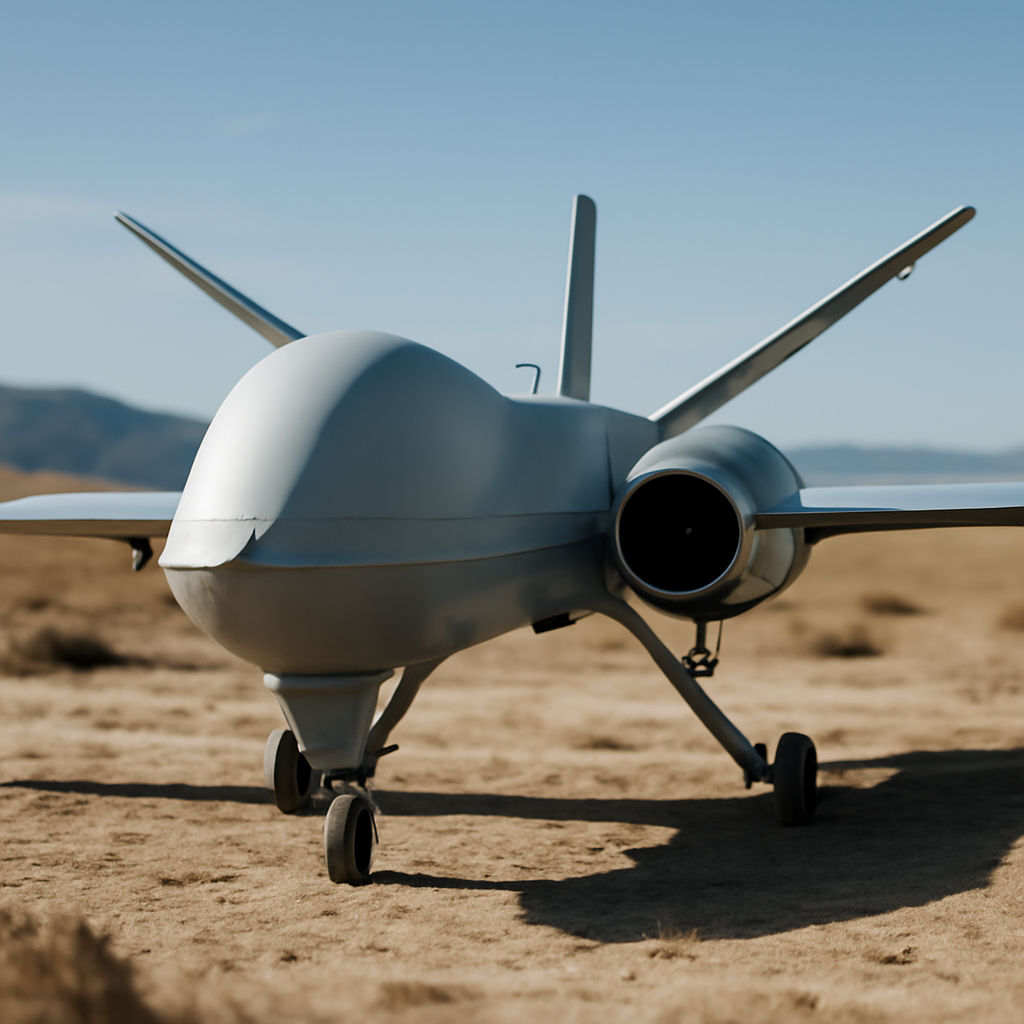
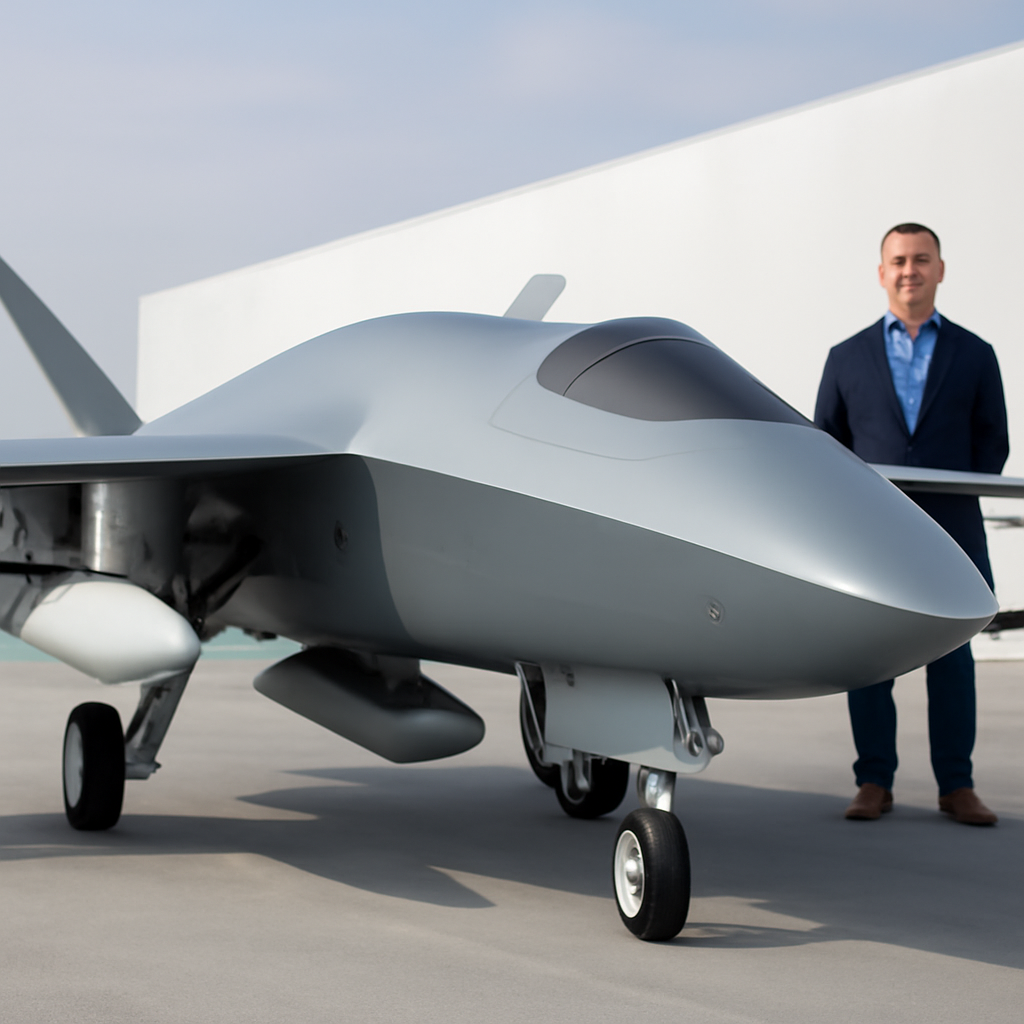
Boeing’s Block 3 iteration enlarges the MQ-28’s wing by 25 percent and increases thrust from 10,000 pounds to 12,000 pounds. Boeing says the combined effect confers an additional 2,000 pounds of fuel, stores and mission payload capacity. Ferguson described the capacity gain as giving operators “freedom to balance payload and endurance to configure for the mission at hand, whether that means carrying extra fuel for longer-range operations, increasing weapons carriage, or any combination of both.”
Internal weapons bays, munitions, and stealth
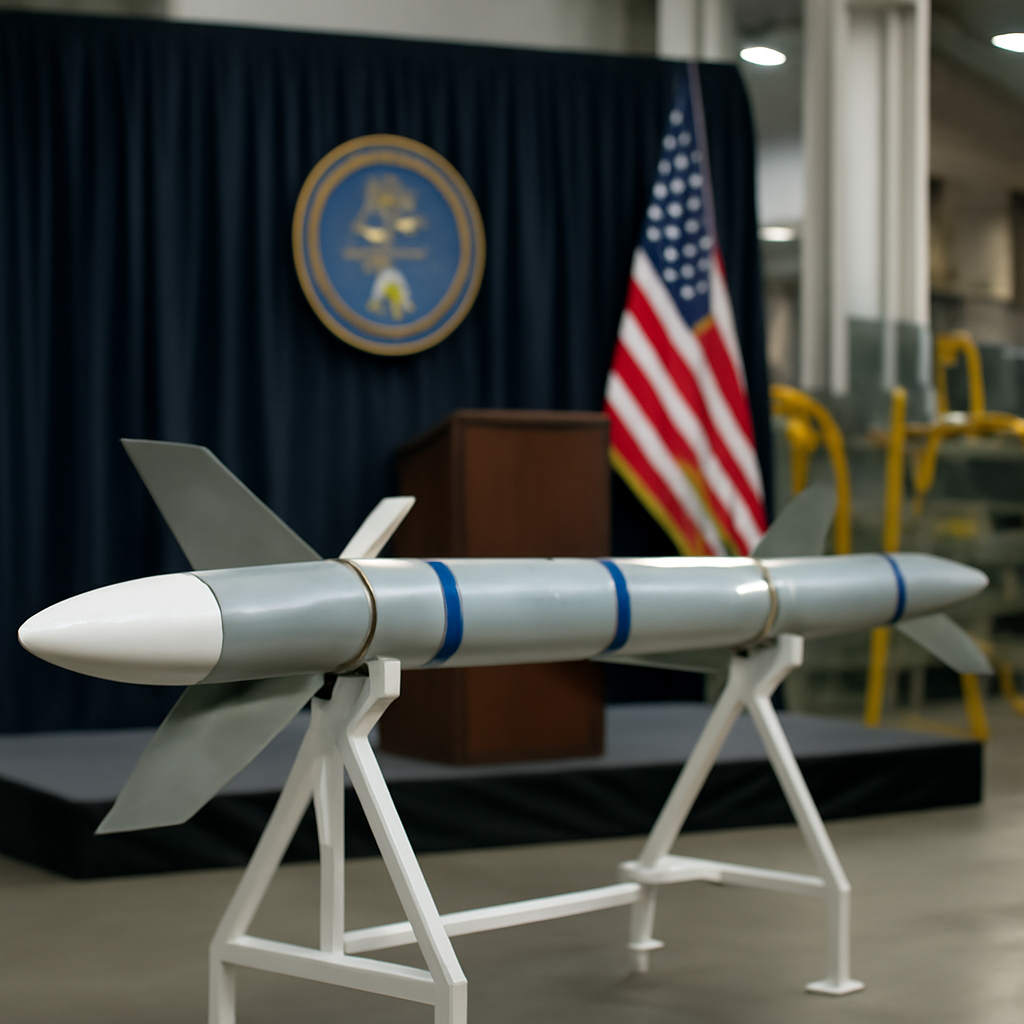
Block 3 adds internal weapons bays in each side of the slab-side fuselage. Each bay can accommodate a single AIM-120 Advanced Medium-Range Air-to-Air Missile (AMRAAM) or two Small Diameter Bombs (SDBs): either the GBU-39/B SDB I or the GBU-53 SDB II (StormBreaker). Boeing highlighted that the Ghost Bat is the first collaborative combat aircraft observed to carry AIM-120s internally—an attribute tied directly to preserving low observable characteristics.
Boeing has recently validated the platform’s radar cross-section (RCS) in a test chamber, measuring elevation, azimuth and roll to demonstrate reduced detectability. Brad Thompson, director for Phantom Works Australia, said after the RCS trials: “The combination of a highly capable platform, stealth features and advanced autonomy provides unprecedented ability for air forces to extend their mission effectiveness and operational flexibility.”
The Block 3 retains provisions for three external weapons stations. Boeing noted at least one external pylon was used in a prior end-to-end engagement where an AMRAAM brought down a target drone; combined with the internal bays, Boeing suggests the configuration could allow operations with as many as five AMRAAMs or at least four in certain mixes of air-to-air and air-to-ground loads.

Audit-ready is a season. It shouldn't be.
Evidence in spreadsheets, controls drifting between audits, frameworks multiplying on flat headcount. Nubivance runs continuous compliance on Rapid7 Cyber GRC - SOC 2, HIPAA, ISO 27001, PCI, CMMC.
End the scrambleRange, beyond-line-of-sight control, SATCOM and sensors
Block 3 introduces beyond-line-of-sight (BLOS) control, enabling operations at “unlimited standoff distances” from ground stations, naval vessels or crewed aircraft, according to Boeing. With a range reported at over 2,000 nautical miles, the addition of BLOS means the MQ-28 can perform independent operations when not under the direct control of a crewed aircraft—an anticipated role for the platform. The inclusion of a SATCOM option was also pointed to as improving resiliency for control in electronic warfare environments.
Boeing says Block 3 will support three or four alternative sensor payloads and that the entire nose can be swapped to accommodate different mission kits. Public imagery released by Boeing included examples of variants fitted with IRST sensors mounted on top of the nose sections.
Program status, testing footprint, and timeline
Block 1 and Block 2 variants have completed more than 150 test sorties across Australia and the United States. Australia has acquired eight Block 1 MQ-28s configured as pre-production prototypes, and nine Block 2 drones are now in production as a pathway to operational capability. Ferguson told attendees at Berlin that Boeing was “on point to build out first [Block 3] aircraft next year,” and that the MQ-28 will be in service with the Royal Australian Air Force in 2028; he added he was “fairly certain that it will be the first operational CCA anywhere in the world.”
Boeing is conducting test flights of the Ghost Bat from the U.S. Navy’s Point Mugu base in California to demonstrate maturity and promote export sales. Boeing Australia unveiled the Block 3 in partnership with Rheinmetall, which is pitching the system to the German Air Force — the Luftwaffe. Rheinmetall CEO Armin Papperger said negotiations with the German government were ongoing and tied the procurement tempo to a possible 2029 delivery: “if they want to have the plane by 2029, my expectation is that by at least next year, we have to go into the final stage of negotiating the contract.” Boeing and Rheinmetall had announced their strategic partnership in March and said then that the MQ-28 could be provided to German Armed Forces by 2029.
What this means for the Luftwaffe, the Royal Australian Air Force, and Rheinmetall/Boeing
- Luftwaffe: Germany is being pitched the Block 3 as an option for its forthcoming CCA requirement; Rheinmetall’s comments tie any acquisition timetable to contract negotiations beginning “by at least next year” if a 2029 delivery is desired.
- Royal Australian Air Force (RAAF): Australia already operates Block 1 prototypes and views Block 2 as a pathway; Boeing projects the MQ-28 will be in RAAF service in 2028 and says upgrades will be released progressively through a spiral program.
- Rheinmetall and Boeing: The partnership brings Boeing’s MQ-28 to Europe with a joint marketing and procurement pitch; program milestones cited include ongoing RCS validation, Block 3 production planning next year, and export-focused testing from Point Mugu.
The Block 3 unveiling at ILA Berlin underscores a rapid refinement of collaborative combat aircraft concepts into fieldable platforms: larger wings, internal weapons carriage for AMRAAMs and SDBs, BLOS control with SATCOM resilience, and modular sensor bays. A lot could change before any European procurement decision is reached, and it remains unclear to what degree Germany’s CCA requirements have been defined or how negotiations will play out, but Boeing and Rheinmetall have set a public timetable that ties further progress to contract decisions next year and potential deliveries toward 2029.