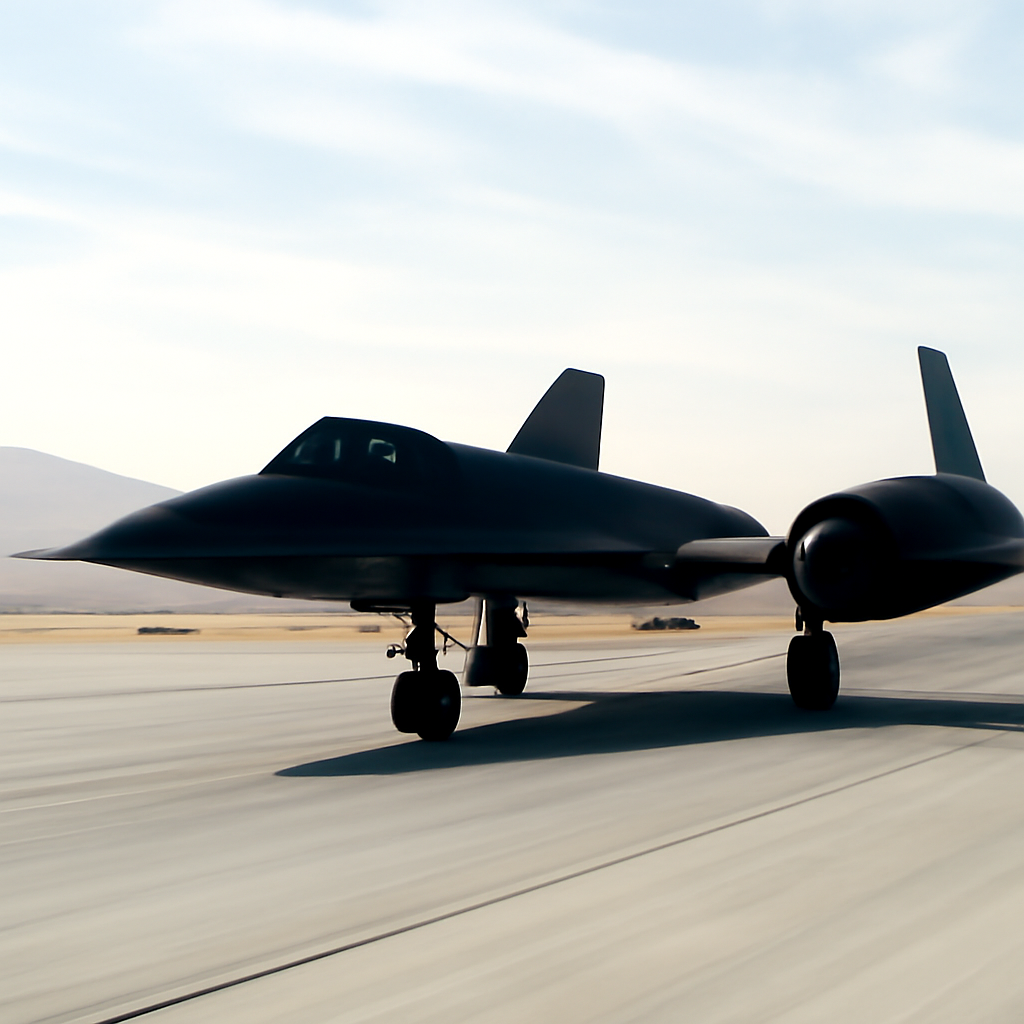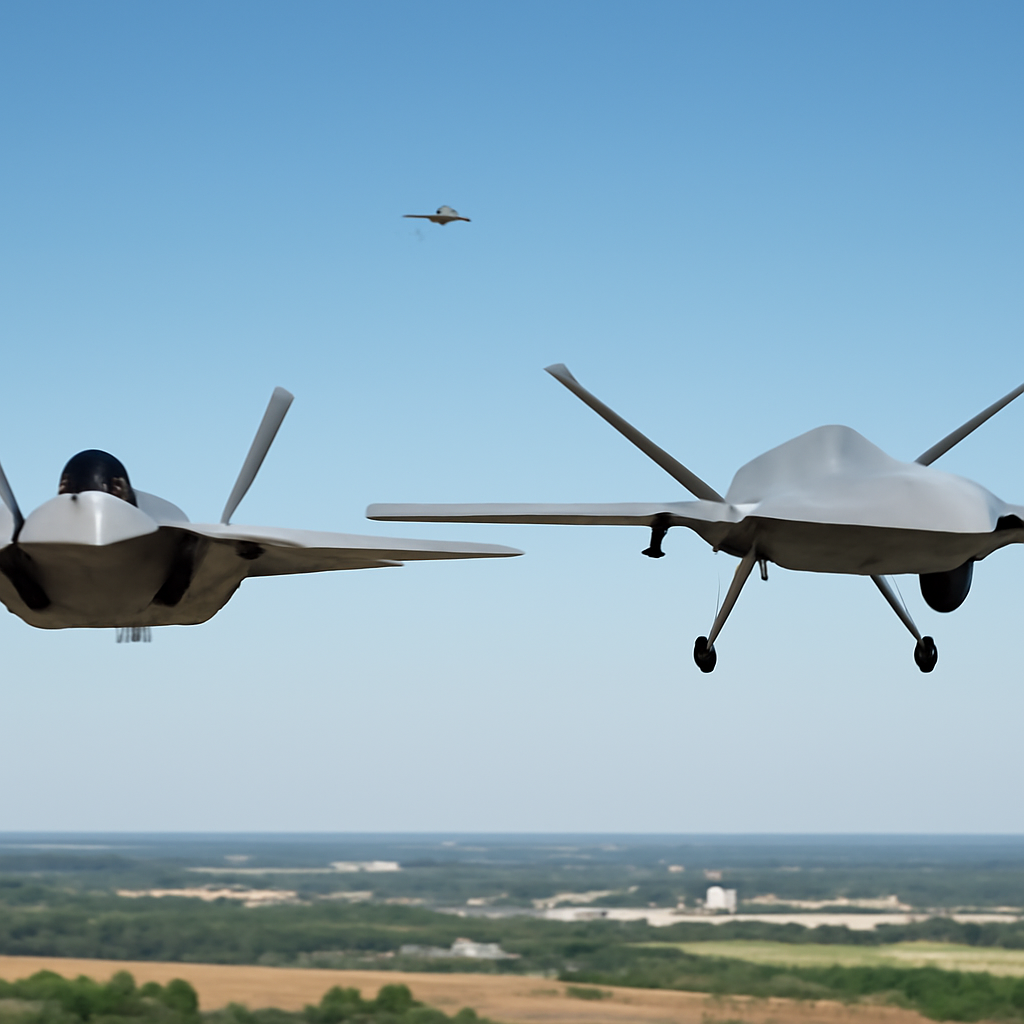
At Çorlu last month, the two-person crew of a Leonardo-owned M-346 assumed direct control of a Baykar Kızılelma in flight — the first time a Turkish combat drone has been commanded in this way from a separate crewed fighter, Leonardo and Baykar said in a joint statement on 22 June.
Çorlu: the live flight moment
The flight campaign took place at Baykar’s flight and test centre in Çorlu, northwestern Türkiye, where an M-346 Fighter Attack aircraft led a Kızılelma while an Italian Air Force T-346A acted as chase plane. According to the companies, the Kızılelma completed an autonomous taxi and take-off, rejoined the M-346 in formation, and then the two-person M-346 crew “assumed full control” of the uncrewed combat air vehicle (UCAV). The M-346 pilots then commanded formations, position changes, separations and rejoins that the drone executed autonomously.
How K-SWARM operated: autonomy, control, and cyber-defence
The companies said the Kızılelma flew using Smart Fleet Autonomy algorithms developed by Baykar’s Hardware-in-the-Loop (HIL) Laboratory, while M-346 pilots used a newly developed, fully integrated onboard avionics suite to direct the drone. Per Daily Sabah, citing Anadolu Agency, the synchronized real-time data exchange between the aircraft was protected and monitored by a Leonardo cyber-defence system known as the GCC Tactical Platform. Leonardo and Baykar describe the work as crewed-uncrewed teaming (also called manned-unmanned teaming or collaborative combat aircraft operations) and emphasise that human pilots retained full control and decision-making throughout the trials.

This site is the portfolio.
OSINTSights runs on Cloudflare Workers, D1, R2, and Vectorize, with an AI pipeline on Hetzner ARM. Nubivance designed, built, and operates it. We do the same for clients.
See what we buildThe Kızılelma at a technical inflection point
Baykar’s Kızılelma is one of a handful of fighter-type combat-drone projects to reach flying hardware. The programme began around 2013 and was revealed publicly in 2021; the aircraft first flew in December 2022. Baykar has positioned the Kızılelma as a drone companion to a crewed fighter and claims later configurations will be supersonic with some reduced-observable shaping. In its definitive form the UCAV is powered by a Ukrainian Ivchenko-Progress AI-322F turbofan, and Baykar reported late last year that the Kızılelma used a Turkish Gökdoğan missile to destroy a target drone — at the time described as the first occasion a UCAV had launched a radar-guided air-to-air missile. The platform has also been tested with the Toygun electro-optical targeting system and an AESA radar.
LBA Systems, Piaggio, and the Italy–Türkiye industrial push
These tests follow rapid industrial moves between the two firms. Leonardo and Baykar signed a memorandum of understanding in Rome in March 2025 and formally launched their 50:50 joint venture, LBA Systems, at the Paris Air Show in June 2025, with Baykar chairman Selçuk Bayraktar and Leonardo chief executive Roberto Cingolani signing the deal. LBA Systems is headquartered in Italy and intended to cover design, development, production and sustainment of unmanned aerial systems, building Baykar’s TB2, TB3, Akıncı and Kızılelma in Italy across three sites. Baykar acquired Piaggio Aerospace in late 2024, giving it an Italian manufacturing base ahead of the venture — a deliberate strategy, the companies say, to support a European push.
Rome’s conditions and the partnership’s strategic limits
The venture cleared its most important political obstacle only this month: on 17 June Rome approved the venture under Italy’s “Golden Power” rules but attached conditions. The Italian government required that sales and any further international development be confined to countries politically aligned with Europe and NATO, and that the drones’ technology be classified. Those conditions, the companies acknowledge, confine Baykar’s European arm to allied customers and away from the broader export base Baykar had previously pursued.
What this means for Leonardo, Baykar, and European procurement
- Leonardo: The firm brings mission systems, payloads, sensor fusion and European certification experience — assets the venture frames as decisive for sales inside Europe. Leonardo’s avionics and cyber-defence systems were central to the Çorlu trial.
- Baykar: Baykar supplies combat-proven uncrewed platforms and autonomy algorithms. The Çorlu tests demonstrate a move from product and factory planning into operational capability under the joint venture construct.
- European and allied purchasers: The Italian conditions limit available customers to those “politically aligned with Europe and NATO,” meaning future exports will be shaped by alliance politics as much as by technical merit.
The Çorlu trials mark a clear technical milestone: crewed aircraft can now take direct command of a Turkish UCAV in flight, with integrated avionics, autonomy software and a cyber-defence layer working together. The companies say further, more complex K-SWARM tests are planned in coming months, with the long-term aim of using artificial intelligence to reduce pilot workload and eventually enable swarming. Whether those next steps — plus Italian production lines and joint export campaigns — turn LBA Systems into a durable part of Europe’s high-end drone industry remains the question the partnership must answer.
Source: Quwa — An M-346 Crew Takes Control of Baykar’s Kızılelma in First Live K-SWARM Trials