Col. James Hayes, the 412th Test Wing, and the crash sequence
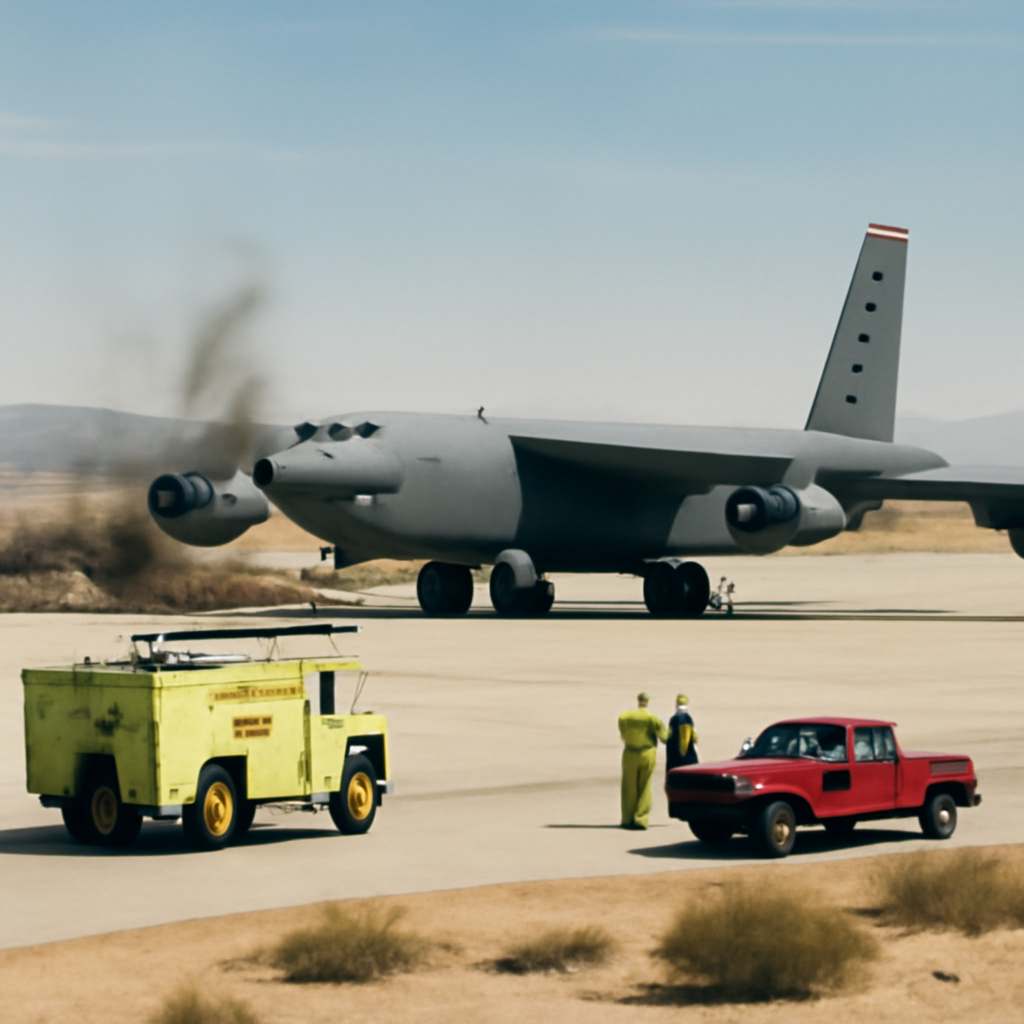
Col. Hayes said the aircraft “took off, and immediately after takeoff, crashed and burst into flames.” After reviewing video, he added the mishap was judged “an unrecoverable crash and unsurvivable.” The B-52H Stratofortress went down at Edwards Air Force Base in California at approximately 11:20 a.m. local on Monday. Emergency crews responded, and Edwards suspended flight operations the following day, citing the state of the runway after the mishap.
The crew aboard was described as “a mixed crew of military, government civilians, and government contractors supporting this test mission.” Boeing confirmed two of its employees were among the eight crew members who died, and said it was in contact with their families and offering support. The Air Force has said its immediate priorities are engaging with families and conducting an investigation that could take months.
Radar Modernization Program and the AN/APQ-188
The aircraft was on a local test sortie in support of the Radar Modernization Program (RMP). Boeing is the RMP prime integrator and Raytheon is supplying the new AN/APQ-188 active electronically-scanned array (AESA) radar. The AN/APQ-188 is derived primarily from the AN/APG-79, a radar family already fielded on other U.S. platforms, and will replace the mechanically-scanned AN/APQ-166 currently installed on B-52s.
Program advocates note the AN/APQ-188’s AESA architecture is expected to deliver greater range, fidelity, and resistance to countermeasures, and could add capabilities such as electronic warfare support, target acquisition improvements, ground moving target indication, and synthetic aperture radar surveillance. Those capabilities are cited as core reasons the RMP is seen as vital to the bomber’s mission set.

This site is the portfolio.
OSINTSights runs on Cloudflare Workers, D1, R2, and Vectorize, with an AI pipeline on Hetzner ARM. Nubivance designed, built, and operates it. We do the same for clients.
See what we buildSchedule, cost history, and test posture
The RMP has a documented history of schedule delays and cost growth. Under the original plan, flight testing was expected to start in 2024 and initial operational sorties were targeted for 2027. Program documents now put the Engineering and Manufacturing Development phase into the middle of 2029, with initial operational capability arriving in 2030. GAO figures cited in reporting peg the 2021 program estimate for AN/APQ-188 development and integration across 76 B-52s at nearly $2.4 billion, with costs rising by 12.6 percent by 2023.
Modification work began in Fiscal Year 2023. The first AN/APQ-188–equipped B-52 arrived at Edwards in December 2025. Air Force budget documents expected a second radar test aircraft to be ready sometime in Fiscal Year 2026, which began on October 1, 2025, but whether that milestone was reached was described as unclear. Raytheon had previously said the remaining test-phase radars were expected to be delivered through the summer of 2024, per a 2023 press release.
Operational impact and fleet consequences
The RMP is one element of a larger, fleet-wide modernization package that will re-designate B-52Hs to B-52Js after receiving new engines, improved communications, and other changes. The Air Force’s fleet size—76 aircraft—creates a tight operational demand for serviceable bombers; officials have noted high operational usage and nuclear mission requirements put a premium on available airframes.
Because of that demand, the Air Force has historically regenerated aircraft from storage after losses; since 2015 two B-52s were returned to service to replace aircraft lost in separate mishaps. Regenerating a bomber of this type is typically a process measured in weeks at best, and with ongoing modernization efforts such returns will have to be balanced against test needs for programs such as the Commercial Engine Replacement Program (CERP) and the RMP itself.
What this means for Boeing, Raytheon, and the Air Force
- Boeing: As prime integrator for RMP, the company faces both the human loss of two employees and the potential programmatic disruption of a test asset that had been supporting radar integration work. Boeing said it was offering support to families.
- Raytheon: The supplier of the AN/APQ-188 faces immediate questions about the availability and delivery schedule of test radars; prior statements in 2023 expected remaining test-phase radars to be delivered through summer 2024, but program documents and recent public reporting leave the current inventory and second-test-aircraft status unclear.
- The Air Force: The service must complete a months-long mishap investigation, engage with families, and rebalance limited test assets and funding. The Air Force has already shown budgetary moves to support increased B-52 test activity at Edwards—the test aircraft asset support line rose from just over $1.5 million in Fiscal Year 2026 to a requested nearly $11 million for the next fiscal cycle—but the loss of a test aircraft is certain to complicate a tightly scheduled modernization program.
The immediate, human toll is clear: eight lives were lost and families are grieving. Programmatically, the crash removes a platform that was directly supporting a modernization effort already running late and over budget, and it raises specific questions the investigation will need to answer—most immediately, how many test radars and test aircraft remain available, and how the Air Force and contractors will re-sequence work while the investigation and runway recovery continue. The service has said the investigation could take months; until it concludes, the RMP’s revised timeline and near-term testing posture will remain under pressure.