"Truly autonomous ground vehicles are not a future capability—they are operational now," Overland AI declared.
Overland AI's fully autonomous ground vehicles
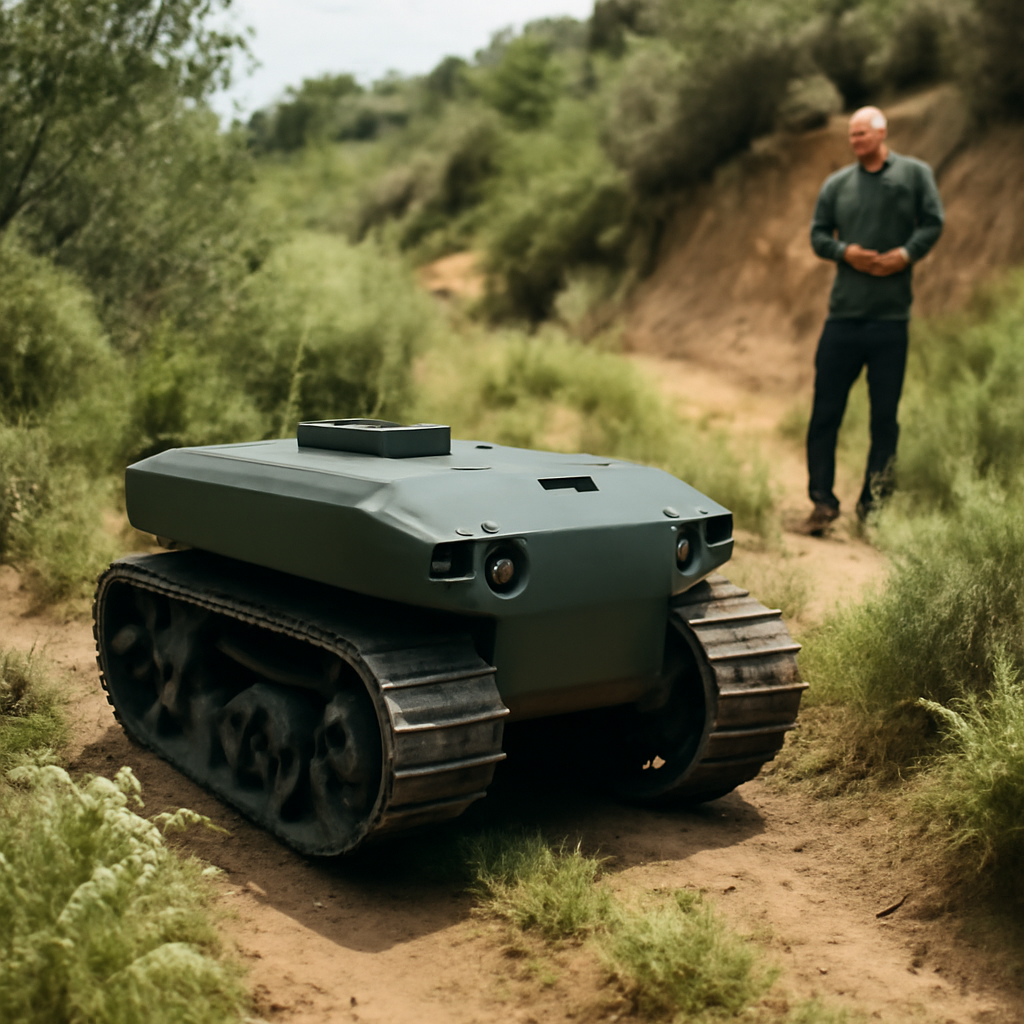
Overland AI presents a new class of ground autonomy it calls autonomous ground vehicles (AGVs). According to the company, these machines combine proprietary software and hardware to sense and navigate their surroundings independently, handling obstacles such as boulders, dense vegetation, steep slopes, and unexpected ditches at tactically relevant speeds. The firm says AGVs can operate even when signals are degraded or lost entirely and that a single operator can task and orchestrate a fleet using natural language prompts — without teleoperation or remote control.
UGVs: tethered control, cognitive cost, and battlefield risk
The comparison the company draws is stark. Unmanned ground vehicles (UGVs) today are largely remote-controlled or teleoperated; they rely on a communications link that can be jammed, spoofed, or severed, and they demand the full attention of a human operator — a setup the source calls "cognitively expensive." Overland AI positions AGVs as a substantive advancement because they remove that tether to continuous human control and the vulnerabilities associated with it.

Audit-ready is a season. It shouldn't be.
Evidence in spreadsheets, controls drifting between audits, frameworks multiplying on flat headcount. Nubivance runs continuous compliance on Rapid7 Cyber GRC - SOC 2, HIPAA, ISO 27001, PCI, CMMC.
End the scrambleExercises and metrics: Africa, drop zones, and breaching
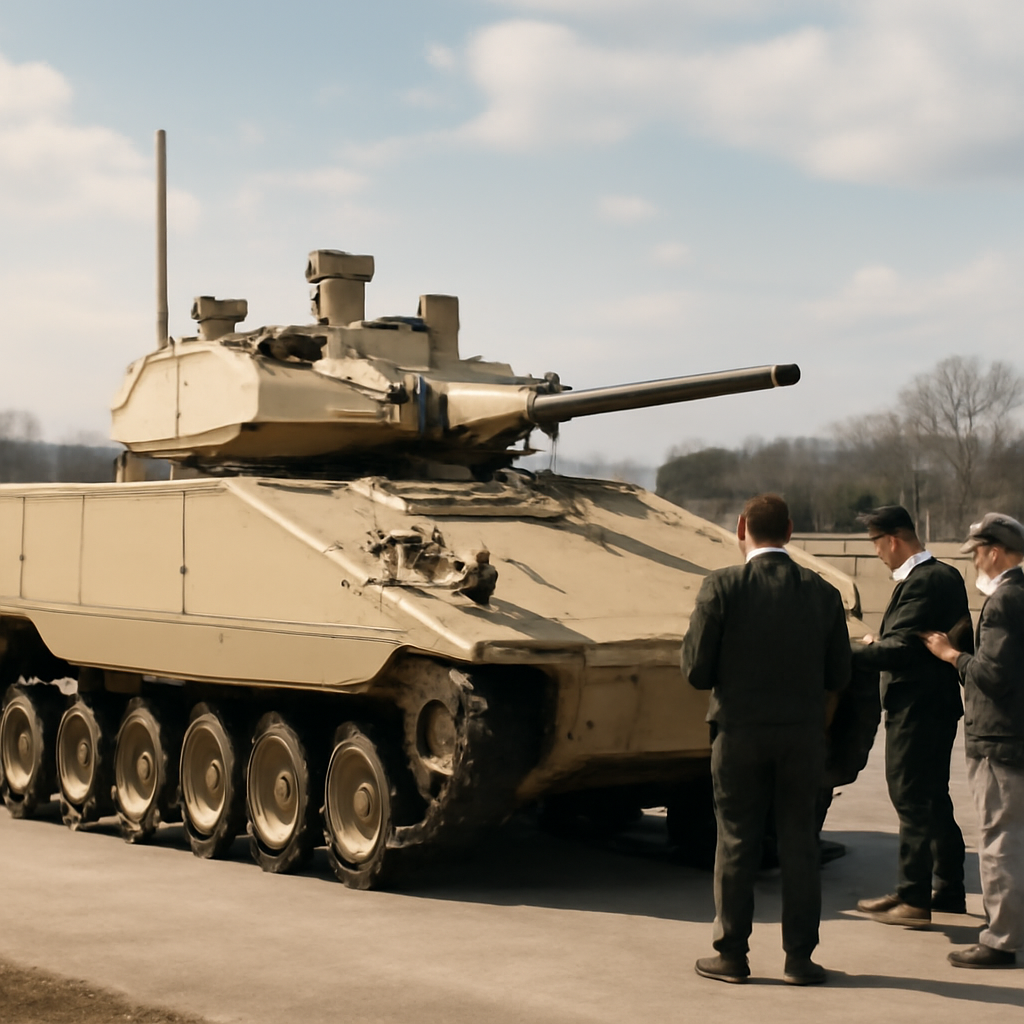
The technology, the company says, has been refined and validated through rigorous field testing and "extensive work with warfighters." In a joint U.S. military exercise in Africa this year, Army officers estimated that two AGVs replaced 40 humans, a ratio the source uses to illustrate the manpower impact of full autonomy. At another recent military event, AGVs reportedly reduced distribution time on a drop zone by 52 percent. The source also contrasts current practice and risk at breaching operations — described as among the most dangerous tasks for troops — with the asserted effect of deploying fully autonomous vehicles: removing humans from the most dangerous places on the battlefield and, the company asserts, dramatically improving life expectancy for service members.
APFIT production contract: $20 million to field AGVs for MADIS with the U.S. Marine Corps
Overland AI has moved from testing to a production role. The company became, according to the source, the first ground autonomy company to prime a production contract for the U.S. military under the Accelerate the Procurement and Fielding of Innovative Technologies (APFIT) program. The award is described as a $20 million agreement to work with the U.S. Marine Corps to produce and field AGVs in support of the Marine Air Defense Integrated System (MADIS).
The APFIT award is framed in the source as the culmination of a push within the Department of War to migrate autonomous systems into programs of record and operational use. The source lists specific missions said to be ready for autonomous deployment: breaching fortified positions, delivering critical supplies under fire, and detecting and defeating enemy drones.
How technologists, the U.S. Marine Corps, and warfighters will respond
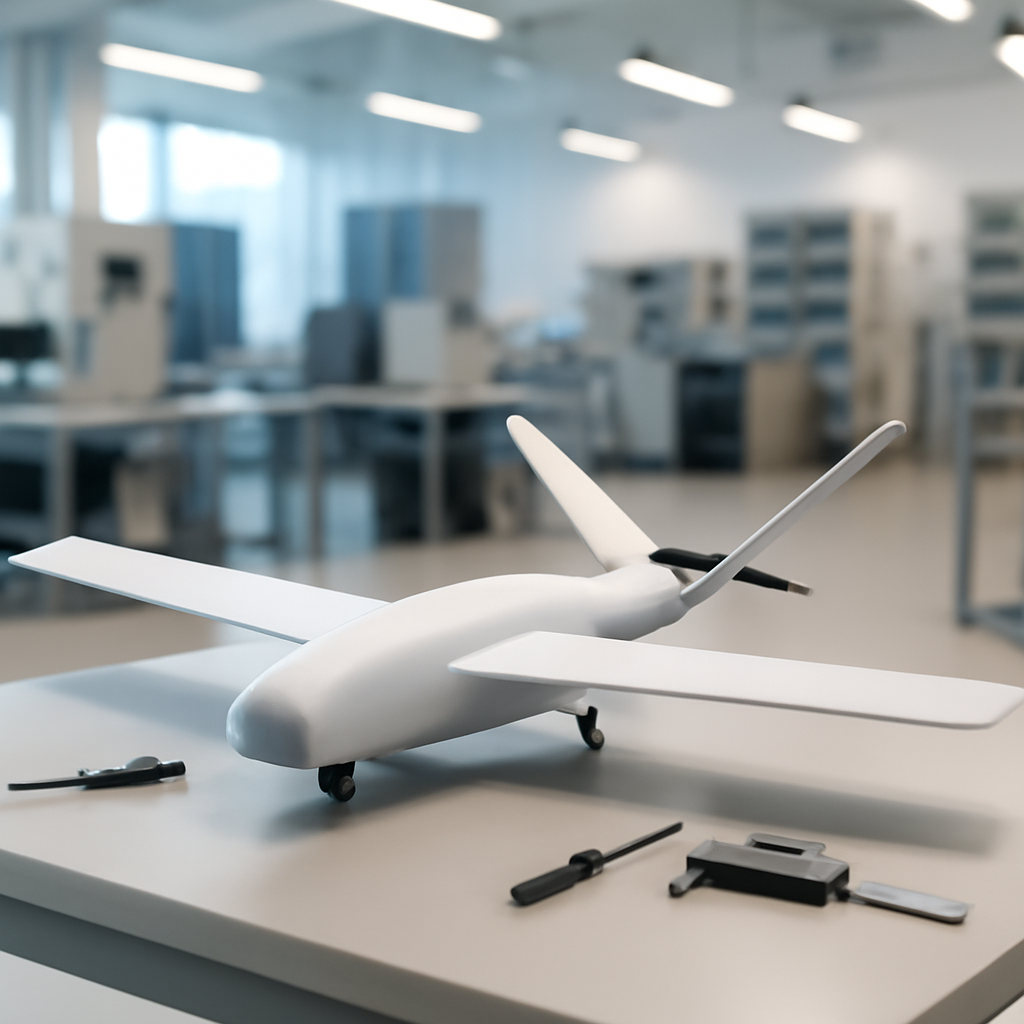
Technologists and development teams will be watched to confirm the claims in practice — specifically the sensor fusion, navigation algorithms, and resilience the company says allow safe autonomous movement across uneven terrain and through degraded communications. The claim that AGVs can be orchestrated via natural language prompts sets a technical bar for human–machine interfaces and fleet management software.
The U.S. Marine Corps, as the named customer in the APFIT award, will move from experimentation to production and fielding when it executes the $20 million agreement in support of MADIS. That step represents an explicit decision to integrate a commercially developed autonomous capability into a fielded system-of-systems.
Warfighters and Army officers are the operational end-users cited by the source: in exercises they reported that small numbers of AGVs could replace scores of personnel, cut distribution time on drop zones, and remove humans from tasks like breaching that the source characterizes as extremely dangerous.
The source closes on a simple, consequential assertion: the robotics revolution in land warfare is here, and Overland AI is driving it. The next, explicit step named in the record is to field the technology broadly across the services.
https://breakingdefense.com/2026/10/agvs-vs-ugvs-a-new-class-of-ground-autonomy-takes-the-field/