What is at stake is whether Western Australia’s Defence West will become a strategic bridge between state industry and national defence priorities — or another layer of coordination that fails to accelerate capability and protect national security.
Western Australia’s industrial strengths and strategic risks
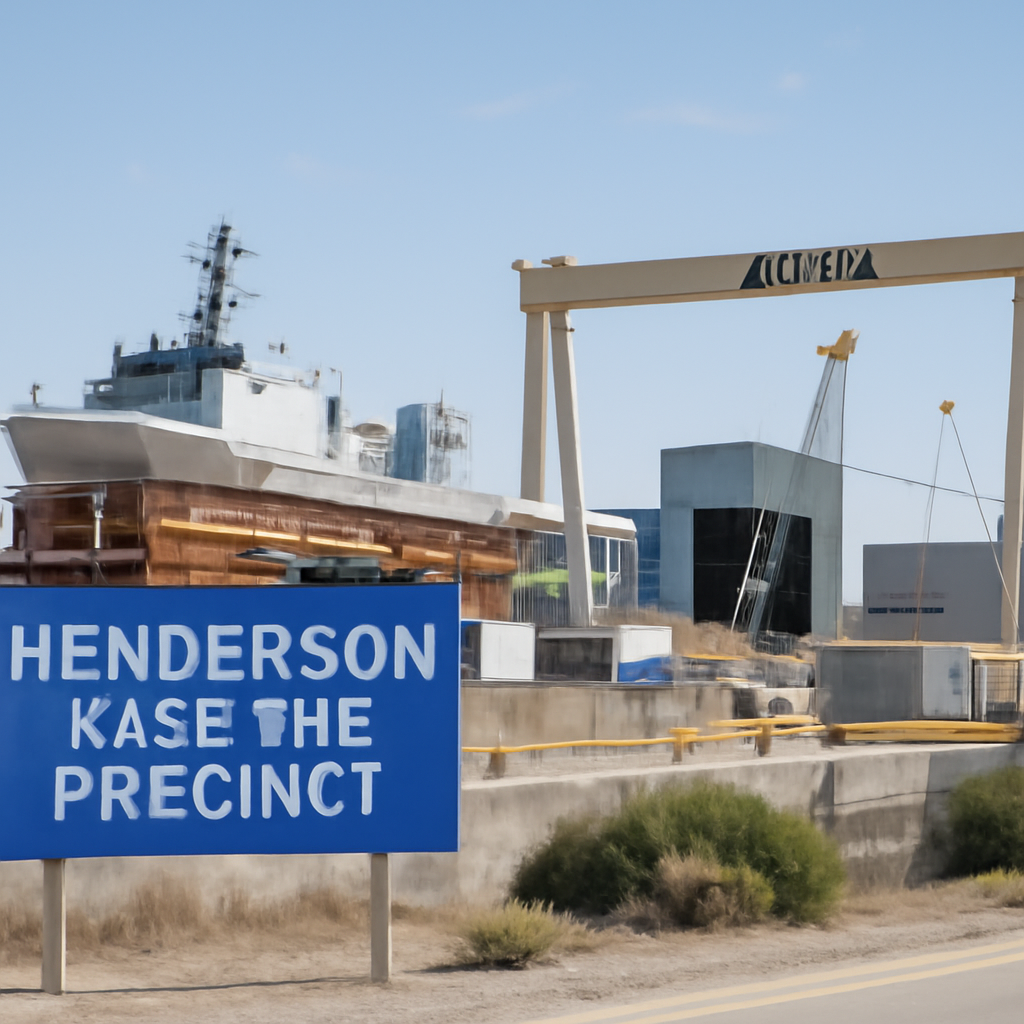
Western Australia brings clear, concrete advantages to the national defence equation. The state contains globally significant critical minerals reserves, advanced maritime industries, major energy infrastructure and proven experience delivering large-scale industrial projects in remote environments. Henderson Defence Precinct is already the headquarters of shipbuilder Austal and supports sustainment and shipbuilding activity that the source expects to grow, as the precinct expands to accommodate sustainment for nuclear-powered submarines under AUKUS, deliver littoral manoeuvre vessels under the LAND 8710 program, and begin construction related to upgraded Mogami class frigates.
Those strengths sit alongside a major risk: Western Australia’s economic reliance on China. The source warns that some state-level economic agreements — for example in solar panels and batteries — can unintentionally help Beijing develop supply‑chain dominance and thereby increase the security burden on Australia.
What statutory authority would change for Defence West
Defence West is currently a branch of the Department of Jobs, Tourism, Science and Innovation. A bill before the Western Australian parliament would elevate Defence West to the status of an independent statutory authority. Proponents argue the change would give Defence West greater influence to integrate state industry with national policy, coordinate investment, and align local capability with federal priorities. Skeptics in the source material caution that a statutory authority without clear authority, funding and a strategic mandate risks becoming another coordination body that mainly advocates and networks rather than accelerates decisions.

The cyber insurance questionnaire just landed. Now what?
SOC 2, HIPAA, insurance renewals - someone has to own security strategy. Nubivance provides fractional CISO leadership without the full-time salary.
Get a security leadFederal–state tension and the need for national integration
The central tension identified in the source is straightforward: Canberra controls defence policy, capability acquisition and strategic priorities, while state governments focus on jobs, investment and regional growth. Those aims often align, but the source cautions they do not always converge—especially when economic ties to a strategic rival complicate decision-making.
The source stresses that the answer is not wholesale centralisation in Canberra. State agencies bring essential local knowledge — different regional economies, infrastructure bases and workforce characteristics — that federal departments may lack. At the same time, the federal 2020 Foreign Relations Act is described as a mitigating mechanism to reduce the risk that states pursue international partnerships inconsistent with national interest. The source argues state-level initiatives must be connected to a coherent national industrial strategy rather than treated as isolated competitions for economic advantage.
Institutional experiments and the trade-offs they reveal
The source highlights several existing institutional models as instructive. ASC Pty Ltd is offered as an example of a commercially structured entity that has retained specialised expertise and supported long-term sovereign capability despite political and strategic change. The federal decision to transition CEA Technologies into a government business entity is cited as recognition that highly strategic technologies may require closer government alignment. ASPI is mentioned as a hybrid model combining a Commonwealth company and a not-for-profit to balance independent analysis with accountability.
These examples underline the trade-offs: commercial flexibility can preserve capability and recruit specialised expertise but may reduce direct oversight; stronger government alignment can ensure national priorities are central but risks narrowing independence. The source argues that Australia’s institutions were designed for a different era — with longer warning times, stable supply chains and incremental technological change — and need redesign to operate at the speed required by strategic competition.
What this means for defence companies, the Western Australian government, and federal agencies
- Defence companies: Currently described as operating inside fragmented systems, companies receive overlapping requests from multiple jurisdictions and face workforce shortages that intensify competition between projects rather than support national capability outcomes. They will watch for reduced duplication and clearer, faster procurement pathways if Defence West gains real decision-making capacity.
- The Western Australian government: The state stands to leverage its minerals, shipbuilding and energy base to attract allied investment and industrial partnerships — the source notes talks with Japan as an example. But the state must balance regional economic aims with alignment to Commonwealth strategic priorities to avoid deepening national fragmentation.
- Federal agencies: The source points to concurrent reform at the Commonwealth level — notably the establishment of a secretary‑level Defence Delivery Agency — and stresses that how the new Defence Delivery Agency and an empowered Defence West will work together must be resolved. Federal agencies will also rely on instruments like the Foreign Relations Act to oversee international partnerships that states pursue.
The path ahead is conditional. Governance reform in Western Australia could strengthen national industrial integration if Defence West is given a clear, funded strategic mandate tied to national capability priorities — not simply a new institutional badge. The source concludes with a pointed benchmark: whether the state’s reforms and the expected mid‑year update to the Defence Industry Development Strategy will produce the coordination and decision‑speed Australia’s strategic competition requires, or whether they will add another layer to an already fragmented system.