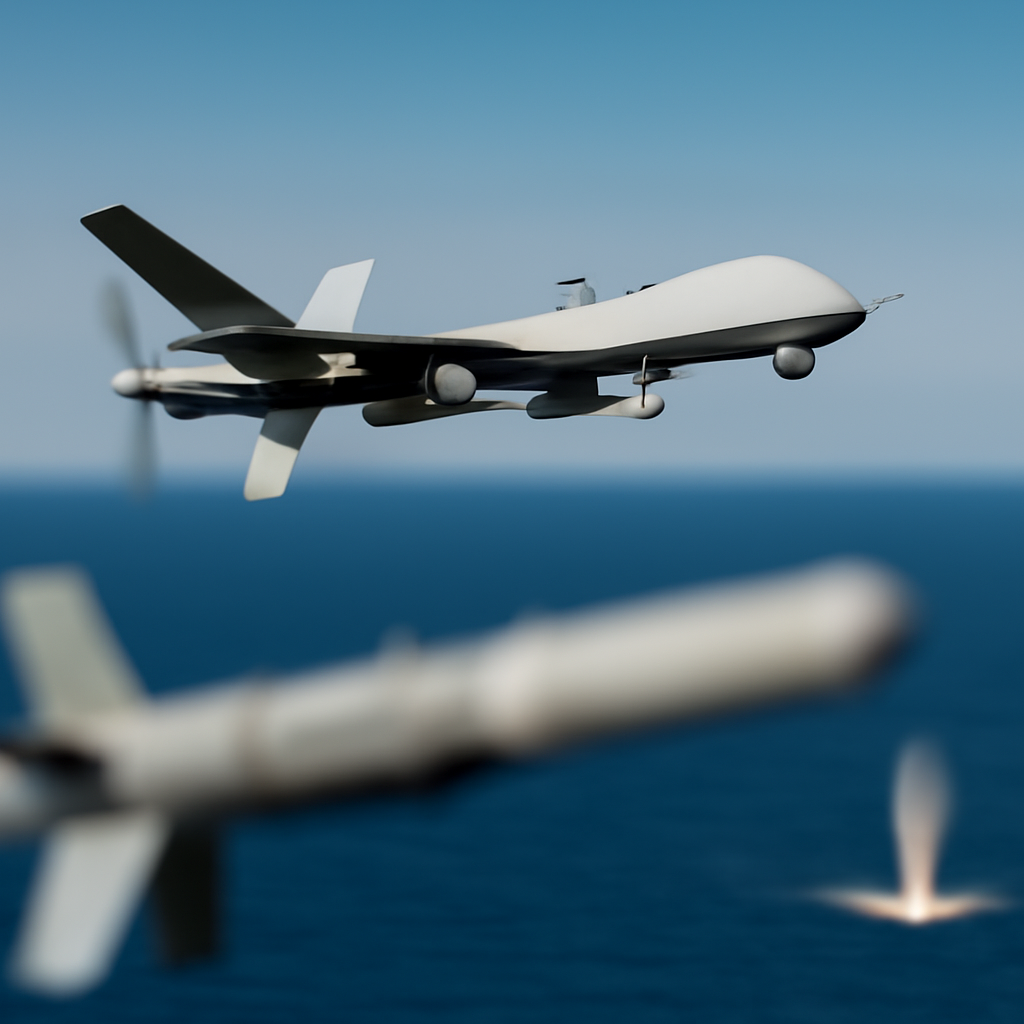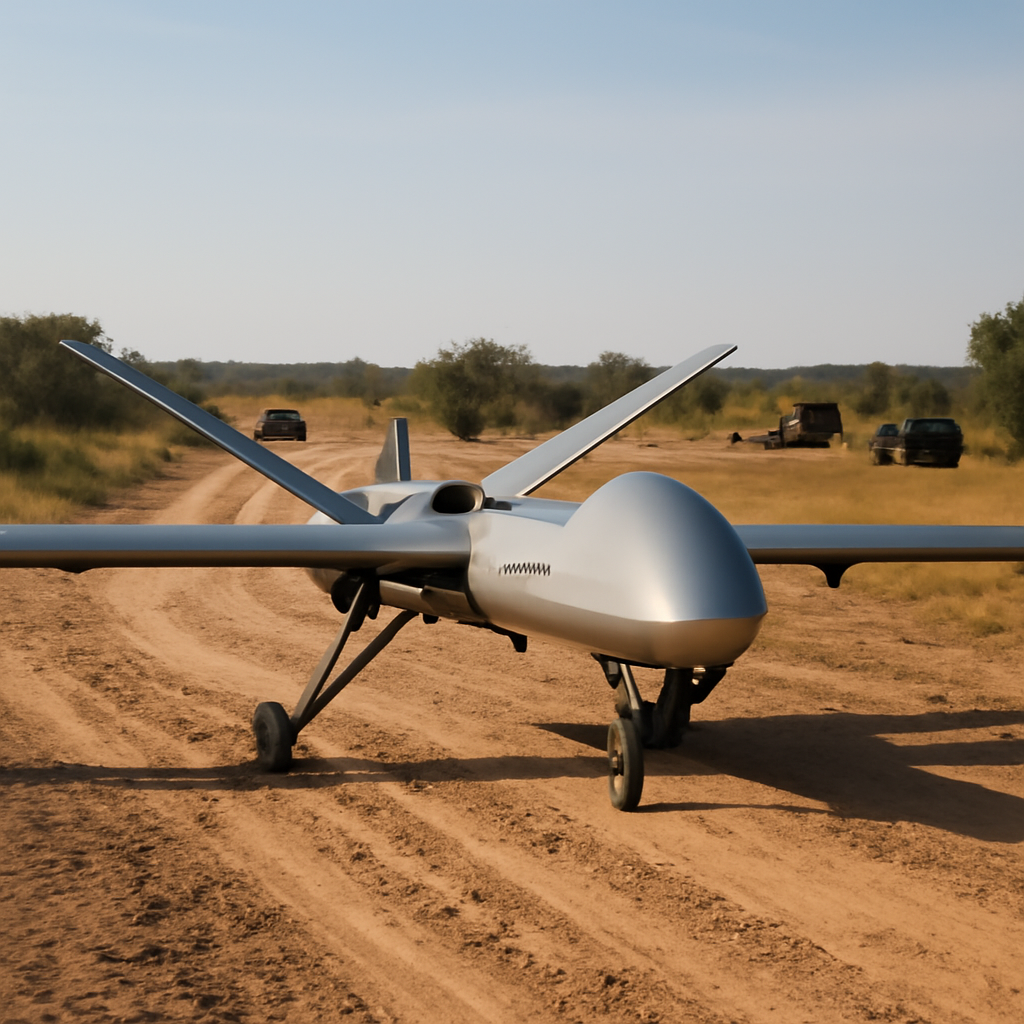
The 2026 National Defence Strategy commits about A$425 billion in capability investment by 2035–36, and names artificial intelligence as a force multiplier across domains from undersea warfare to cyber.
How finance has made AI structural in the ADF
AI is no longer an experimental add‑on: it is embedded in budget lines across the Australian Defence Force. The 2024 Integrated Investment Program (IIP) allocated A$8.5 billion to A$11 billion to enterprise data and information and communication technology — the digital backbone for AI. The 2026 update adds A$14 billion to A$19 billion for theatre command and control, A$27 billion to A$38 billion for space and cyber, and a dedicated A$12 billion to A$15 billion for uncrewed systems. The Advanced Strategic Capabilities Accelerator can take prototypes into service with up to A$4.3 billion by 2035–36. In undersea warfare, the IIP allocates A$94 billion to A$130 billion, and the Integrated Undersea Surveillance System is budgeted at A$5.6 billion to A$8.3 billion for 2025–2040. These numbers describe a force whose effectiveness increasingly rests on data and algorithms.
Decision time compression: Joint Air Battle Management, Distributed Ground Station Australia, and OneDefence
Several programs are explicitly designed to shorten the interval between detection and response. The Joint Air Battle Management System is budgeted at A$1.99 billion to A$3.15 billion for 2023–2031; the Distributed Ground Station Australia project carries a A$1.33 billion to A$1.99 billion range for 2024–2031; and the wider OneDefence data program underpins rapid information sharing. That compression suits a strategy of denial, which requires a force that can see farther and decide faster. But the same speed that is an asset in routine operations can become a hazard in a crisis: accelerated alerts and compressed decision cycles can create momentum that outpaces diplomatic or political deliberation, producing escalation from speed and uncertainty rather than deliberate choice.

Audit-ready is a season. It shouldn't be.
Evidence in spreadsheets, controls drifting between audits, frameworks multiplying on flat headcount. Nubivance runs continuous compliance on Rapid7 Cyber GRC - SOC 2, HIPAA, ISO 27001, PCI, CMMC.
End the scrambleHuman judgement, automation bias, and legal obligations under Article 36
AI systems are probabilistic and often opaque; the source notes operators under pressure tend to defer to algorithmic outputs — a dynamic known as automation bias. That drift from assessing evidence to confirming a recommendation sits awkwardly against the legal requirement for informed human judgement in targeting under Article 36 of Additional Protocol I to the Geneva Conventions. The Defence AI Centre, established in 2024, and the RAS‑AI Strategy 2040 are described as sensible foundations, but the institutional rules for using AI under operational pressure are still being written. The article argues Canberra needs auditable decision‑support for high‑stakes outputs and a mechanism for auditing decisions made with AI assistance.
Undersea awareness, Ghost Shark, Integrated Undersea Surveillance System, and the problem of misperception
Undersea programs extend Australian awareness into areas that nuclear‑armed competitors consider essential to second‑strike survivability. The Ghost Shark autonomous undersea vehicle and the Integrated Undersea Surveillance System both increase visibility in contested waters. The source warns a Chinese naval commander observing those activities during a crisis cannot easily distinguish whether they are oriented to conventional denial or to tracking nuclear platforms. That ambiguity, the brief argues, can itself drive escalation: when rivals interpret AI‑enabled awareness as compressing their options, they may act to restore room for manoeuvre. The article points to the precedent that the United States and China have already affirmed on paper — that final decisions in nuclear command and control will remain with humans — and suggests Australia could reduce ambiguity by refraining from automating certain decisions and signalling that choice.
What this means for the Defence AI Centre, technologists and security teams, and regional rivals
- Defence AI Centre: The Centre and the RAS‑AI Strategy 2040 provide a starting point, but must be followed by rules and audit mechanisms that match the tempo of deployed capability, particularly for high‑stakes decision support.
- Technologists and security teams: Engineering choices — thresholds that defer to human review, auditable decision logs, and clear limits on automation — are presented as concrete governance measures that could be built into systems such as the Joint Air Battle Management System and Distributed Ground Station Australia.
- Regional rivals and commanders: The build‑up in undersea awareness and AUKUS Pillar II access to AI can be read ambiguously; the article warns that signalling constraints on automation could reduce misperception and unintended escalation.
The central dilemma is stark: integration is proceeding at pace because money, platforms and doctrine now push AI to the centre of Australian defence. The policy prescription in the author’s April brief for the Asia‑Pacific Leadership Network is correspondingly narrow and specific — three measures to close the governance gap: thresholds that slow AI‑assisted decision cycles at key escalation points; auditable decision‑support for high‑stakes outputs; and a clear position on the limits of AI in defence decision‑making. Canberra faces a practical choice: accept faster, more capable systems with unfinished governance, or pause to embed checks that may reduce both speed and the danger of misperception. Either path will shape how the ADF looks and how regional rivals read it.
https://www.aspistrategist.org.au/the-adf-is-integrating-ai-faster-than-it-can-govern-it/