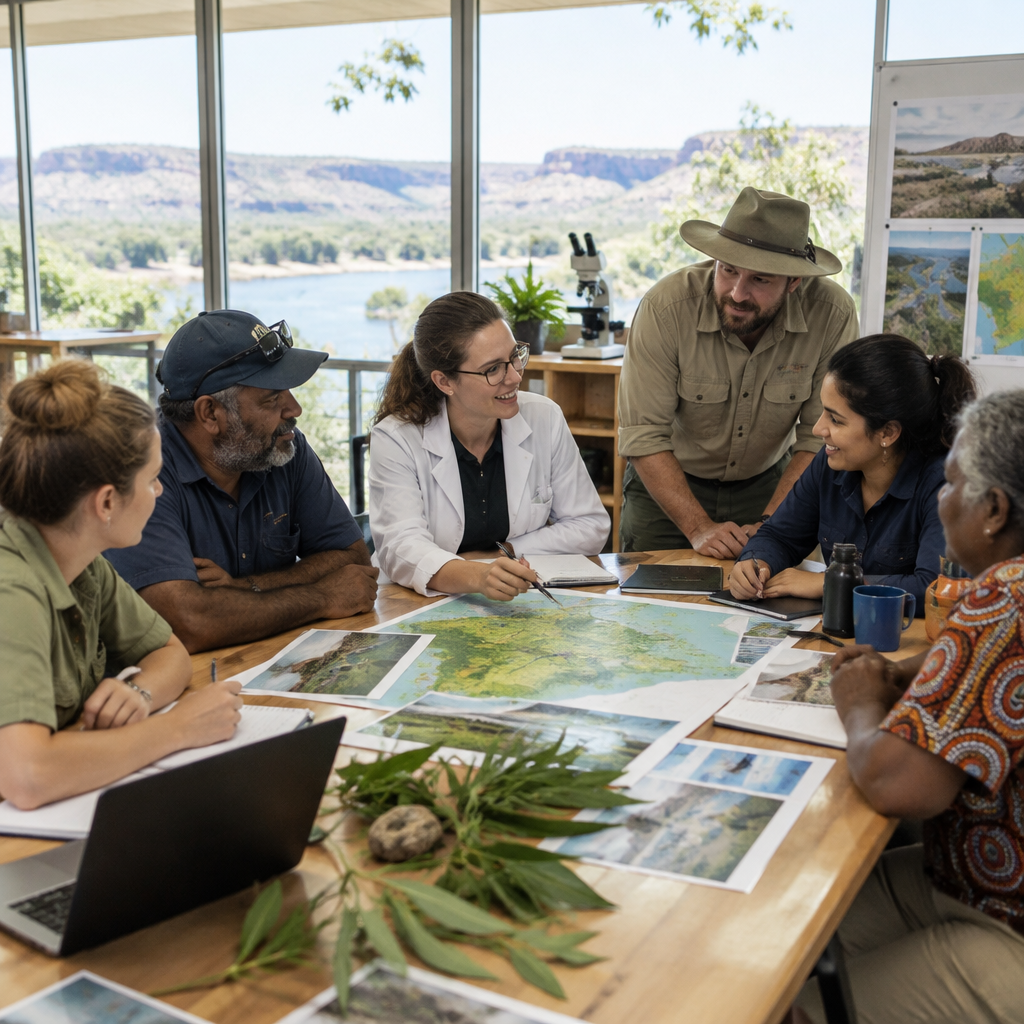
“Established in 2017 with A$75 million in federal funding, the CRCNA has supported more than 100 projects involving 272 partners and generated more than A$155 million in collaborative research activity.”
Cooperative Research Centre for Developing Northern Australia (CRCNA): what it built and what ends in June 2027
The CRCNA, founded in 2017 with A$75 million in federal funding, supported more than 100 projects with 272 partners and generated more than A$155 million in collaborative research activity. Its federal funding is scheduled to end in June 2027, and the CRC model is described as time‑limited. Research funding through the CRCNA was fully committed in 2024, leaving projects that will produce findings and tools but creating a risk that the relationships, coordination and institutional knowledge behind those projects will disperse.
Joint Standing Committee on Northern Australia: unanimous backing for a successor in October 2026
The Joint Standing Committee on Northern Australia, in its October 2026 report titled Developing the north is not a catchphrase, unanimously concluded that northern Australia needs a durable, northern‑based research capability. The report’s sixth recommendation calls for 10 years of funding — through to mid‑2037 — for a northern‑based, northern‑led capability supporting research, innovation, extension, knowledge translation and place‑based development. The committee’s position frames the scheduling imperative: a successor must be in place before CRCNA’s federal funding ends in June 2027.

Audit-ready is a season. It shouldn't be.
Evidence in spreadsheets, controls drifting between audits, frameworks multiplying on flat headcount. Nubivance runs continuous compliance on Rapid7 Cyber GRC - SOC 2, HIPAA, ISO 27001, PCI, CMMC.
End the scrambleCentre for Northern Australia (CNA): the proposed successor and its mandate
The authors propose establishing a Centre for Northern Australia (CNA) as an enduring, northern‑based organisation that builds on CRCNA’s networks while expanding coordination of research, investment and adoption across the region. The CNA is put forward as an independent, not‑for‑profit organisation with skills‑based governance, strong northern representation and meaningful First Nations participation. Federal funding would provide a foundation for contributions from governments, industry and research partners.
Their proposed mandate is practical and broad: identify research gaps, broker partnerships, coordinate investment and support adoption. The CNA would complement universities, the Commonwealth Scientific and Industrial Research Organisation, regional development bodies and First Nations institutions by connecting their expertise across northern jurisdictions.
Practical outcomes now linked to research: oysters, cattle systems and remote eye care
The case for continuing and expanding northern research is grounded in concrete outcomes. On northern Australia’s coastline, First Nations communities are exploring how blacklip rock oysters could create businesses and employment; aquaculture research has helped establish growing systems suited to northern conditions and is presented as a pathway to enterprise and economic independence for communities with deep connections to Sea Country. On cattle stations, producers and researchers are testing more resilient farming systems — with Kidman Springs in the Northern Territory offered as an example where practical agricultural knowledge and contemporary science are helping producers adapt to unpredictable seasons, rising costs and changing markets.
In remote health, research has connected local workers with specialist expertise so patients need to travel less. The source cites eye‑screening interventions that have helped prevent permanent blindness. These examples underline two themes repeated across the piece: research must respond to northern realities (wet‑season abundance does not guarantee water when needed; farming systems require tropical adaptation; commercial opportunities depend on land tenure, cultural authority, environmental sustainability and market access) and climate change makes the work increasingly urgent.
What this means for First Nations communities, producers, clinicians, and the Australian government
- First Nations communities: research‑supported aquaculture presents pathways to enterprise and economic independence, but meaningful First Nations participation and leadership are central to how those opportunities are shaped and sustained.
- Producers (cattle and agricultural): sustaining and commercialising new systems requires seasons of testing and local knowledge; examples like Kidman Springs show how practical and scientific inputs must be combined to manage unpredictable seasons, rising costs and markets.
- Clinicians and remote health services: adoption of technology such as eye‑screening has reduced patient travel and prevented avoidable blindness, illustrating how locally adapted research can change outcomes in remote clinics.
- The Australian government and funders: the Joint Standing Committee and the authors both call for a clear, early commitment — agreement on mandate and foundational funding for a successor well before CRCNA concludes in June 2027, with a proposed funding horizon of 10 years to mid‑2037.
The argument is straightforward: trust, networks and place‑based knowledge take years to build and do not fit neatly into short funding cycles. The authors warn that once coordination, relationships and institutional knowledge disperse they cannot simply be recreated by a later announcement. They measure success in practical terms — stronger businesses, healthier communities, better decisions and lasting regional capability — and ask the Australian government to commit to establishing the Centre for Northern Australia and secure foundational funding before June 2027.