"You’ll see more and more projects where we’re looking at spiral development," Defence Industry Minister Pat Conroy told the ASPI Defence Conference on Thursday.
What spiral development means for defence acquisition
Conroy described spiral development as an adaptive, risk-reducing process in which "a system’s features are added or changed incrementally, as program managers and engineers avoid biting off more than they can chew." The approach aims to produce fewer problems than attempting to achieve all goals in a single delivery and to ease adaptation as development proceeds.
Conroy framed spiral development not as a one-off tactic but as an organising principle: establishing architectures and funding lines that allow new capabilities to be introduced "as they develop, as they become mature." He added that pairing spiral development with "prioritising open architecture" would allow the government to "do much better" in keeping pace with technological change.
Land 156: a rapid, iterative path to counter-drone capability
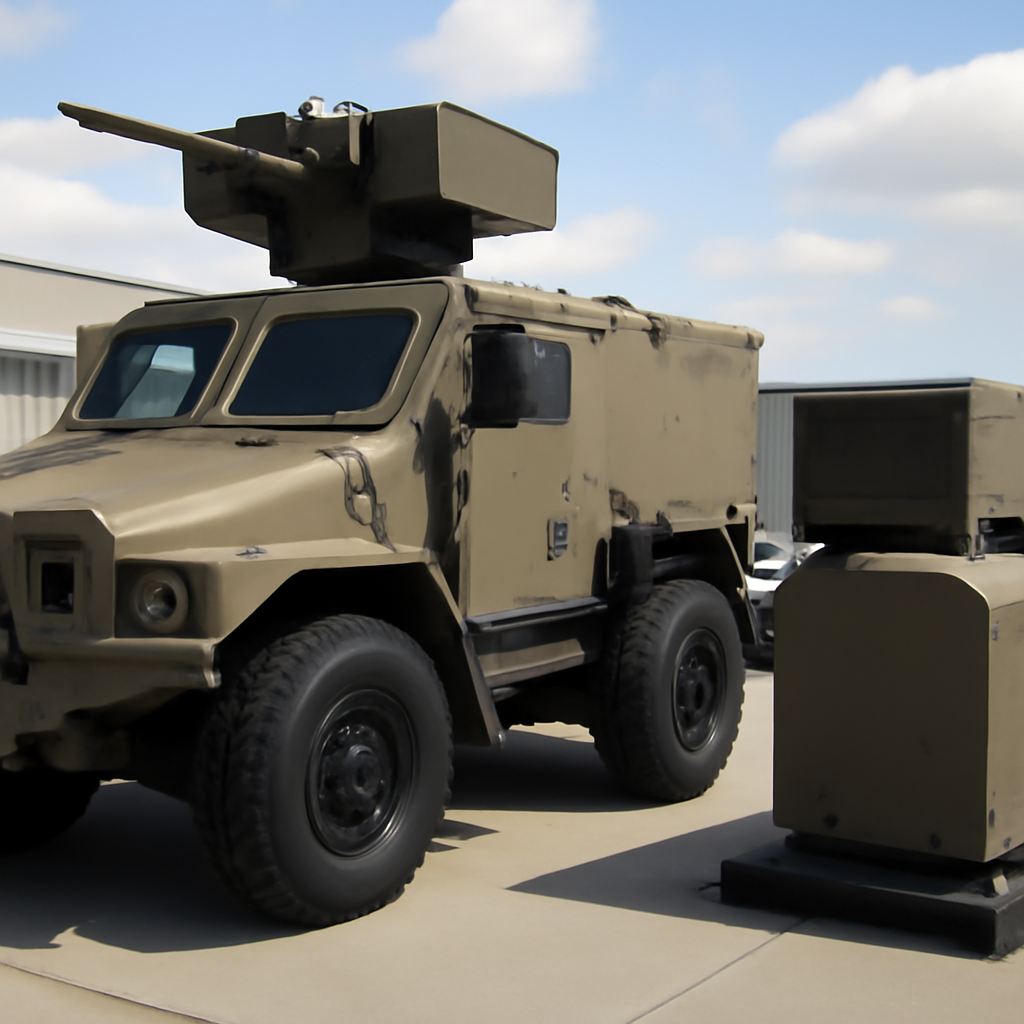
Conroy singled out Land 156, the project for fielding systems to protect against drones, as the "best example" of spiral development in practice. He paid "tribute to Army and CASG [the Defence acquisition organisation] in driving that process, where we recognise counter-drone technologies are evolving at a rapid rate."
Spiral development in Land 156 is tied to a minimum viable capability concept: an early, pragmatic fielding of a capability that can be iterated as technologies and threats evolve. That approach was described in the source material as a deliberate choice to avoid locking large sums into solutions that will quickly become obsolete.

The cyber insurance questionnaire just landed. Now what?
SOC 2, HIPAA, insurance renewals - someone has to own security strategy. Nubivance provides fractional CISO leadership without the full-time salary.
Get a security leadRAAF’s MQ-28 Ghost Bat: incremental design updates
The Royal Australian Air Force has applied spiral development to the MQ-28 Ghost Bat, described in the source as a fighter-like drone Boeing is developing in Australia in partnership with the service. In 2022 the RAAF’s then manager for the program said the plan was to revise the design every two years.
The government in December announced it would buy a prototype for a new Ghost Bat version called Block 3. Boeing revealed this month that the Block 3 prototype will have a larger wing — an explicitly incremental change consistent with spiral development's pattern of staged improvements.
Why Canberra rejected a wholesale stockpile of cheap interceptors
Conroy directly addressed a proposal voiced this week by Strategist contributor Timothy Millar that the government rapidly acquire a large stock of inexpensive interceptors to counter strike drones. Conroy rejected the idea: "If we just bought 10,000 counter-drone interceptors and put them on the shelf, they’d be out of date within three months, and we just would have blown hundreds of millions of dollars," he told ASPI’s conference.
Instead, Conroy advocated establishing "the architecture in place and ... a funding line to do spiral development to introduce new capabilities as they develop," making a case that iterative procurement is a better long-term hedge against rapid technological turnover than bulk buying fixed-point hardware.
How Army and CASG, RAAF and Boeing, and the Defence Delivery Agency are responding
- Army and CASG: Recognised by Conroy for driving iterative acquisition on Land 156, they are implementing spiral development to keep counter-drone capabilities current as technologies evolve.
- Royal Australian Air Force and Boeing: The RAAF's multi-year revision plan for MQ-28 Ghost Bat and Boeing's disclosure that Block 3 will feature a larger wing illustrate how service–industry partnerships are using incremental design changes to field new generations without restarting programs.
- Defence Delivery Agency and Capability Acquisition and Sustainment Group (CASG): The Defence Delivery Agency will be formed in part by consolidating acquisition organisations, including CASG. ASPI analyst Malcolm Davis urged the forthcoming Defence Delivery Agency last year to adopt spiral development for rapid capability acquisition, saying "that means challenging ossified regulatory and bureaucratic practices and being prepared to embrace change to workplace culture."
The government's public steps — the December purchase of a Ghost Bat Block 3 prototype, Boeing's recent design disclosure, and the explicit endorsement of spiral development by the Defence Industry Minister — show a preference for iterative, architecture-led procurement over large single-batch purchases. Conroy's dismissal of a stockpiled-interceptor approach and his call for funding lines to sustain spiral upgrades make clear that Canberra is betting the best defence against rapidly evolving drone threats is an acquisition model that assumes continued change, not a one-time fix.
Link to the original story: https://www.aspistrategist.org.au/australia-will-increasingly-use-spiral-development-in-defence-conroy/