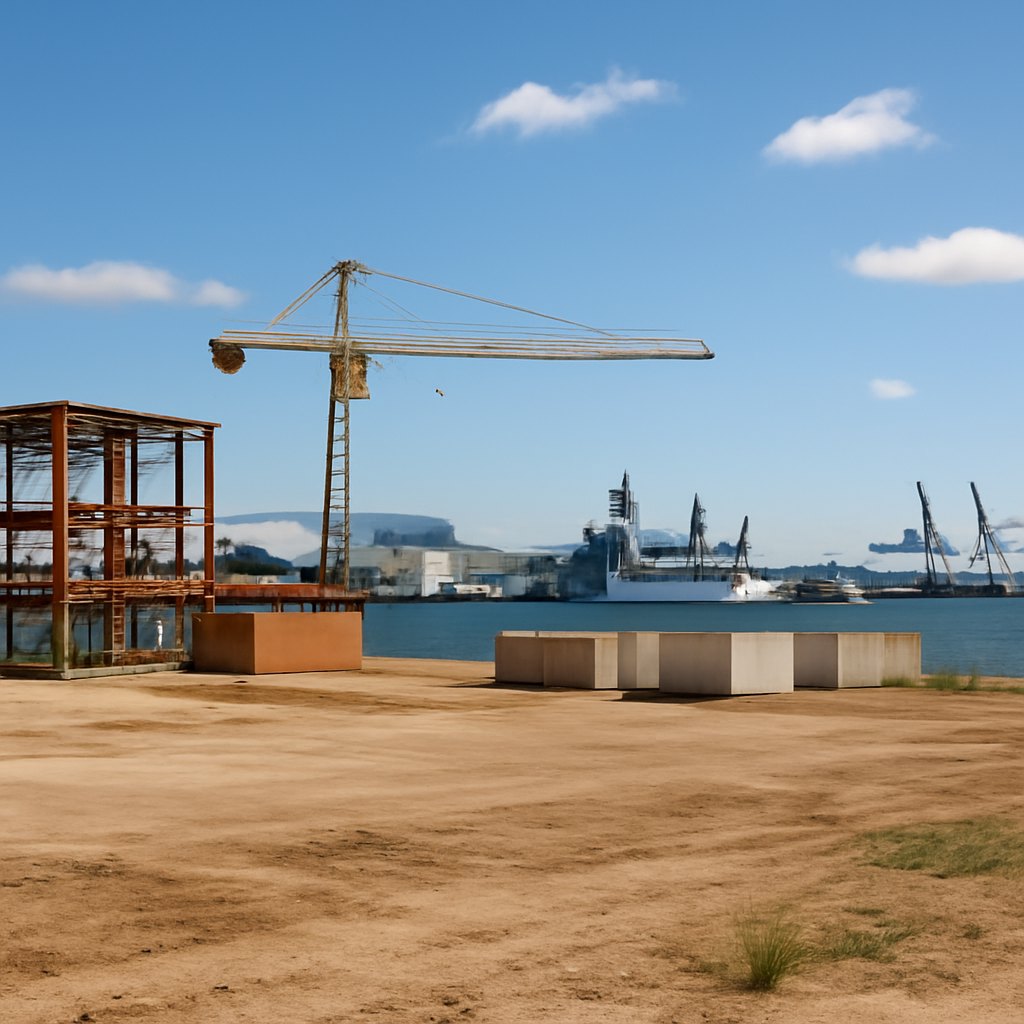
“This decision allows the next phase of planning and development of the precinct to progress at pace, so we can deliver the infrastructure needed to support continuous naval shipbuilding and sustainment in the West, and develop the capability to own, operate and sustain conventionally armed, nuclear-powered submarines,” said Australian defense minister Richard Marles.
Henderson: a shore-side address for future submarine sustainment
Australia announced that Henderson, in Western Australia, is the official location for its future defence precinct intended to house sustainment activity for submarines acquired under the AUKUS agreement. The site sits seven miles across the water from the Royal Australian Navy base that hosts the country’s submarine fleet and is described in the announcement as including “the preferred location for the Government’s naval shipbuilding and sustainment activities, and for the sustainment of Australia’s future conventionally armed nuclear-powered submarines.”
What the precinct will contain and where
An official outline overlaid on an aerial photo shows the precinct immediately south of Austal’s existing shipyard and encompassing areas currently occupied by BAE Systems Australia and civilian boat yards. Surrounding parcels are labeled as “fabrication, support and other facilities,” indicating a mix of existing industrial uses that the government intends to integrate into the precinct’s footprint.

Audit-ready is a season. It shouldn't be.
Evidence in spreadsheets, controls drifting between audits, frameworks multiplying on flat headcount. Nubivance runs continuous compliance on Rapid7 Cyber GRC - SOC 2, HIPAA, ISO 27001, PCI, CMMC.
End the scrambleScale: jobs, money and the next phase
The government’s release projects the precinct will support up to 10,000 jobs over the next 20 years and be underpinned by “billions of dollars” in investment. The announcement explicitly cites 12 billion Australian dollars ($8.59 million) announced last September as part of that underpinning. With the site decision made, the precinct will move into a conceptual design phase, during which the federal government and the defence department will engage with the state government, local industry and other stakeholders.
Parallel work: Hunter-class keel laying and ship fit
On the same day as the Henderson announcement, a keel laying ceremony took place at BAE Systems Australia’s shipyard in Osborne, South Australia, for the first of six Hunter-class frigates. Based on the Type 26 design, Australia’s Hunter-class ships will be fitted with CEA Technologies’ CEAFAR phased array radar suite and will have the capability to launch SM-2 and SM-6 air- and missile-defense weapons as well as Tomahawk land-attack cruise missiles. In a separate defence department release, the department said: “The Hunter class will provide Navy with an advanced anti-submarine warfare capability, one of the most important capabilities for Australia’s maritime security, and strengthen our ability to operate alongside allies and partners.”
What this means for the Royal Australian Navy, Western Australia, and local industry
- Royal Australian Navy: The precinct is framed as the physical centre for long-term sustainment of Australia’s future conventionally armed nuclear-powered submarines and other naval platforms, projecting an intent to consolidate maintenance and shipbuilding capacity close to where the submarine fleet is based.
- Western Australia (state and workforce): The announcement projects up to 10,000 jobs over two decades and signals large-scale, multi-billion-dollar investment in regional industrial infrastructure, beginning with the move into conceptual design and stakeholder engagement.
- Local industry and prime contractors: Existing operators in and around Henderson — named in the official outline as Austal and BAE Systems Australia, plus civilian boat yards — will be inside or adjacent to the designated precinct, positioning them to play direct roles in fabrication, support and sustainment activities as planning advances.
The government’s choice of Henderson ties together immediate shipbuilding milestones and longer-term sustainment ambitions. With the Hunter-class keel laid in Osborne and Henderson designated for continuous shipbuilding and submarine sustainment, Australia has defined both a near-term industrial project and a locus for future AUKUS-related maintenance. The next concrete steps are well defined in the announcement: progress the precinct through conceptual design and the promised engagement with the state government, local industry and other stakeholders — a sequence that will determine how quickly the job and investment figures move from projection to reality.