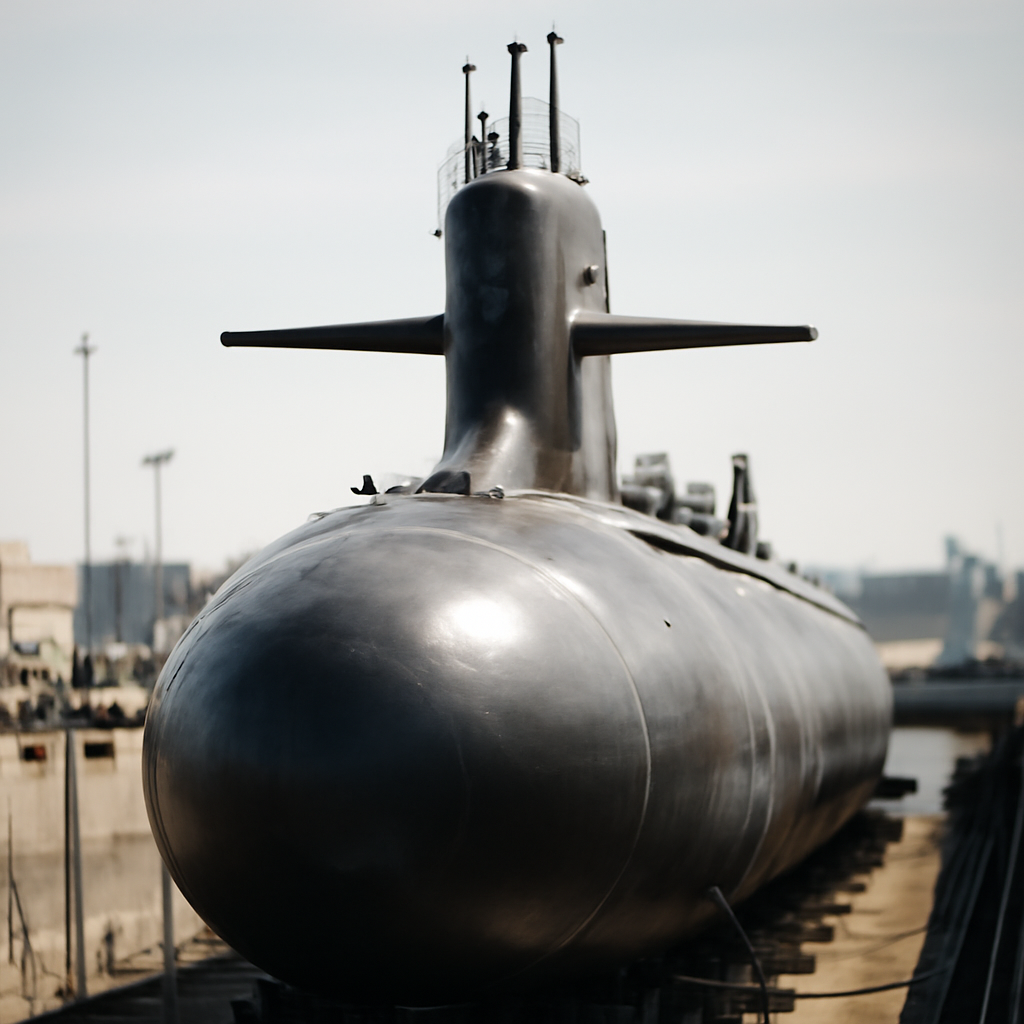
"finding, tracking, attacking and destroying [nuclear-armed] Chinese submarines" — that, former foreign minister Gareth Evans told the inquiry, is an "inescapable conclusion" about the future role of Australia's nuclear-powered submarines.
What the AUKUS inquiry revealed
The AUKUS "independent" inquiry opened last week with a familiar set of concerns from long-time critics, including warnings that reactor fuel disposed of in 2060 could be recovered for use in nuclear weapons 10,000 years in the future. Witnesses pointed to risks ranging from the industrial base to the long-term stewardship of nuclear material. The inquiry is led by commissioners who, the source notes, have long opposed Australia’s acquisition of nuclear-powered submarines.
The operational logic for nuclear-powered submarines
The article stresses that nuclear-powered submarines are prized for endurance and transit speed. A conventional submarine takes about nine days to travel from Sydney to Perth; a nuclear-powered submarine can do so in roughly half that time and is much less likely to be detected. That combination — speed, endurance and stealth — is presented as the primary operational logic for Canberra: the ability to operate across Australia’s vast maritime domain and to respond across long distances without the same detection risks as conventional vessels.

Audit-ready is a season. It shouldn't be.
Evidence in spreadsheets, controls drifting between audits, frameworks multiplying on flat headcount. Nubivance runs continuous compliance on Rapid7 Cyber GRC - SOC 2, HIPAA, ISO 27001, PCI, CMMC.
End the scrambleMaritime trade as the core strategic driver
The piece argues the acquisition is first and foremost about protecting maritime trade. Ninety-nine percent of Australia’s imports and exports move by sea, the article emphasizes, including essentials that underpin both prosperity and national security. The greater risk identified is maritime coercion — interference with the sea lines of communication on which the economy and security depend — rather than missile or drone attacks alone. Acquiring nuclear-powered submarines, the author says, is about projecting power through the maritime domain to safeguard those sea lines of communication.
The Chinese naval task groups that framed the debate
The debate over purpose is anchored by two cited events: a Chinese naval task group’s circumnavigation of Australia in February and March 2025, and the return of a second task group in November 2025. The article uses those deployments to illustrate the operational challenge: a conventional submarine lacks the speed to intercept such a deployment unless it is positioned well in advance. That, the author contends, underscores why transit speed matters when operating a small submarine force across the world’s third-largest maritime domain.
What this means for policymakers, the navy, and Australian exporters
- Policymakers: The government, the article argues, has made substantial progress under AUKUS but has sometimes struggled to communicate the capability’s benefits. Policymakers will need to address concerns raised at the inquiry — from industrial-base risks to long-term nuclear stewardship — while anchoring public debate in Australia’s stated national interests.
- The navy and planners: For planners and operators, the article presents a likely use-profile for the submarines that focuses on locating, tracking and, if necessary in conflict, destroying adversary naval task groups and submarines that threaten maritime trade, alongside intelligence collection and support for special forces across the Indian and Pacific oceans.
- Australian exporters and the maritime sector: The piece frames the capability as an insurance policy for the uninterrupted movement of goods: protecting the sea lines of communication on which 99 percent of trade depends is presented as central to prosperity and national security.
The article rejects a narrow framing that AUKUS is “clearly aimed at China,” a view expressed by former deputy ambassador John Leslie Lander, and pushes back on the claim advanced by Gareth Evans that Australia’s future submarines would have only one role focused on tracking Chinese nuclear-armed submarines. Instead, it presents the capability as a versatile means to protect national interests across vast maritime distances. In an increasingly contested Indo-Pacific, "where for the first time since 1942 a regional military power possesses the ability to threaten Australia’s maritime supply lines and trade at scale," the author concludes, the ability to protect those interests is not optional but foundational to a credible defence.
Link to the original story: https://www.aspistrategist.org.au/aukuss-importance-goes-beyond-deterring-china/