Since it launched in August, the Army's new range-reservation system is averaging 33 days for test scheduling, according to the commander of Test and Evaluation Command.
What the Army built and what it aims to do
The Army has opened a quick-turnaround, online reservation system that lets companies submit a proposal with dates and a preferred range; within 24 hours a “concierge” will call back to schedule a time. The service's stated goal is to cut wait times for test-range access from more than a year to no more than 30 days. Maj. Gen. Pat Gaydon, the commander of Test and Evaluation Command, told an AUSA event near Washington, D.C., that the system launched in August and is currently averaging 33 days.
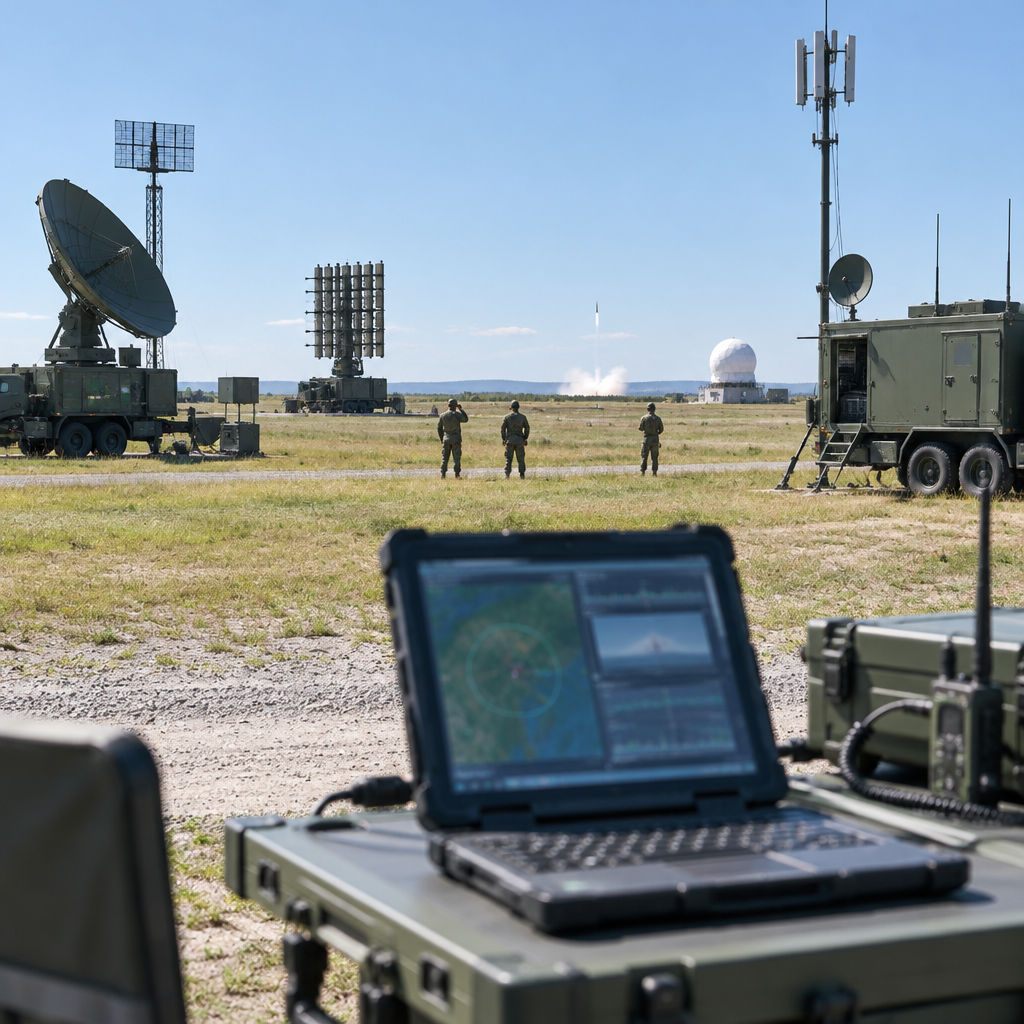
The Army has enrolled a mix of domestic and international ranges in the construct: Dugway Proving Ground (Utah); the West Cibola Range at Yuma Proving Ground (Arizona); Camp Grayling (Michigan); Camp Shelby (Mississippi); Camp Atterbury (Indiana); and an international range near Tan-Tan, Morocco. Gaydon characterized the design as a “permissive test range” construct intended to expand choice beyond heavily booked locations such as White Sands Missile Range.
Fast-tracked invitations and industry experience — Covenant Industries
The permissive test range construct has pushed the Army to fast-track invitations to some of its own exercises. Abby Denberg, president of Covenant Industries, said her company was testing a missile in Morocco 14 days after receiving a call from the Army this fall. “When companies are invited to participate in exercises, those invitations usually come about a year out,” Denberg said. She added that the final planning conference for exercises is usually about six months before the exercise and that “locking configurations six months out can hamper your ability to bring the latest and greatest technology to those exercises,” especially for startups that are changing rapidly.

Audit-ready is a season. It shouldn't be.
Evidence in spreadsheets, controls drifting between audits, frameworks multiplying on flat headcount. Nubivance runs continuous compliance on Rapid7 Cyber GRC - SOC 2, HIPAA, ISO 27001, PCI, CMMC.
End the scrambleIteration, soldier feedback, and the aim of “fly, fail, fix, fly again”
Gaydon framed the program around rapid experimentation: companies should be able to “fly, fail, fix, fly again,” and not be limited to a one-week test window a year or 18 months out. The system’s flexibility is intended to let companies test “once a week or one week a month,” he said. Denberg tied that rapid cadence to the Army’s Continuous Transformation philosophy, noting the value of getting systems into the hands of soldiers early so end-users can test concepts of employment and concepts of operations and provide feedback.
Unmanned systems and AI testing — Mach Industries' view
Nathan Diller, president of Mach Industries, emphasized the importance of repeated, rapid testing for unmanned systems that rely on artificial-intelligence models. “What it allows us is very rapid closure on those models, to make sure that you can start to build trust in the models sooner,” he said. Gaydon also noted operational constraints that private ranges cannot easily replicate: if a company “owns the whole kill chain and drone/counter-drone, the FAA will not allow you to shoot down your own drone in airspace that is in ours,” and contested electronic and electromagnetic-spectrum test conditions are similarly difficult to reproduce on private property.
Program metrics, deliverables, and the memorandum of participation
Through November, the reservation system had received 156 requests, Gaydon said. More than 60 percent of those requests are being or have been scheduled. The Army reported it has completed 15 tests to date, has 14 more ready, and is “actively working to get on the range” roughly 93 additional requests. The program also offers companies a memorandum that documents that they “came, operated in this environment,” and which firms can use with program offices or other audiences to build confidence in their products.
How startups, unmanned-systems firms, and program offices are likely to respond
- Startups: Use accelerated invitations and rapid scheduling to iterate hardware and software more quickly, avoiding the six‑month configuration lock described by Covenant Industries' president.
- Unmanned-systems firms and AI developers: Take advantage of frequent, contested-environment testing to shorten model-development cycles and begin building operational trust in AI-driven systems, as Mach Industries' president described.
- Program offices and range operators: Use the memorandum of participation as a documentary input to acquisition conversations and weigh how the permissive range construct supplements heavily booked ranges such as White Sands.
The program has demonstrable momentum: multiple ranges onboarded, industry examples of two‑week turnarounds into tests in Morocco, and a pipeline of more than 120 requests already scheduled or being processed. The central test is whether the system can consistently hit the stated goal of no more than 30 days—so far averaging 33—and whether that tempo scales as demand rises. The Army has taken a procedural step toward faster, repeatable testing; whether that translates into faster fielding or measurable gains in soldier feedback and model trust will be seen in the next rounds of activity.