"When realized," Brig. Gen. Anthony Gibbs said, "this capability will be able to understand and translate human intent into mission plans and mission execution, dynamically re-task as needed."
CPE Mission Autonomy: a new integrator, not a buyer
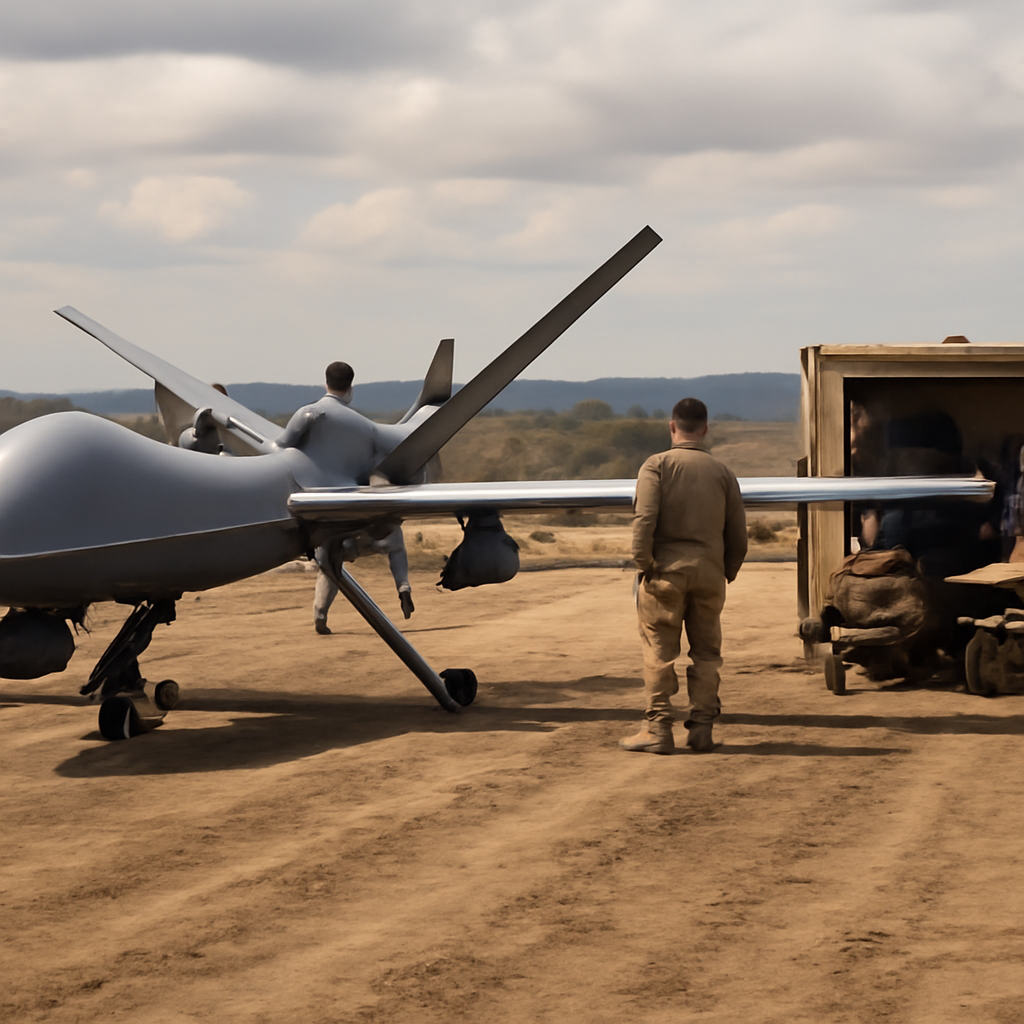
Earlier this year the Army created the Capability Program Executive Office for Mission Autonomy (CPE Mission Autonomy) to interconnect unmanned operations across the service — from drones to ground robots. The office will not build or acquire platforms; its charge is to integrate existing systems into what Brig. Gen. Anthony Gibbs described as "packages of capability" that commanders can task depending on the mission. Headquartered at Fort Belvoir, Va., CPE Mission Autonomy was assembled from pieces already in the acquisition community: Program Executive Office Ground Combat Systems and Program Executive Office Combat Support & Combat Service Support in Michigan, Picatinny Arsenal in New Jersey, and Aberdeen Proving Ground in Maryland.
Three initial mission areas: combat engineering, fires, sustainment
Gibbs identified three near-term priorities for those capability packages. First is autonomous combat engineering — mobility and counter-mobility work traditionally done by sappers to shape terrain and clear breaches — which the office sees as "ripe for autonomy" given the danger to soldiers. Second is fires, starting by connecting mature, cross-cutting tools already in the Army's portfolio such as automated target recognition and call-for-fire algorithms. As Gibbs put it, "Those technologies are mature... No one owns them. We're saying we own those spaces." Third is sustainment: resupply at echelon and casualty evacuation (CASEVAC). Gibbs pointed to ongoing efforts including the Autonomous Transport Vehicle System program and demonstrations of autonomous ship-to-shore resupply using unmanned surface vessels and ground robots.

This site is the portfolio.
OSINTSights runs on Cloudflare Workers, D1, R2, and Vectorize, with an AI pipeline on Hetzner ARM. Nubivance designed, built, and operates it. We do the same for clients.
See what we buildHow the packages will operate: intent, planning, and dynamic re-tasking
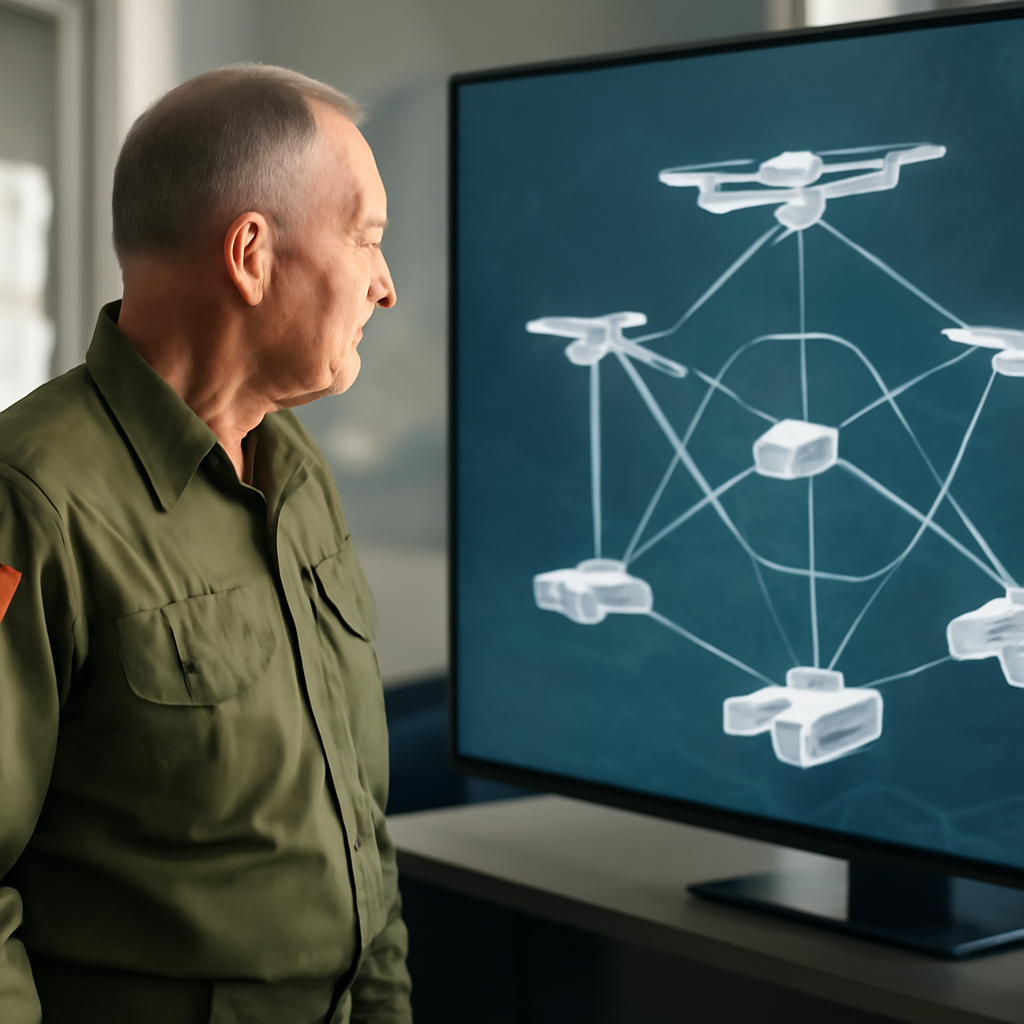
The stated goal for these mission-autonomy packages is an end-to-end capability that can interpret a commander's intent, plan, execute and adjust as battlefield conditions change. Gibbs said the packages will employ "a system of systems approach" so a commander can task them "much like he or she would a manned formation." He acknowledged that not every mission area sits wholly inside his portfolio: launched effects are not under CPE Mission Autonomy, though the office will "help enable them," and counter-UAS and electronic warfare are supporting efforts because "a lot of that mission can and should be done with unmanned and autonomous systems." Maneuver-related tasks such as intelligence, surveillance and reconnaissance, overwatch and maintaining contact with manned formations remain in the science-and-technology phase and could move up in priority later.
Technical direction: open architecture, open APIs, and a reference architecture
Gibbs emphasized open architecture as a critical enabler. He urged industry to "build to open APIs and avoid proprietary interfaces," particularly for counter-UAS, electronic warfare and weapon payloads. The office intends to create a reference architecture to accelerate onboarding: CPE Mission Autonomy wants the Army to be able to add new platforms, payloads and enabling technologies "in a matter of weeks or even days," rather than months or years.
How commanders, technologists, and sustainers will respond
- Commanders and operational planners: They will gain the option to task bundled autonomous capabilities "much like" a manned formation and to call for alternatives when traditional movement is too exposed. Gibbs warned plainly, "If you move exposed, you're going to be targeted," noting unmanned options may be needed when helicopters or other assets cannot safely reach wounded soldiers.
- Technologists and industry partners: The office's insistence on open APIs and avoidance of proprietary interfaces signals concrete priorities for vendors hoping to plug into the Army's packages of capability. CPE Mission Autonomy will integrate systems rather than purchase them, pressuring suppliers to conform to shared interfaces.
- Logistics and medical sustainers: Programs cited by Gibbs — the Autonomous Transport Vehicle System and unmanned ship-to-shore demonstrations — point to near-term experimentation in resupply at echelon and CASEVAC options that could alter how sustainment is performed in contested areas.
Gibbs also acknowledged a practical management challenge: prioritizing across the Army is "a big challenge," and Army Training and Doctrine Command is assisting CPE Mission Autonomy in looking across user communities to set focus areas. The office's next practical deliverables are clear in Gibbs' remarks: establish ownership of cross-cutting autonomy technologies, produce a reference architecture, and accelerate the tempo for onboarding new capabilities so commanders have taskable, interoperable autonomous packages when they need them.