What happens when a single program forces a military service to ask whether its existing aircraft are doing the jobs they were bought to do? The MV-75 Cheyenne II has set off exactly that question, according to reporting: it is prompting a re-think of the service’s aviation lineup and, the story says, “might mean longer-range Apaches, new missions for the Black Hawk, and even a drone tanker.”
Why one program matters
The MV-75 Cheyenne II has become a catalyst for conversations about where rotary- and vertical-lift aviation fits into future operations. The reporting presents the program as a driver of institutional reassessment rather than as an isolated procurement item: its emergence is prompting planners to reconsider roles, range and mission sets across multiple airframes already in service.
How the lineup could change
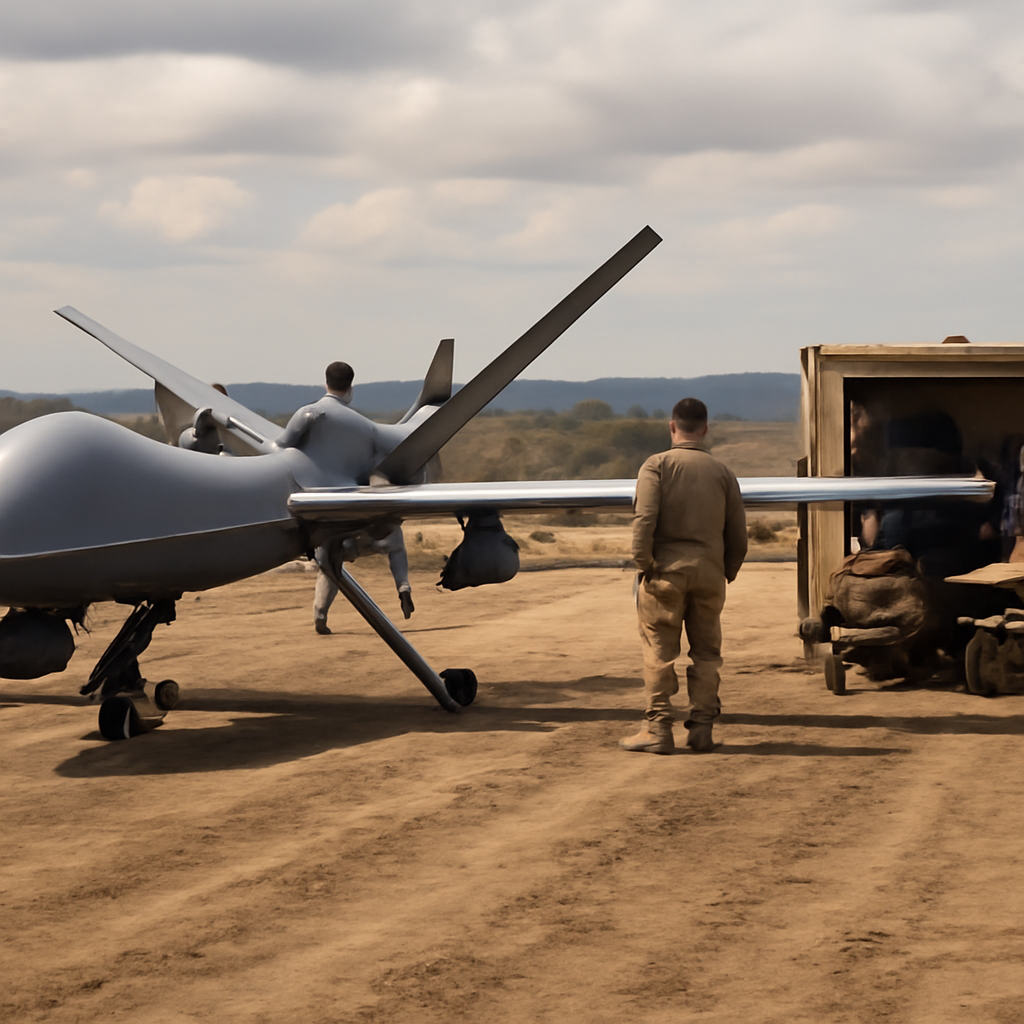
The published account identifies three concrete possibilities that could flow from integrating the MV-75 Cheyenne II into the force. First, Apaches could be adapted for longer-range operations. Second, the Black Hawk could be assigned new missions beyond its current employment. And third, the service could pursue a concept of operations in which a drone serves as an aerial tanker.
Each of those possibilities is presented as a potential consequence—"might mean"—rather than a fait accompli, signaling planning and discussion rather than finalized decisions.

Audit-ready is a season. It shouldn't be.
Evidence in spreadsheets, controls drifting between audits, frameworks multiplying on flat headcount. Nubivance runs continuous compliance on Rapid7 Cyber GRC - SOC 2, HIPAA, ISO 27001, PCI, CMMC.
End the scrambleWhy it matters: perspectives to consider
Technologists will read the report as an invitation to explore new integrations and interoperability between platforms—how a new program reshapes requirements for range, communications and offboard support. Policymakers and planners face choices about priorities and trade-offs: whether to adapt legacy platforms to follow a changing concept of operations or to procure new systems built to those emerging missions.
End users—pilots, maintainers and commanders—would contend with shifts in doctrine and daily operations if Apaches operate at greater ranges, if Black Hawks take on unfamiliar tasks, or if unmanned systems are employed as tankers. Meanwhile, potential adversaries observing these conversations could see opportunities and constraints in how the service is reorganizing its aviation posture.
What to watch next
The coverage frames the MV-75 Cheyenne II as more than another program line item: it is a hinge point for broader debate about aircraft roles, force structure and the incorporation of unmanned concepts such as a drone tanker. The reporting leaves open whether the service will pursue any of the specific outcomes described; what is clear is that the program has elevated those questions within the service’s planning discourse.
Will this discussion produce incremental adaptations to existing airframes, or will it push the service toward more radical changes in how it composes and employs its aviation fleet? The MV-75 Cheyenne II has set the question; the service will now have to answer it.