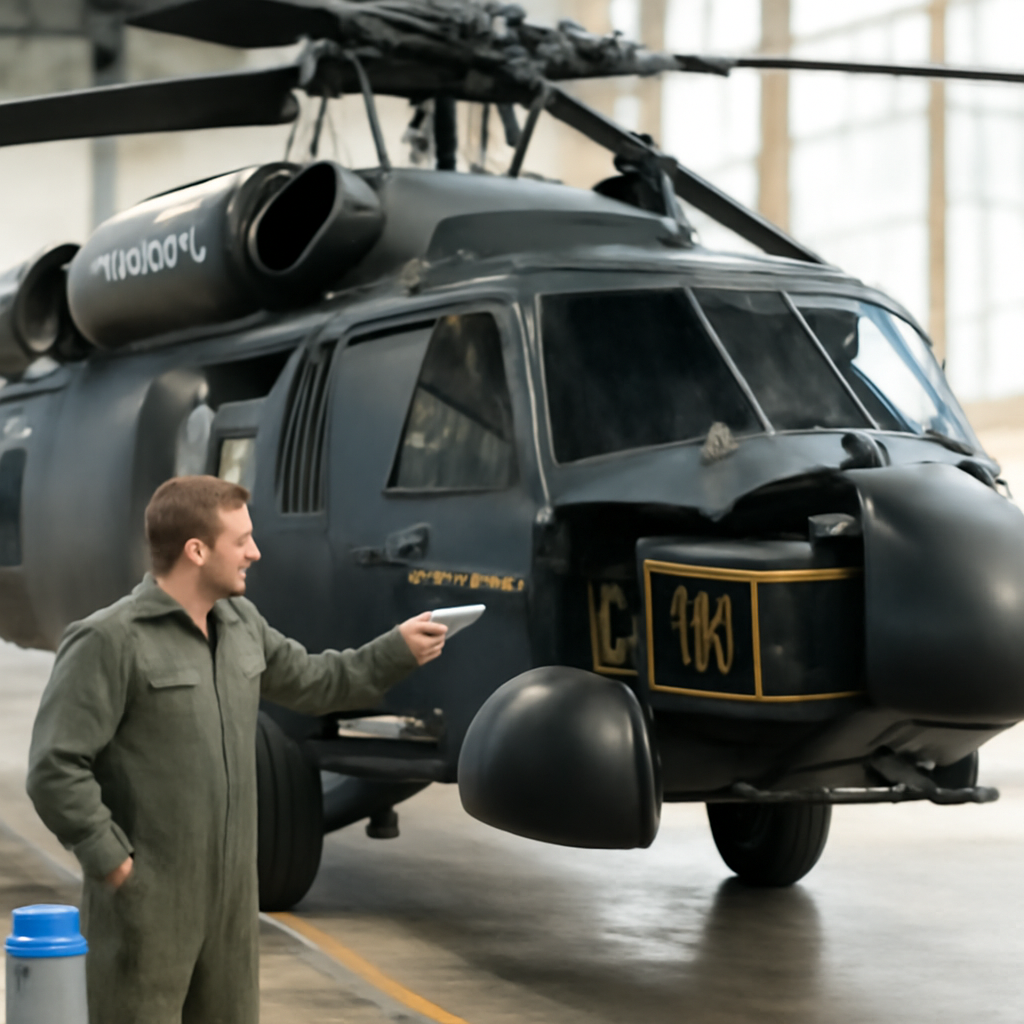
“We had 600 rounds total,” Maj. Gen. Clair Gill said April 15, describing how a single idea from the force is reshaping how the Army thinks about its attack helicopters.
How a warrant officer’s suggestion sparked tests
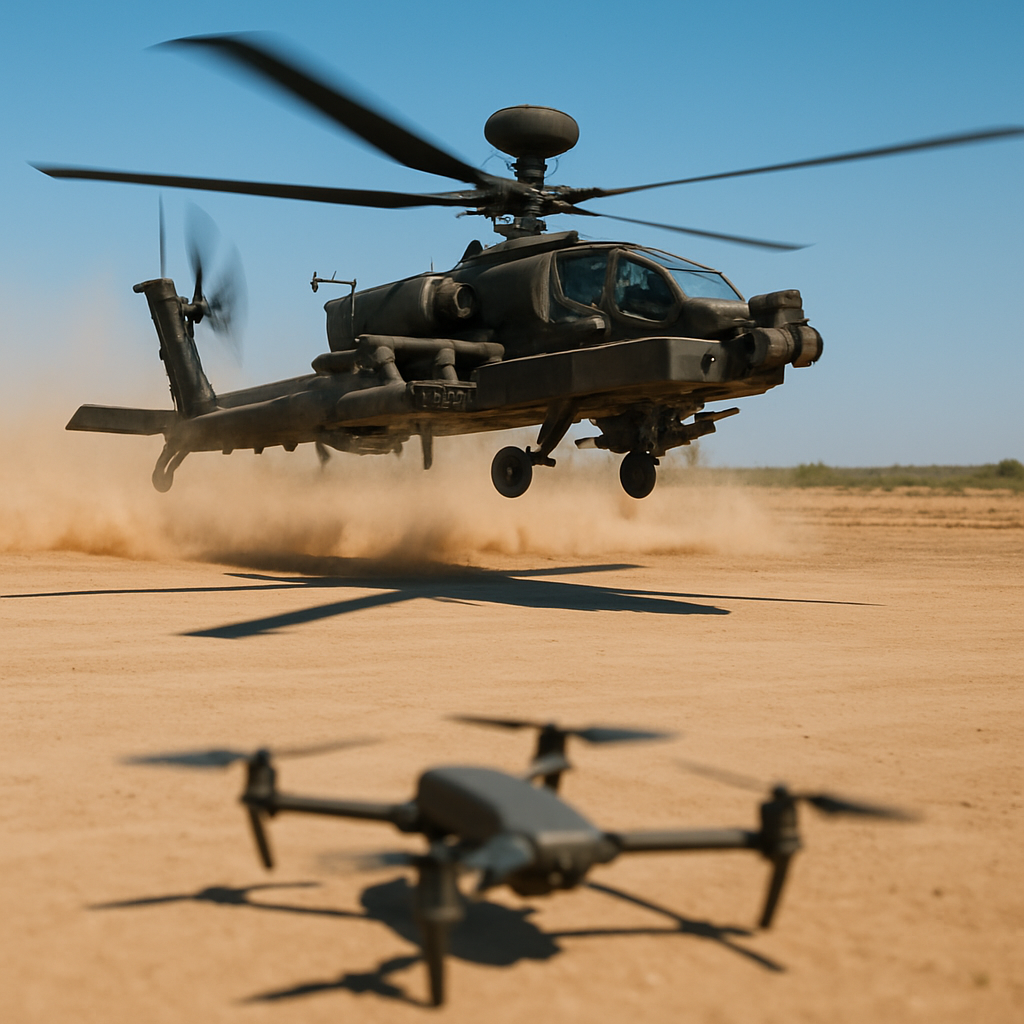
The concept to try Apaches as drone hunters came from Daniel York, a recently retired chief warrant officer-5 and Apache training manager, Maj. Gen. Gill told attendees at the Army Aviation Warfighting Summit. York’s proposal led to a program of experimentation named Operation Flyswatter, which ran tests last year to explore whether AH-64 attack helicopters could engage unmanned aerial systems (UAS) more economically and effectively than some existing counter-UAS approaches.Operation Flyswatter: weapons, targets, and outcomes
During Operation Flyswatter, Apaches were armed with a mix of munitions as they engaged drones, according to Gill. The tests used air-to-ground missiles, Hellfires, guided rockets, and 30mm rounds with proximity fuzes. Officials described engagements against UAS weighing more than roughly 50 pounds — the weight range associated with Group 3 UAS and above. The service presented the Apache as a potential answer for threats two or three orders of magnitude smaller than the armored targets for which the aircraft was originally developed.[SPONSOREDNUBIVANCE]
The cyber insurance questionnaire just landed. Now what?
SOC 2, HIPAA, insurance renewals - someone has to own security strategy. Nubivance provides fractional CISO leadership without the full-time salary.
Get a security leadWhy the Army sees Apaches as part of air defenses
Brig. Gen. David Phillips, the Army’s deputy Portfolio Acquisition Executive for air maneuver, framed the Apache’s role in cost and mission terms. He told Defense One that engaging Group 3–5 UAS with “cost-effective munitions like 30mm or guided rockets preserves high-end, expensive ground interceptors for more complex threats.” Phillips argued the Apache “can rapidly reposition to intercept incoming threats across a massive operational footprint,” thereby augmenting ground-based air and missile defenses. He also described the Apache as “a flying sensor and shooter for the joint force,” and said the service’s acquisition path toward the AH-64E Version 6 “strongly validates” using attack aviation in theater air defense designs.Production decisions and fleet implications
To support the concept, the Army has placed a substantial order for 30mm proximity-fuze ammunition with Northrop Grumman. Gill reported the service had “600 rounds total” initially; Northrop Grumman “produced 1,000 rounds already this month, and they’ll produce another 1,000, and they're going to ramp their rate up probably five times that,” he said. At the same time, the Army is managing fleet transitions: the AH-64D models are being retired and moved to other functions, while purchases of AH-64E continue. Phillips emphasized that the Apache’s new counter-UAS role “doesn't change our entire procurement strategy,” but that it will change mission priorities for attack helicopters.What this means for the 12th Combat Aviation Brigade, NATO, and acquisition leaders
- 12th Combat Aviation Brigade: The brigade recently tested its Apaches in aerial counter-drone operations, directly translating the Operation Flyswatter work into brigade-level experimentation and evaluation. - Lt. Gen. Hank Taylor, the U.S. military representative to NATO: Taylor linked the UAS threat to recent conflicts and theaters, saying April 16 that “The UAS threat has defined the conflict in Ukraine, and as we see, also back in the [U.S. Central Command area of operations],” and that controlling airspace and protecting forces drives the need for solutions. - Brig. Gen. David Phillips and acquisition officials: Their public comments indicate a procurement strategy that pairs continued AH-64E buys with investments in munitions — notably proximity-fuzed 30mm rounds — aimed at preserving higher-cost interceptors for other missions.Conclusion
The Army’s experiments have moved beyond concept to concrete logistics and procurement choices: rounds ordered, production ramp targets announced, brigade-level tests conducted, and a reorientation of mission priorities for the AH-64 fleet. The service is betting that using existing platforms with comparatively inexpensive munitions will be an efficient plug-in to theater air defense. The immediate, tangible next step reported is a production ramp of proximity-fuzed 30mm rounds by Northrop Grumman — “probably five times” the current rate, Gill said — raising a clear operational question the record leaves open: can ammunition production and Apache tasking scale fast enough to meet demand where Group 3–5 UAS threats are already reshaping airspace control?Source: Defense One — Exploding shells may turn the Apache helicopter into a drone hunter