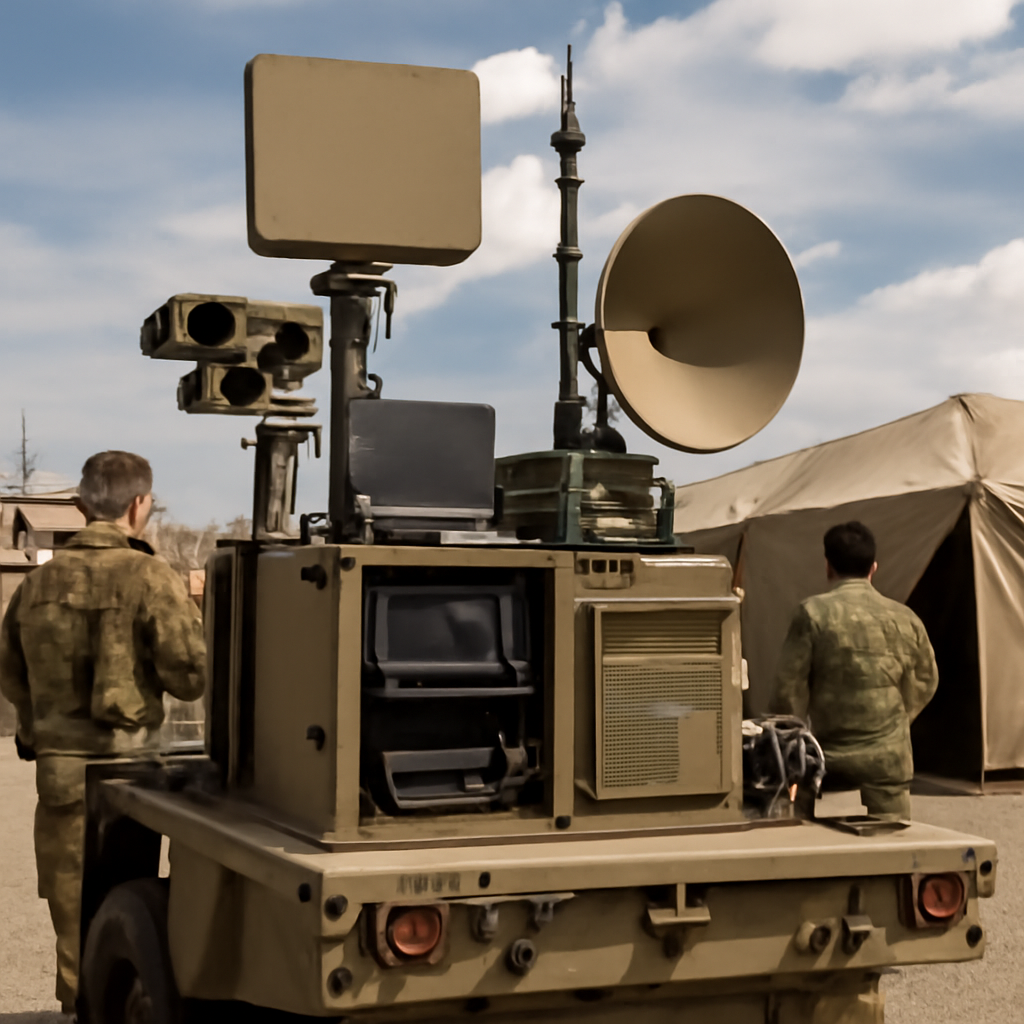
"This effort is the result of Soldier feedback we have received over the past four years of prototyping from units utilizing TITAN prototypes in multiple configurations across diverse operating environments," Col. Jonathan Lipscomb said, summing up why the Army moved the Tactical Intelligence Targeting Access Node into production.
Army awards and who will build TITAN
The Army awarded production contracts totaling $192 million to move the next-generation mobile intelligence node, TITAN, into production. Palantir received $127 million as the prime contractor; Anduril received $65 million to deliver ruggedized hardware and vehicle-mounted systems, according to the Army announcement.
The awards cover procurement and integration of eight systems to be delivered over the next 18 months and split into four advanced and four basic variants. Additional capabilities were identified as coming from L3Harris Technologies, Sierra Nevada, Strategic Technology Consulting and World Wide Technology, but the Army did not specify those capabilities in the announcement.
Two variants, three vehicle families, and a constrained footprint
The Army plans a basic TITAN variant intended as a division asset mounted on the Joint Light Tactical Vehicle and the Infantry Squad Vehicle-Utility, emphasizing mobility. The advanced variant is described as a corps-level, military intelligence brigade theater-level and multi-domain command asset mounted on the "Family of MediumTactical Vehicles." Units will be allocated two basic and one advanced system, a limited footprint the Army says makes those systems high-value and necessitates protection from targeting on the battlefield.

The cyber insurance questionnaire just landed. Now what?
SOC 2, HIPAA, insurance renewals - someone has to own security strategy. Nubivance provides fractional CISO leadership without the full-time salary.
Get a security leadPrototyping, climate lessons, and environmental fixes
The service has been prototyping and experimenting with TITAN for several years. The Army sent "pre-prototypes" to the Pacific and Europe in 2022 and used soldier feedback to iterate the design. Early assessments from a deployment in the Philippines flagged humidity as creating unforeseen problems not encountered in prior deployments, prompting redesign and more rigorous environmental engineering.
At a demonstration at Aberdeen Proving Ground on Aug. 27, Col. Lipscomb told reporters that leaders believe they resolved climate concerns through more rigorous environmental engineering. His explanation tied directly to the program's iterative cycle: feedback from four years of prototyping informed changes intended to make TITAN function reliably across diverse operating environments.
Palantir, Anduril, and the vehicle-agnostic approach
Palantir will lead overall production for TITAN; Anduril will provide the ruggedized, vehicle-mounted systems as well as power and operator subsystems to ensure TITAN functions in the "demanding environments" the Army operates in, the company said. The contract structure assigns software-led integration and systems delivery to Palantir while Anduril focuses on hardware and ruggedization for fielded platforms.
The Army is also pursuing a vehicle-agnostic version of TITAN, a system that can be housed in a case, loaded into the back of a vehicle or removed and plugged into a building. That approach is explicitly intended for Denied, Degraded, Intermittent, and Limited (DDIL) environments. "If you’re in that [Denied, Degraded, Intermittent, and Limited] environment and you don’t have access to the cloud, you don’t have access to the pristine, I’ll call it ‘intelligence community data sources,’ then you can pull in local sensor data direct," Col. Lipscomb said. He described how a mobile node can position itself to receive, process and act on local sensor data to continue targeting and to enhance situational understanding.
How units, technologists, and procurement leaders will respond
- Units: With allocations limited to two basic and one advanced TITAN, military units will need to prioritize protection and employment of those nodes; the Army flagged that limited numbers make each system a high-value target.
- Technologists and field operators: Soldier feedback has driven iterative environmental engineering changes; field operators will watch how the more rigorous environmental fixes perform in humidity- and climate-challenged deployments as the eight production systems are fielded.
- Procurement leaders and integrators: The contract distributes roles across Palantir, Anduril and multiple subcontractors, and Maj. Dell Barnes said the Army will continue prototyping and integration onto the Joint Light Tactical Vehicle and the ISV-U while production ramps up, signaling an overlap of continued experimentation with limited initial production deliveries.
The Army's decision to buy eight TITAN systems and continue concurrent prototyping reflects a calculated bet: keep soldier-informed iteration alive even as initial production begins. Deliveries are scheduled over the next 18 months; whether the environmental fixes and vehicle-agnostic concepts perform as intended under operational pressures will be the immediate measure of success for a program built expressly around soldier feedback.