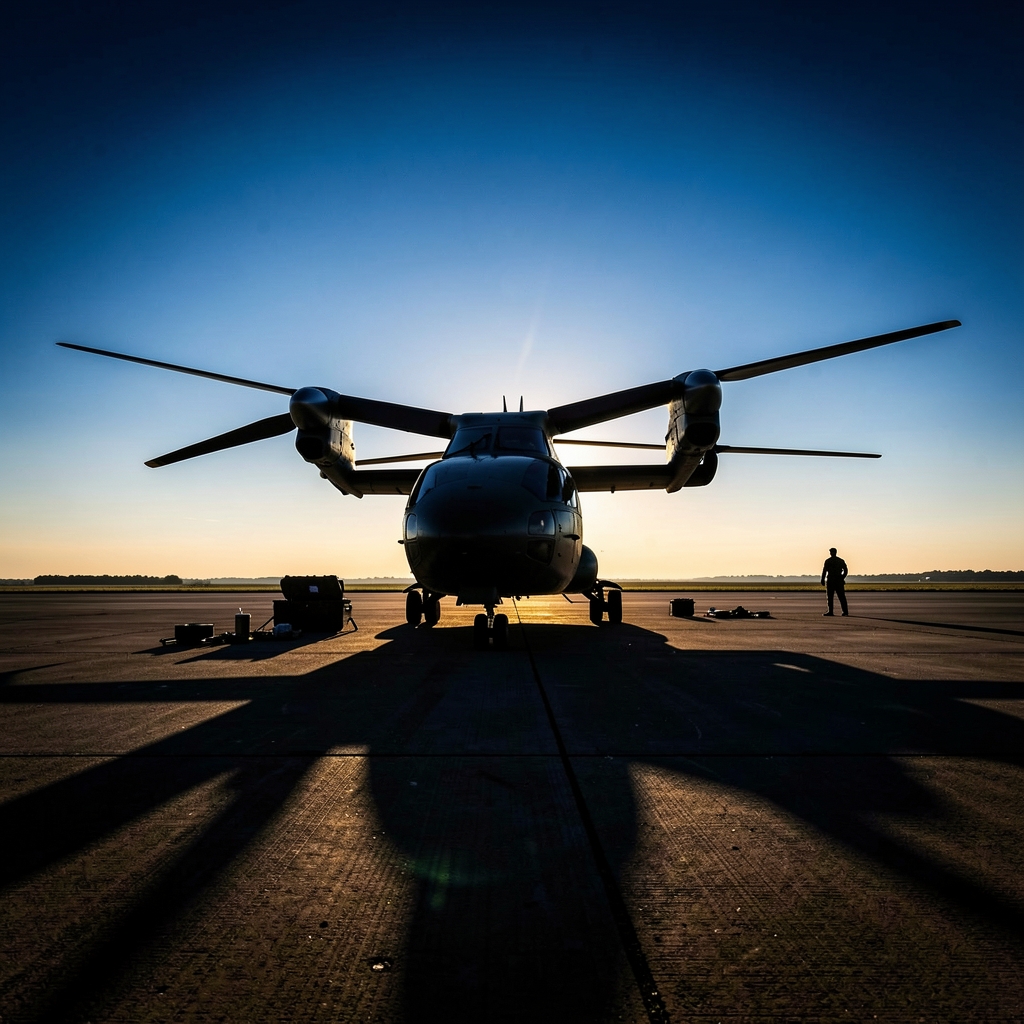
Can an aircraft inherit the operational promise of a new flight regime while shedding the baggage of an older platform's reputation? That is the central dilemma facing the Army as it prepares to introduce its first tiltrotor aircraft, the MV-75, into service.
What the Army is doing now
Defense One reports that the Army is moving to bring a tiltrotor into its fleet for the first time. The new aircraft, designated the MV-75, is being positioned to deliver capabilities that, according to the report, "other services have had for years" while explicitly attempting to avoid the fraught reputation associated with an earlier tiltrotor platform, the V-22.
At its core this effort combines two objectives: acquire vertical lift with airplane-speed range and protect the program from public and operational criticisms that have shadowed prior tiltrotor efforts. Those dual aims frame how the service is describing and shaping the MV-75's introduction.
Why the reputation issue matters
Reputation in military aviation is not merely public relations. A platform's safety record, media coverage, and institutional memory affect acquisition choices, congressional oversight, training tempo, and user confidence. The Defense One account notes the Army's clear intent to avoid repeating the V-22's reputation problems. That concern helps explain why the service is emphasizing both capability parity and perception management as it brings the MV-75 online.
The decision to foreground a break from past perceptions signals an awareness that technical performance alone does not determine a program's acceptance. Program managers and policymakers must manage engineering, testing, logistics, and messaging in parallel if they intend to change how an aircraft is seen by soldiers, commanders, lawmakers, and the public.

This site is the portfolio.
OSINTSights runs on Cloudflare Workers, D1, R2, and Vectorize, with an AI pipeline on Hetzner ARM. Nubivance designed, built, and operates it. We do the same for clients.
See what we buildPerspectives and trade-offs
- Technologists: For engineers and maintainers, tiltrotor designs present a set of familiar trade-offs: combining helicopter-like vertical lift with fixed-wing cruise speeds introduces complexity in propulsion, flight control, and maintenance. The Army's emphasis on delivering capabilities that others have long fielded suggests an intent to leverage existing design concepts rather than reinvent them, but also raises questions about integration, sustainment, and testing regimes specific to the MV-75.
- Policymakers: For budget-makers and overseers, a program that explicitly seeks to avoid a predecessor's reputation means closer scrutiny on milestones that demonstrate safety, readiness, and cost control. The service's stated priorities imply that congressional and executive stakeholders will be watching not only technical outcomes but program narratives that aim to restore or build confidence.
- Users: For soldiers who will plan missions around the MV-75, the promise of capabilities enjoyed by other services for years could expand options for movement, range, and logistical flexibility. Equally, users will want assurance that the aircraft meets operational reliability and survivability standards without imposing excessive maintenance burdens.
- Adversaries: Observers outside the U.S. will judge capability changes and may adjust their own planning accordingly. The Army's adoption of a tiltrotor capability sends a message about desired operational reach; avoiding the stigma attached to prior platforms helps ensure that message is assessed on current performance rather than historical controversy.
Why this matters and what to watch
Introducing the MV-75 is a statement of intent as much as an acquisition choice: the Army wants tiltrotor capability without the baggage associated with the V-22. How the service manages testing, training, sustainment, and public communication will shape whether that intent becomes reality.
Practical indicators to follow will include the MV-75's flight-test milestones, maintenance and logistics plans, reported safety metrics, and how the service frames performance updates. Each of those elements will contribute to program credibility. If the Army can demonstrate reliable performance and clear operational benefits, it will strengthen the case that tiltrotor capability can be normalized within its force structure. If not, the legacy of earlier platforms could complicate political and operational support.
Ultimately, the MV-75 program asks a simple but consequential question: can an aircraft deliver proven capabilities while rewriting the public and institutional record left by its predecessors—and what happens if it does not?