“Whether it's an intelligence analyst in the field or whether it's a flightline operator, someone who's literally trying to get information off of the system, the sensor, and making a meaningful decision about it. What's really different, and what we're seeing is this ruggedized edge.” — Liz Martin, AWS’ global defense managing director and general manager.
What Anduril’s Menace‑I is and how AWS fits in
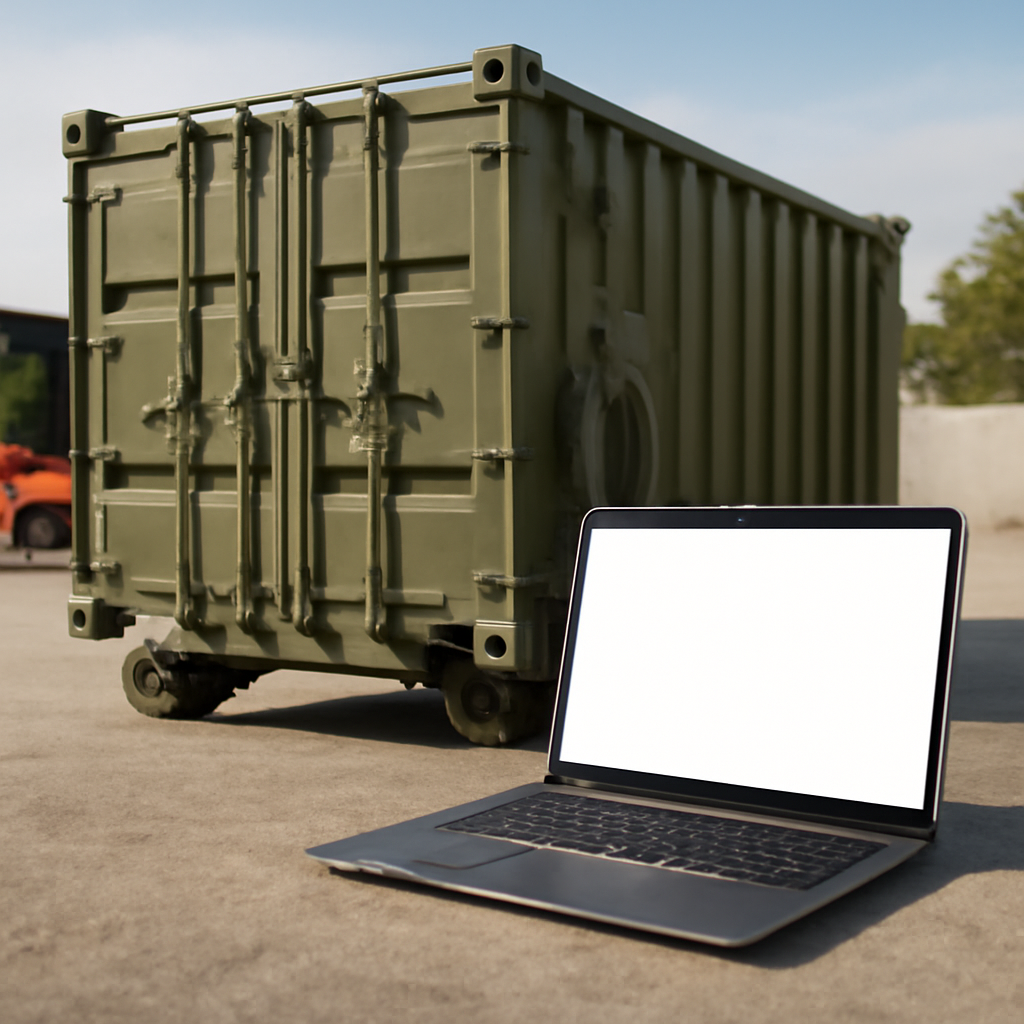
Anduril’s containerized command and data center, Menace‑I, is a mobile, ruggedized shipping‑container system designed to host computing and command capabilities close to operations. Launched in 2022, Menace‑I is built to move by truck, rail, airlift, or by helicopter sling load and, the company says, “with two people, the mobile data center can stand up in under 10 minutes.”
Amazon Web Services (AWS) and Anduril announced that Menace‑I can now be outfitted with AWS’s Outpost — AWS’s on‑site cloud hardware and software stack — allowing applications that run in the cloud to operate at the tactical edge inside the container. AWS has named the California‑based contractor its “preferred edge provider” for defense customers.
Field provenance: Operation Epic Fury and service branch deployments
Both Menace‑I and AWS Outpost have already seen use in the Iran war, according to the companies. An Anduril executive told reporters at the AWS Summit in Washington, D.C., that Menace‑I had been used during Operation Epic Fury and that the containerized command center “has been deployed with the Army, Air Force, Marines, and Navy.” AWS Outpost, the executive added, had been deployed in the region as well — but in protected structures.
Anduril notes a recent demonstration of the system’s transportability: last year, U.S. Marines strapped a Menace‑I container onto a CH‑53K King Stallion helicopter for transport.

This site is the portfolio.
OSINTSights runs on Cloudflare Workers, D1, R2, and Vectorize, with an AI pipeline on Hetzner ARM. Nubivance designed, built, and operates it. We do the same for clients.
See what we buildAWS’s pitch and Anduril’s operational framing
AWS framed the integration as bringing cloud capability down to the tactical edge so field users can run cloud applications locally or send data upstream for larger analysis. Liz Martin described a range of users — from intelligence analysts to flightline operators — who would benefit from reduced data‑transfer time and local processing. Tom Keane, Anduril’s senior vice president of engineering, said the combined offering “is providing capabilities for commanders that today they either don’t have or are simply too expensive and too difficult for them to practically field and use in real world.”
Keane also described a shifting architectural preference among customers: “The idea of distribution as a mechanism for fault tolerance, having many, is becoming increasingly important … as opposed to having a singular thing that is immensely and infinitely robust.”
Survivability questions and tradeoffs on the battlefield
The companies emphasize mobility and local processing, but the record quoted in their announcements raises explicit questions about survivability. The story notes that it is “not clear how survivable the shipping container data center would be on the battlefield.” That caution is anchored to a recent combat incident: during Operation Epic Fury, six U.S. Army reservists were killed when a makeshift operations center fortified by concrete walls was hit in an Iranian attack. That example underscores the difference between deploying equipment inside protected structures — which AWS has reported doing in theater — and putting containerized systems in exposed or contested positions.
Anduril’s and AWS’s statements point to a design choice: distribute many systems for fault tolerance rather than rely on a single, hardened installation. Distribution can reduce single‑point failures but also raises questions about protection, logistics, and the ability to recover or relocate systems under fire.
What this means for commanders, the Army and Marines, and defense buyers
- Commanders and field operators: Expect faster, localized access to cloud applications and sensor data if Menace‑I and AWS Outpost are colocated at the edge; they will need to weigh speed and autonomy against protection and concealment requirements.
- The Army and Marines: Both services have already moved Menace‑I in exercises and operations — including helicopter transport on the CH‑53K — so transportability and rapid stand‑up will shape tactics, basing decisions, and logistical planning.
- Defense buyers and procurement officials: AWS’s naming of Anduril as its “preferred edge provider” for defense customers signals a vendor tie that could influence future procurements; buyers will have to evaluate lifecycle costs, survivability, and interoperability between cloud‑native services and mobile hardware.
The collaboration between a cloud provider and a defense contractor folds standardized cloud services into a deliberately mobile, tactical package. It promises quicker decisions at the point of contact, but it also reframes familiar tradeoffs: mobility and distribution versus protection and resilience. As Anduril and AWS push cloud functions closer to frontline users, the unanswered operational questions — survivability of containerized centers in contested spaces, the rules for placing Outposts in protected versus exposed locations, and how commanders will balance risk versus capability — will determine whether these systems are transformative tools or additional items to be managed under fire.