"An exciting step for European sovereignty," Airbus Defence declared on X on June 11, 2026 — a short, deliberate claim that crystallizes a rapid realignment in Europe's next-generation combat-air plans.
Team Gen 6: the companies and the pitch
Airbus Defence and Space launched "Team Gen 6" at the ILA Berlin airshow, presenting a strategic positioning paper signed by eight German defence and aerospace firms: Autoflug, Diehl Defense, Hensoldt, Liebherr, MBDA Germany, MTU Aero Engines, and Rohde and Schwarz. Those German companies are now “closely integrated” with Spanish partners GMV, Grupo Oesia, Indra, ITP Aero, and Sener, reflecting the program’s German‑Spanish leadership.
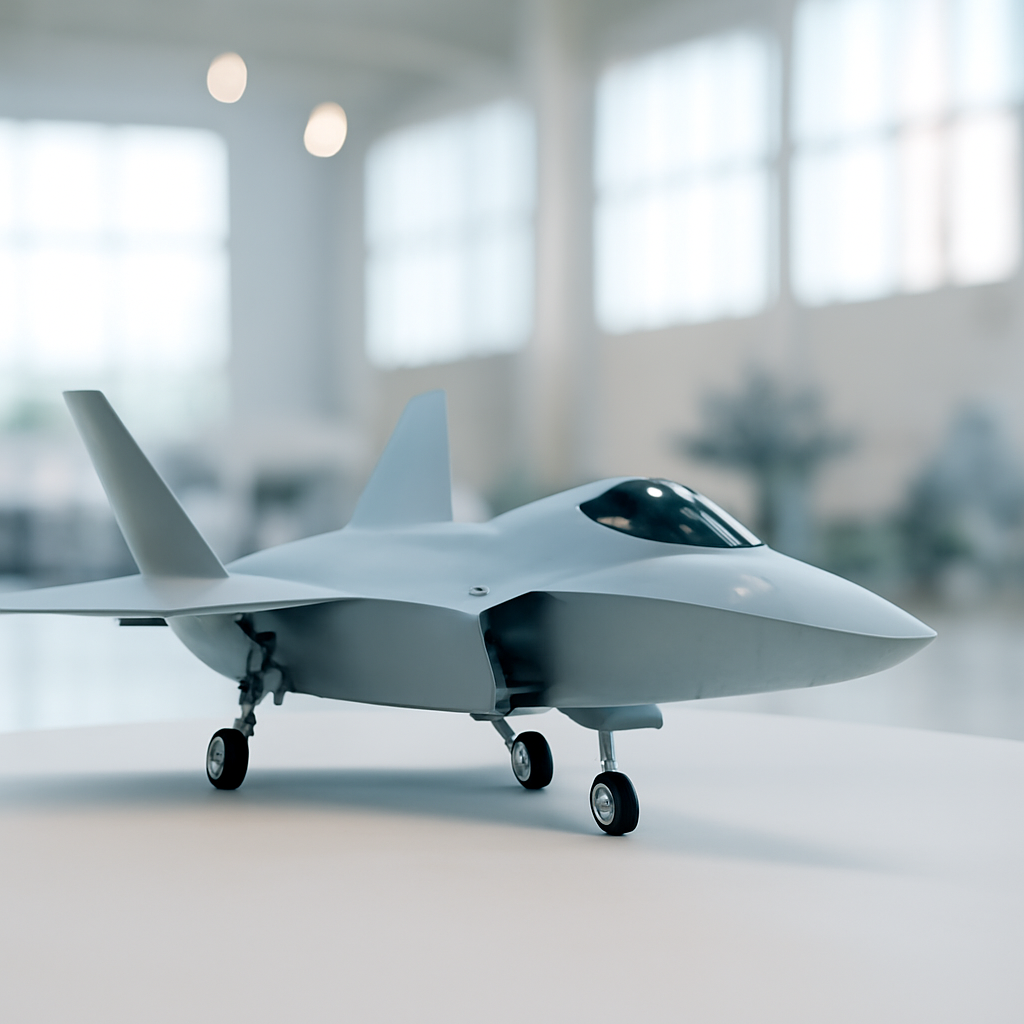
Airbus framed Team Gen 6 as a new, “agile industrial setup” for the sixth‑generation fighter element of the broader Future Combat Air System (FCAS). In an accompanying video, Airbus showed a notional crewed aircraft operating with multiple uncrewed platforms; the crewed model in the clip featured canard foreplanes, a chin intake, and a cranked wing.
What survived the NGF collapse: FCAS pillars and retained work
Airbus says the overarching FCAS “system of systems” continues to progress, but the crewed New Generation Fighter (NGF) component requires rethinking. Jean‑Brice Dumont, head of air power at Airbus Defense and Space, told attendees that NGF was one of seven technology “pillars” under FCAS — alongside powerplant, remote carrier vehicles, precision‑guided weapons, and data connectivity — and that much of the analysis from Phase 1A and 1B remains useful.
Dumont described the NGF’s failure in its previous form as partly industrial: NGF had been dogged by disputes over workshare and leadership between Airbus and Dassault Aviation. He stressed that governments must show industrial feasibility for whatever path is chosen. “We have to consider safeguarding areas where it works, and how we reshape,” Dumont said, and that Airbus has “put a number of options on the desk of our ministers and ministries of defense” and is now awaiting guidance.

Audit-ready is a season. It shouldn't be.
Evidence in spreadsheets, controls drifting between audits, frameworks multiplying on flat headcount. Nubivance runs continuous compliance on Rapid7 Cyber GRC - SOC 2, HIPAA, ISO 27001, PCI, CMMC.
End the scrambleNear‑term technical steps: Eurofighter trials, Learjet surrogates, and a 2029 target
Airbus pointed to concrete, near‑term activity to bridge current platforms and future concepts. Trials will involve a Eurofighter operating as a “command fighter” — a crewed jet designed to operate with drones or uncrewed collaborative combat aircraft (UCCAs). Those tests will fit a Eurofighter with a Rafael Litening 5 targeting pod modified to serve as the interface between the crewed jet and UCCAs; initial trials will use a Learjet configured as a surrogate command fighter flying with drones in an “enhanced teaming” mode.
Airbus hopes the command‑fighter configuration for the Eurofighter will be ready for operational service in 2029. Dumont argued that customers are asking to “be ready early” and that rapid, staged milestones are required because “the world in 2026 is very different to the world of 2017 when the [FCAS] programme was launched.”
Douglas Barrie (IISS): market size, partners, and competitive risks
Douglas Barrie, senior fellow for military aerospace at the International Institute for Strategic Studies, said a German‑Spanish pairing “makes a lot of sense” but faces hard economic constraints. Putting German and Spanish requirements together, Barrie estimated a build of perhaps 250–300 jets — a total he argued would make it “very difficult to stack up” a credible, economically viable program without additional partners.
Barrie suggested likely partner choices include the British‑led Global Combat Air Program (GCAP) — whose centerpiece is the Tempest and which also involves Italy and Japan — or Sweden’s next‑generation program led by Saab. He said integrating Airbus into GCAP would be disruptive to an already formed industrial architecture, and that a German‑Spanish‑Swedish tie‑up might be more natural given aligned requirements and aircraft size. Barrie also noted that France, through Dassault, could continue independently to develop a successor to the Rafale, perhaps backed strongly by the French government, and that other competitors could include further Rafale development and advances from South Korea or Turkey.
On price dynamics, Barrie was blunt about export markets: even a “watered‑down” export variant of a U.S. design would likely carry a high unit cost — he cited a likely unit cost of $250 million or more for the F‑47 family — limiting appeal.
What this means for Germany, Spain, and France
- Germany: Airbus and German suppliers are pushing an industrial path that dovetails with existing roles inside Airbus, and Berlin will be asked to clarify procurement and industrial guidance for a scaled, earlier timetable.
- Spain: Madrid joins the German lead inside Team Gen 6, preserving Spanish industrial involvement and the search for a replacement path for its Eurofighter fleet.
- France: With NGF’s collapse in its previous form and lasting disputes over leadership and capabilities (carrier operations and nuclear delivery), France and Dassault remain an independent axis that may pursue its own successor to the Rafale, likely with government support and potential non‑European partners.
The new Team Gen 6 initiative reframes a debate that was once Franco‑German and now pivots toward a German‑Spanish industrial core. Airbus and its partners have sketched a mixed path of immediate capability steps and a longer, retooled industrial plan — but their next milestone is political: ministers and ministries must decide which of Airbus’s options they will back. Until those decisions arrive, the future contours of Europe’s sixth‑generation combat aviation will be negotiated as much in defence ministries as on the ILA tarmac.