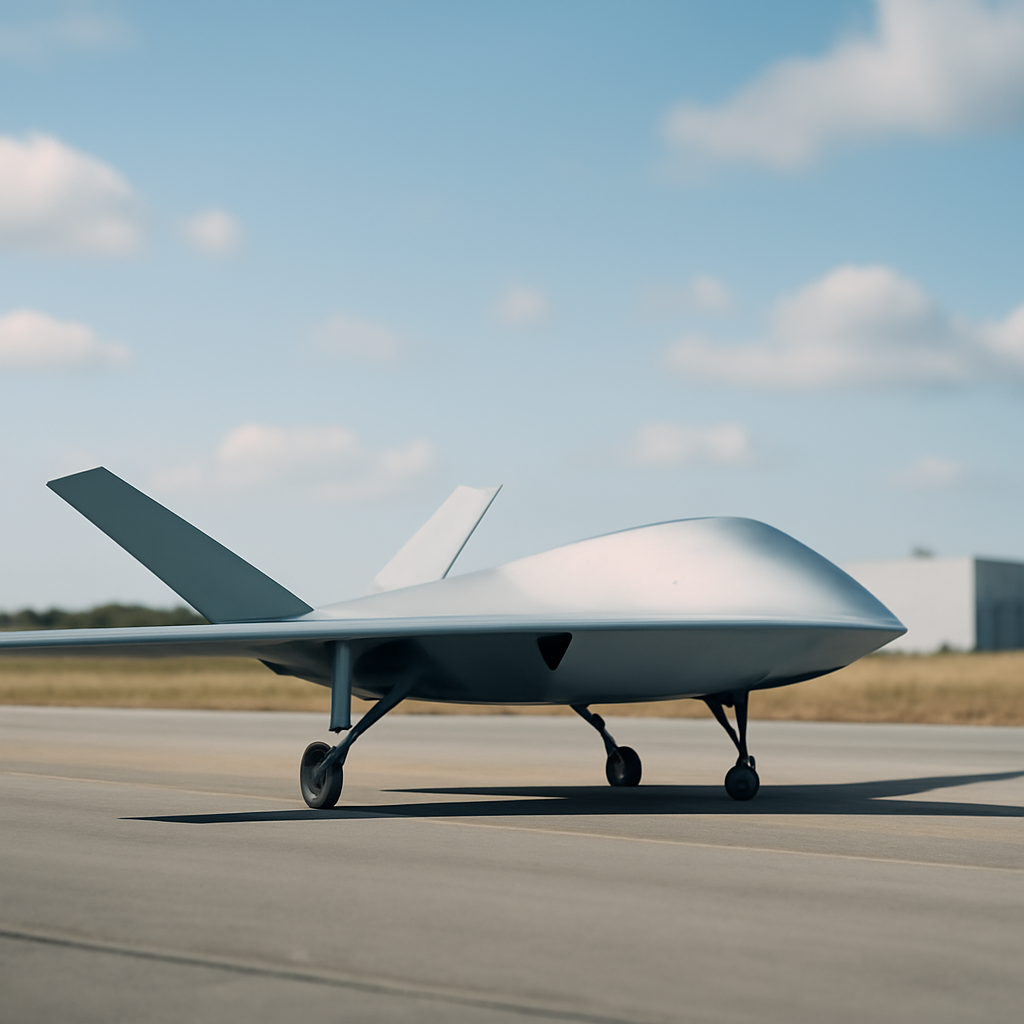
"With the successful first flight of the Airbus U740 Valkyrie in Europe, we are one step closer to introducing an operational uncrewed Collaborative Combat Aircraft (CCA) to the German and other European Armed Forces," Airbus Defence wrote on October 12, 2026.
U740 flight test in northern Europe: what happened
Airbus and Kratos Defense & Security Solutions announced on October 12 that the European U740 Valkyrie—an adaptation of Kratos' American XQ-58A—completed its first flight at an unnamed test facility in northern Europe. Airbus reported the sortie used a rocket-assisted takeoff, performed maneuvers at different altitudes, and reached speeds up to Mach 0.8. The flight included in‑flight mission adjustments and, Airbus said, met all test objectives.
Published performance figures and launch/recovery options
Airbus lists the U740’s maximum takeoff weight at around 3,000 kilograms (6,600 pounds), a range exceeding 5,000 kilometers (3,100 miles), and a service ceiling of 45,000 feet. The airframe carries an internal weapons bay and external payload stations beneath its wings. One distinctive capability highlighted in the announcement is rocket-assisted launch, reducing dependence on conventional runways. The original Valkyrie design relied primarily on parachute recovery; newer variants can use rocket assistance for launch and runway landings, increasing deployment flexibility.

This site is the portfolio.
OSINTSights runs on Cloudflare Workers, D1, R2, and Vectorize, with an AI pipeline on Hetzner ARM. Nubivance designed, built, and operates it. We do the same for clients.
See what we buildAirbus’ MARS mission system and European-controlled software
Airbus said the next phase will integrate its Multi-platform Autonomous Reconfigurable and Secure (MARS) mission system. MARS is intended to provide the U740 with a European-controlled software and mission-management architecture that supports autonomous operations and coordination between multiple uncrewed aircraft while retaining human oversight of critical decisions. Airbus frames the MARS/U740 combination as a way to deliver a sovereign European capability without waiting for an entirely new airframe.
Because the U740 uses an American-origin airframe, Airbus acknowledged the extent of German sovereignty will depend on the practical ability to control and modify software, integrate national weapons and sensors, and provide support throughout the platform’s service life.
Germany’s 2029 timetable, operational concepts, and existing drone fleet
The flight arrives as the Luftwaffe develops requirements for what press reports have called a Jagdbomberdrohne (fighter-bomber drone). Public debate continues over whether Germany seeks a CCA primarily to accompany crewed fighters or a long-range, independently operating strike platform. Berlin has set a goal of being ready for war by 2029, and reporting indicates the Luftwaffe wants a combat-drone capability on a similar timeline.
Germany’s current larger uncrewed fleet is limited to five leased Israeli-made Heron TP medium-altitude, long-endurance drones. Germany also participates in the Eurodrone program and had previously expected uncrewed systems to be part of the Future Combat Air System (FCAS), which the source says "hit the buffers earlier this year."
Competitors and parallel efforts
Several other teams are reported to be competing to meet Germany’s requirements. Those named include Anduril; General Atomics partnered with Germany’s INTEC; Lockheed Martin; Boeing and Rheinmetall offering a Block 3 MQ-28 Ghost Bat; and the German startups and suppliers Helsing and Hensoldt pursuing the CA-1 Europa. Airbus is also advancing a larger U760 Ravenstorm, intended for service in the early 2030s, as a longer-term European-designed option.
What this means for the Luftwaffe, Airbus and Kratos, and German defense planners
- The Luftwaffe: faces a compressed timeline to define which capabilities must be fielded by an initial fleet versus what can be phased in later; integration, testing, training, and infrastructure will be essential before operational use.
- Airbus and Kratos: gain an early testing advantage in Europe with the U740 flight, but must demonstrate MARS integration, mission-system maturity, and effective cooperation with crewed fighters to meet a 2029 operational target.
- German defense planners: will weigh sovereignty trade-offs tied to an American airframe against the urgency of acquiring a combat-capable drone and whether to pursue a mix of longer‑range systems and attritable CCAs.
The European U740 flight is a concrete technical milestone: rocket-assisted launch, Mach 0.8 performance, and initial mission autonomy demonstrations. But Airbus and Kratos must still integrate MARS, complete further testing, and show how the U740 will operate with crewed fighters and national systems. With Germany’s 2029 readiness target and a crowded competitive field, the announcement answers one question while sharpening others about control, timelines, and how a Jagdbomberdrohne would be employed in practice.