The Air Force is aiming to have a fleet of at least 500 Massed Modular Aircraft (MMA) drones by 2032, a procurement goal that has galvanized an unusually diverse group of competitors — including the exotic aircraft maker Otto Aerospace.
Who is said to be in the MMA running
Air & Space Forces Magazine reported that seven companies “made the cut” for the MMA program, citing anonymous sources. TWZ and an industry source separately identified the same seven firms as moving ahead: Otto Aerospace (previously Otto Aviation), Anduril, Chaos Industries, General Atomics Aeronautical Systems, Grid Aero, Shield AI, and Swarm Aero. The Air Force has not yet confirmed a full list but said, via a service spokesperson, “The Air Force’s partnership with the Defense Innovation Unit is accelerating requirements development and rapid prototyping by leveraging commercial innovation and reducing timelines.” TWZ also reached out to the named companies for comment.
Otto Aerospace: laminar flow, unusual shapes, and bold performance claims
Otto’s design philosophy and prototypes stand out in the MMA context because they emphasize laminar flow — the smooth, layered movement of air across surfaces to reduce drag and improve efficiency. Otto’s earliest public showing, the Celera 500L, used a teardrop-shaped fuselage, long slender wings, and a pusher-propeller layout driven by a single turbocharged multi-fuel V12 piston engine. Otto conducted test flights with the Celera 500L up to 15,000 feet and 250 miles per hour, and the company posited a cruising speed near 460 miles per hour at a 50,000-foot design ceiling. Otto also holds a patent describing an exhaust system with a heat exchanger intended to provide an additional thrust boost.
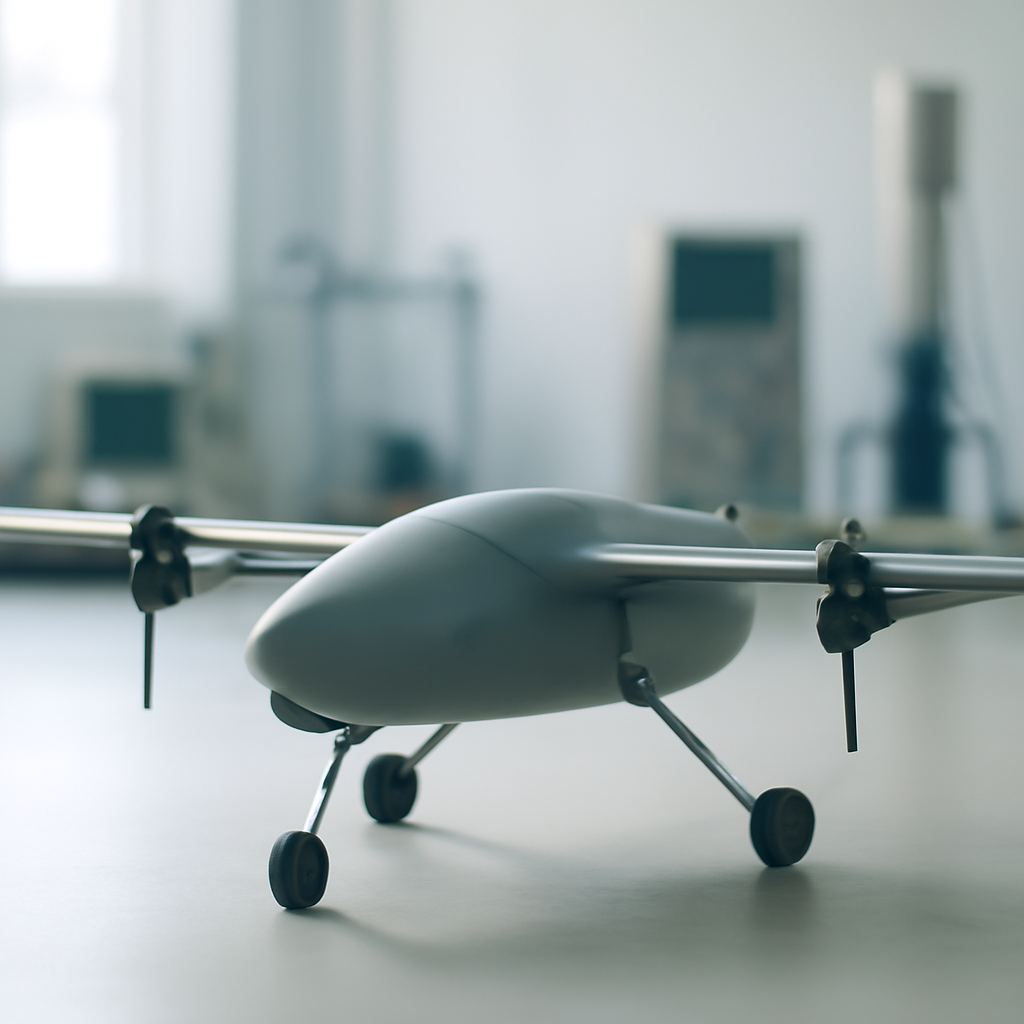
Development focus has since shifted toward the jet-powered Phantom 3500, which Otto says will burn about 115 gallons of fuel per hour — a figure the company contrasts against roughly 300 gallons per hour for comparably sized business jets, citing Jet Support Services, Inc. (JSSI). Otto has publicly explored both crewed and uncrewed militarized concepts, and the company produced a small, highly laminar-flow-efficient unmanned vehicle for DARPA; that vehicle completed a flight-test campaign in May and is intended to support DARPA demonstrations of laser-based power beaming that could relay electricity to forward operating locations or dramatically extend endurance for electrically powered drones.

This site is the portfolio.
OSINTSights runs on Cloudflare Workers, D1, R2, and Vectorize, with an AI pipeline on Hetzner ARM. Nubivance designed, built, and operates it. We do the same for clients.
See what we buildMMA program constraints: range, modularity, and a tight cost target
The MMA effort formally began in July with concrete, demanding parameters. The program seeks a lower-cost, highly modular successor to the MQ-9A Reaper with an unrefueled combat radius of at least 2,300 nautical miles. It emphasizes modularity and open-architecture systems to speed the integration of new capabilities, and the Air Force has signaled it may select multiple vendors or run follow-on competitions to meet operational needs. Crucially, the service is targeting a base unit cost of $10 million per drone — a number designed to enable mass purchases and absorb losses more affordably. The Air Force has also acknowledged potential budget and other hurdles to the effort, even as sustained operational demand for Reaper-class drones and “dozens of losses” during the war with Iran and other Middle East operations have intensified urgency to find a successor.
Known offerings and gaps among contenders
- General Atomics Aeronautical Systems has publicly proposed a Wildfire design that draws on MQ-9A experience; the company declined additional comment to TWZ. General Atomics is also contracted to build FQ-42 Vengeance drones under the Collaborative Combat Aircraft (CCA) program.
- Anduril — also a CCA contractor with the FQ-44 Fury — has unveiled two tactical drones since 2025: the twin-engine hybrid-electric tail-sitting Omen (unveiled November 2025) and Thunder, an armed tiltrotor pitched as an uncrewed companion for crewed rotorcraft. Neither necessarily maps directly to the MMA requirements but could serve as starting points.
- Shield AI’s specific MMA offering is unknown. The company already fields the VTOL V-BAT (in service with several armed forces, including the United States and Ukraine) and is developing the higher-end X-BAT; Shield AI is also expanding V-BAT work to include air-launched munitions and continues to develop autonomy packages.
- Swarm Aero unveiled Gamera, a design TWZ reported aligns with MMA performance needs: a single front propeller, large fuel cells in sponsons, and a twin-boom tail reminiscent of the OV-10 Bronco.
- Grid Aero is publicly developing a twin-engine Lifter Lite cargo drone — funded in part by AFWERX — and has been testing ground prototypes; whether Grid Aero would adapt Lifter Lite for MMA or propose a new design is not yet known.
- Chaos Industries appears focused on radar systems (notably counter-drone radars), does not show drone designs publicly, and declined to comment to TWZ.
What this means for the Air Force, DARPA, and procurement leaders
- The Air Force: If Otto or other unconventional designs can meet the MMA’s 2,300-nautical-mile radius and the $10 million base-cost target while delivering modular open architectures, the service could field hundreds of lower-cost, long-range drones — but the Air Force must still validate performance, logistics, and lifecycle support.
- DARPA and technologists: Otto’s earlier DARPA unmanned vehicle and the agency’s laser power‑beaming demonstrations could inform endurance and energy-relay approaches for future MMA derivatives or persistent surveillance platforms.
- Procurement leaders and vendors: The MMA’s emphasis on cost, modularity, and potential multi-vendor sourcing favors designs that are both efficient and adaptable; established makers and startups alike will face pressure to translate novel efficiencies into producible, supportable airframes.
Otto’s appearance on the MMA shortlist — if confirmed — would be a striking test of whether radical aerodynamic efficiencies can scale from experimental teardrops and DARPA demonstrators to a mass-producible Reaper successor that meets tight range and cost requirements. The next concrete steps are vendor proposals, Air Force confirmations, and design trades that reconcile laminar-flow promises with the hard metrics the MMA program has laid down.