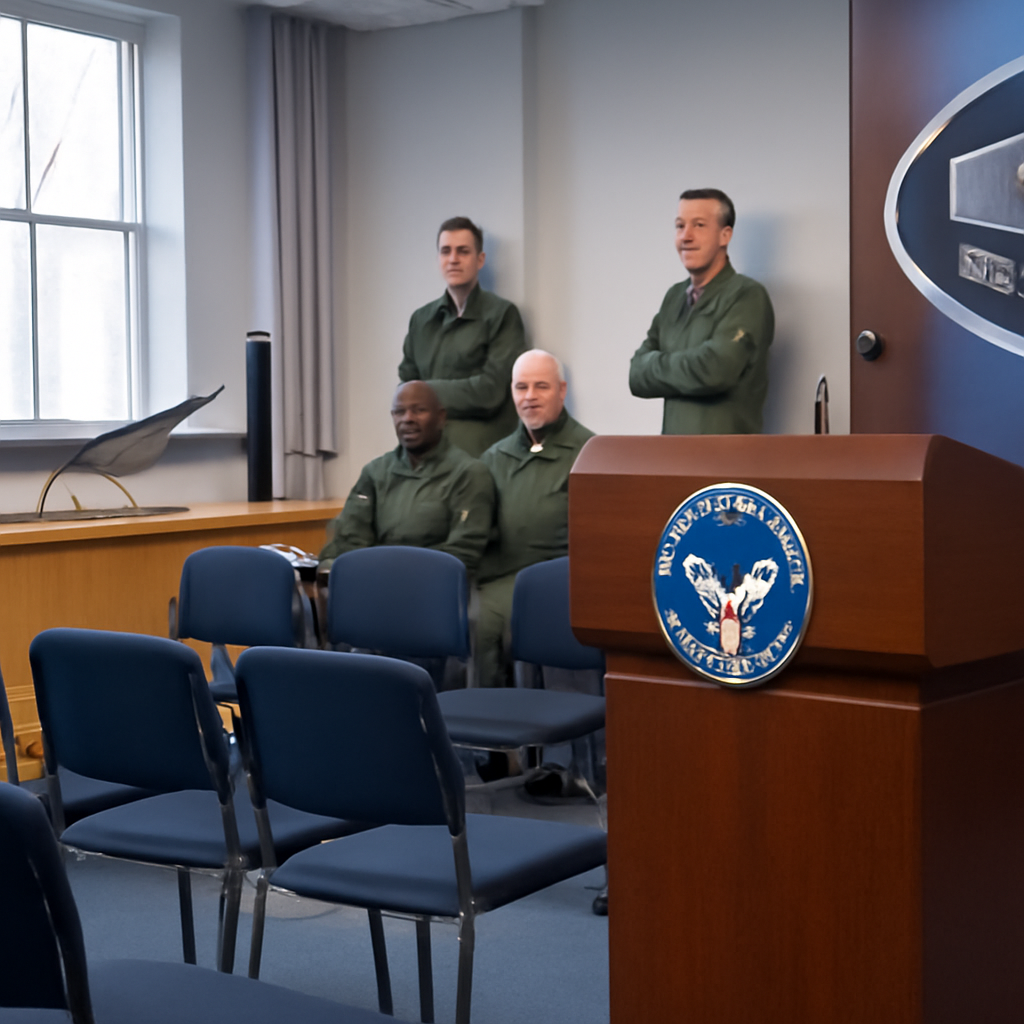
"As we get to the end of the MQ-9 life, there was some early talk of where do we want to go afterwards, and candidly, as a result of some of the losses that we’ve experienced in combat operations, that discussion sort of got accelerated," Lt. Gen. Christopher Niemi told reporters at the Pentagon on Sept. 4, 2026.
Why recent Reaper losses forced a rethink
Air Force officials say steep attrition in recent combat operations against Iran has changed the calculus for their remotely piloted aircraft fleet. According to reporting cited by the Air Force, "at least 45" General Atomics MQ-9A Reapers — roughly a quarter of the Pentagon’s inventory — have been lost since the launch of Operation Epic Fury in February. That depletion, officials said, has left the Defense Department with "few good, short-term options to quickly backfill losses."
The financial stakes are also sharp. The MQ-9A can cost up to $50 million apiece "depending on its payload," while the Air Force is now pushing to field unmanned aircraft that the department can tolerate losing without breaking budgets. Those losses, Niemi said, are a central reason the service accelerated plans to replace the Reaper.
Mass Modular Aircraft: DIU targets and accelerated timeline
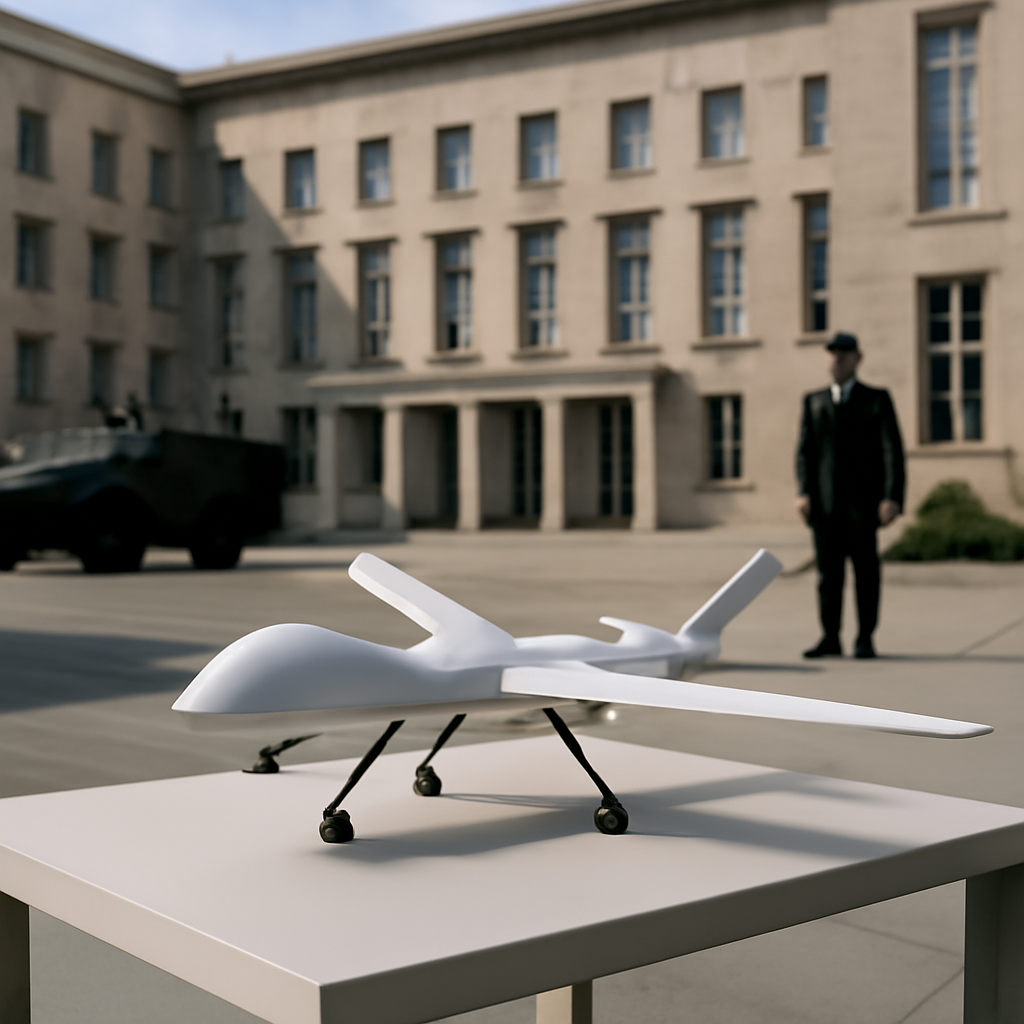
The Pentagon’s July kickstart of the Mass Modular Aircraft (MMA) program came with concrete targets and a compressed ambition. The Defense Innovation Unit’s solicitation included a one-way range goal of 8,000 nautical miles (about 9,206 miles), high modularity, and producibility and price points intended to tolerate losses. DIU’s public goal at the time was to get 20 mission-ready MMA drones by fiscal 2031.
Officials said they have since been instructed to move faster. Maj. Gen. Joseph Kunkel, DIU’s military deputy, said DIU "intend[s] to get to a prototype within a year, [and] fielded at scale within three years." Lt. Gen. Niemi added the Air Force will probably field "at least 180" MMA drones, though he declined to give a stricter schedule at the briefing.

This site is the portfolio.
OSINTSights runs on Cloudflare Workers, D1, R2, and Vectorize, with an AI pipeline on Hetzner ARM. Nubivance designed, built, and operates it. We do the same for clients.
See what we buildCost targets, trade-offs, and the intended aircraft profile
Cost is central to the MMA concept. Niemi laid out ambitious price goals: the Air Force wants Collaborative Combat Aircraft (CCA) air vehicles at $20 million each and MMA air vehicles "closer to half of that," language the briefing tied to a roughly $10 million per-vehicle target for MMA. An Air Force spokesperson clarified that those estimates are for the air vehicle only and do not reflect a fully missionized system.
To reach those targets, officials say they will make design trade-offs and rely on proven technologies. Niemi argued the MQ-9’s strengths stem not from exotic aeronautics but from its endurance, payload and systems integration, and that "if you’re focusing on the truck, and you do it in a way where you’re able to make some smart design compromises … we do think you can drive the cost down."
On likely design features, Niemi said the MMA will be "an aircraft that has a long aspect wing, probably a turboprop, flies a very long way and carries a heavy weight." He also described it as likely in the "4,000 miles-type class," meaning it would be slower and carry more weight than some other planned systems.
Industry competition and General Atomics' response
Air Force leaders want multiple contractors involved, mirroring the CCA effort where Anduril and General Atomics were both selected to produce aircraft in the first round. Niemi said officials want "multiple aircraft designs that go into production" and production lines that can be scaled quickly if needed.
General Atomics, whose MQ-9 Reaper is the incumbent platform, pushed back on suggestions the aircraft is easily substituted. Company spokesman C. Mark Brinkley told Breaking Defense that the Reaper’s "unique combination of endurance, payload, range, sensors, weapons, connectivity, adaptability and reliability is precisely what enables mission effects that others struggle to replicate." General Atomics is competing in the MMA solicitation with a new design called Wildfire; Brinkley said Wildfire "addresses all of the concerns posed by the MMA solicitation. We can deliver years earlier and maintain the same high quality."
What this means for combatant commanders, the Defense Innovation Unit, and acquisition leaders
- Combatant commanders: They will have to contend with fewer MQ-9As in the near term and watch for new MMA capabilities that trade off speed or advanced features for endurance and lower per-item cost. Niemi acknowledged commanders "love" the Reaper for endurance and multi-mission capability, even as the Air Force looks to replace aspects of that performance.
- The Defense Innovation Unit: DIU is under direction to accelerate development — Kunkel said DIU "intend[s] to get to a prototype within a year" and aims to field at scale within three — which will require rapid industry delivery, government reference architectures, and an incremental approach to adding features.
- Acquisition leaders and program offices: They are being asked to prioritize producibility, common interfaces, and automation. Niemi and Lt. Gen. Luke Cropsey emphasized architectures that enable rapid capability insertion, higher automation so "one operator" can control several aircraft, and a user interface "more like mouse clicks and keyboard as opposed to stick and throttle."
The Air Force has moved from contemplating a post-MQ-9 future to actively trying to create one that accepts losses as part of the operating model. Officials have set aggressive cost and timeline goals, pressed industry to deliver multiple producible designs, and signaled willingness to trade off some capabilities to ensure numbers and survivability through quantity. The key open question the briefing and DIU’s targets leave on the table is how quickly production and fielding can scale to replace the tens of lost MQ-9As while meeting the Air Force’s cost and capability constraints.