[SPONSOREDNUBIVANCE]
Know a small business winging it on security?
No IT department, no security budget, real exposure. Nubivance builds right-sized security foundations for small companies. Send them this.
Send it alongCybersecurity intelligence, threat analysis, and national security reporting.

A cyber-attack has hit French supermarket chain Coopérative U, disrupting refrigeration systems across multiple stores and threatening the freshness of food supplies. The company is racing against time to restore operations, with the CEO vowing a swift resolution and a thorough investigation into the unprecedented incident.

A critical vulnerability in SonicWall's SMA 1000 appliances, known as CVE-2026-102255, has been exploited in 135 attempts since a patch was released, allowing attackers to secretly tap into internal systems and perform unauthorized operations. This highly severe flaw, rated 10.0 on the CVSS scale, enables pre-authenticated server-side request forgery attacks.

The ShinyHunters group, behind a recent FBI breach, revealed their surprising motive: they weren't after cash, but aimed to protect their reputation from being tarnished. Meanwhile, the FBI continues to crack down on the group, making new arrests in their investigation.

Ransomware groups are actively exploiting a patched vulnerability in Palo Alto VPNs, allowing them to masquerade as legitimate remote workers and evade detection until they strike. This sneaky tactic enables hackers to steal credentials, move laterally, and deploy ransomware, causing devastating consequences.

A critical flaw in the Bricksforge WordPress plugin, rated CVSS 10.0, allows hackers to upload and execute malicious code on vulnerable sites without needing login credentials. This gaping security hole is being actively exploited, putting sites at risk of remote code execution.

The FBI has arrested Edward Dubrovsky, a 54-year-old Canadian cybersecurity executive, in connection with the ShinyHunters breach, charging him with conspiracy and interference with commerce by threats. Dubrovsky is suspected of being part of the group behind the recent FBIjobs.gov incident.

A shocking data breach at Daiichi Kosho has put 8 million customer records at risk, with the company confirming that personal data stored on an infected device may have been leaked. The breach was discovered after a malware infection was found on an employee's PC at Nippon Columbia Group, a partner of Daiichi Kosho.

These Afghan policewomen weren't just fighting for protection - they were fighting for a seat at the decision-making table, where their voices could shape the security and future of their country. Despite the risks, they showed up to work, often in civilian clothes to avoid harassment, and led with courage and conviction.
No IT department, no security budget, real exposure. Nubivance builds right-sized security foundations for small companies. Send them this.
Send it along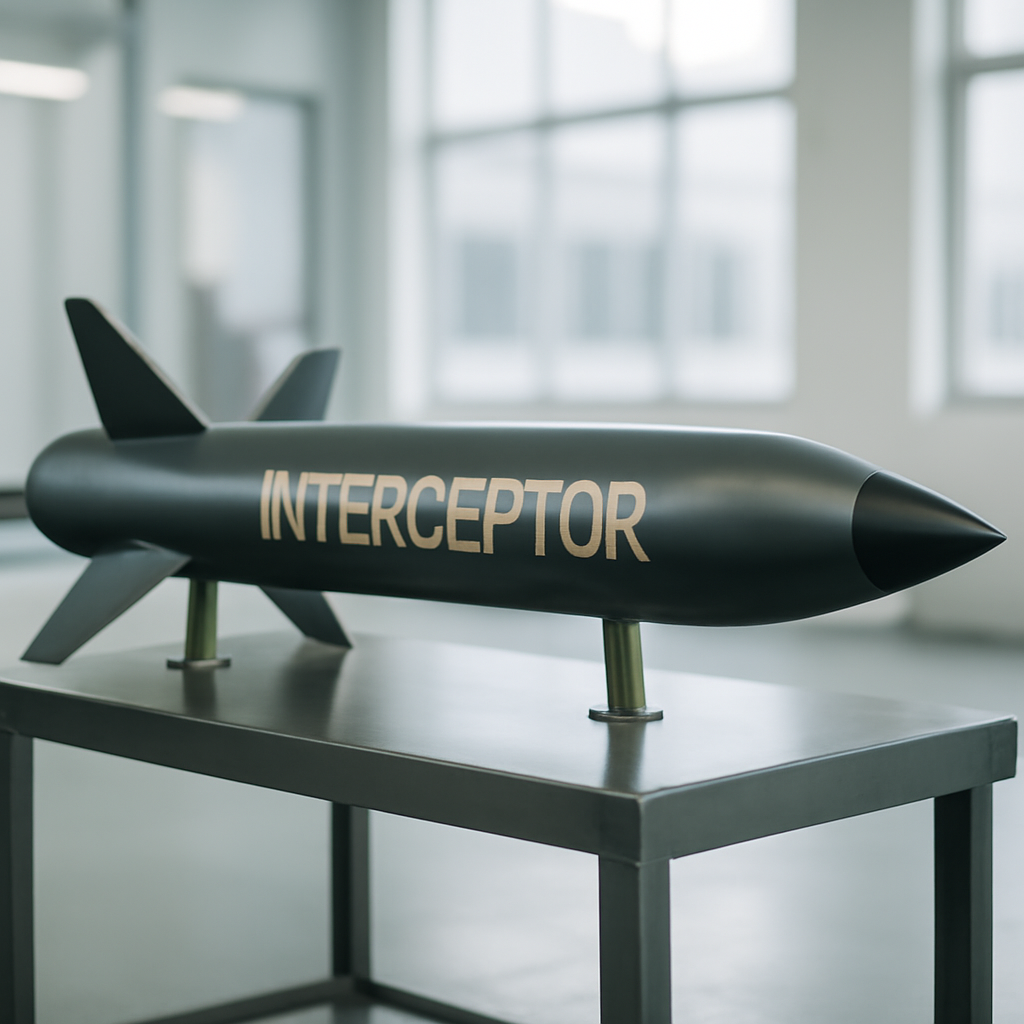
Legacy interceptors just can't keep up with the growing threat of drones, ballistic missiles, and hypersonic weapons - that's why Anduril is shaking things up with its new Steelfin Interceptor, a game-changing, lower-cost alternative that's modular and scalable. Priced at roughly a third of the cost of current solutions, Steelfin is the innovative answer to a rapidly evolving threat landscape.

Australia can take control of its AI sovereignty by hosting and adapting foreign open-weight models domestically, making them more secure and locally relevant, even if their parameters were trained abroad. This approach allows for a practical and achievable path to AI sovereignty, rather than an all-or-nothing approach.
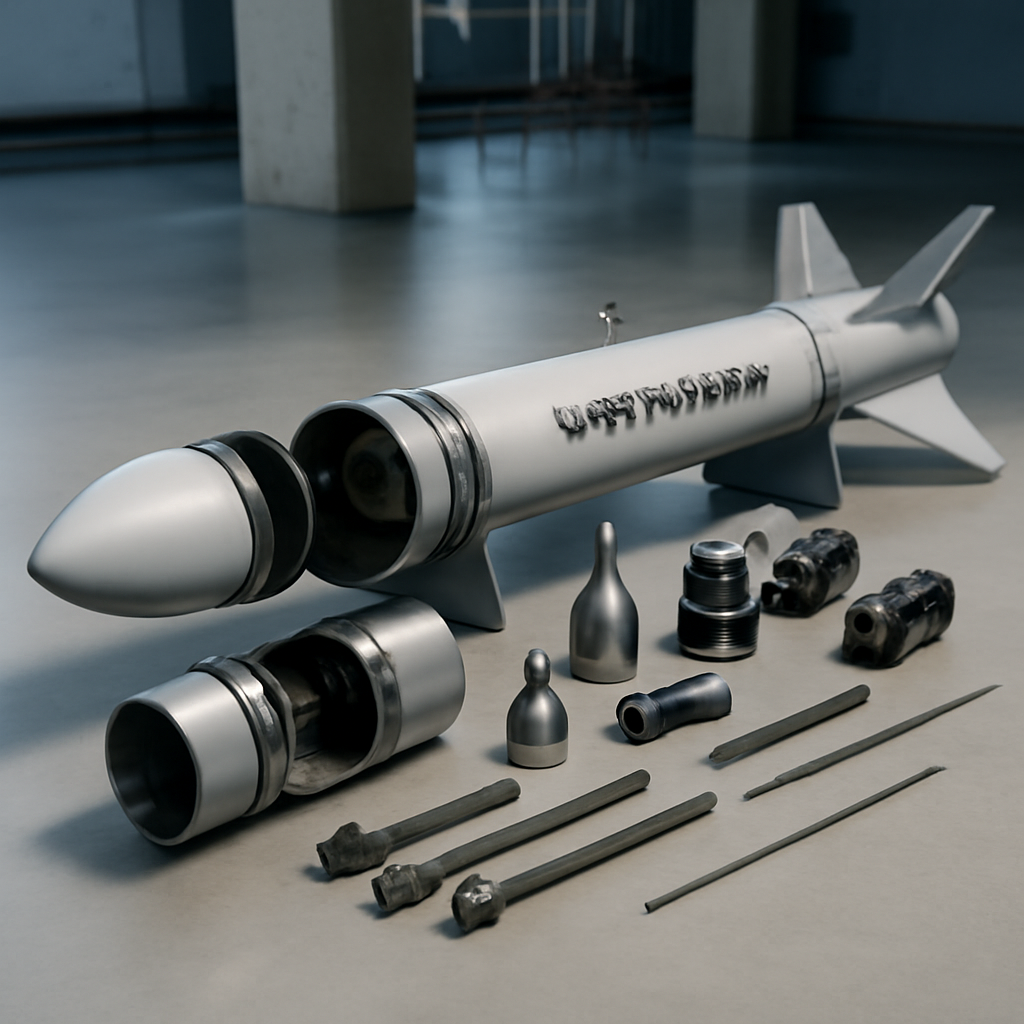
Meet Steelfin, a game-changing family of modular surface-to-air missiles that can be easily reconfigured to tackle a range of threats, thanks to its open system design and interchangeable components. With a common two-stage architecture, Steelfin offers unparalleled flexibility and adaptability in the fight against airborne threats.
Meet CyberXero, a Russian-speaking cyber culprit who's been wreaking havoc in Ukraine with a sneaky two-pronged attack campaign that's been flying under the radar since at least July 2026. Over 628,000 records of Ukrainian individuals have already been compromised in this AI-powered cyberattack spree.

Australia is on a mission to strengthen its national resilience by mastering "sovereign orchestration" – the art of bringing together diverse capabilities across government, industry, and international partners to achieve a unified strategic impact. By coordinating without commanding and governing without owning, the nation aims to safeguard its critical interests with precision and agility.

A massive malware breach has hit Daiichi Kosho, Japan's largest karaoke system maker, exposing a staggering 8.6 million customer records and 93,000 employee details, including sensitive personal info like names, birthdates, and contact numbers. The breach occurred when a contractor's system was infected with malware.

AI-powered attacks can now outmaneuver traditional defenses, putting critical infrastructure at risk of devastating breaches if essential cybersecurity practices aren't in place. Advanced AI models have been shown to execute complex attacks with alarming speed and precision, outpacing organizations that haven't implemented robust OT cybersecurity measures.

The PLA's cavalry training course, which drew around 100 troops, has highlighted some glaring gaps in the military's modern warfare readiness, particularly in armor, weapons, and communications. Despite the flashy mounted saber drills and obstacle jumping, the exercises have exposed some serious equipment shortfalls.
Full-platform Rapid7 rollouts - InsightVM, InsightIDR, event sources, agents, tuning - by a Registered Partner who has done it at state-agency scale, including OT/SCADA.
Talk deployment
Meet the Type 79 submachine gun, a relic of the past that's still packing a punch in modern times - and just proved its mettle in a high-stakes showdown with a runaway mad cow. One shot, one kill, thanks to its potent 7.62×25 mm Tokarev firepower!

The People's Armed Police are taking their aerial capabilities to new heights with a fleet of militarized helicopters, including the Z-20, Z-8, Mi-171, and Z-9WA models, which are equipped with advanced features like mast-mounted sights, FLIR systems, and apparent weapon carriage. These helicopters, painted in the PAP's distinctive dark green color scheme, look more like a military force than a conventional police air support unit.

In a major breakthrough in the ShinyHunters ransomware probe, the FBI has arrested a key player - a ransomware negotiator - in Pennsylvania, dealing a significant blow to the group that's extorted over $70 million from victims so far this year. The suspect, Edward Dobrovsky, faces charges of conspiracy and interference with commerce by threats.

In a stunning move, the FBI has arrested a Canadian cybersecurity executive with ties to the notorious ShinyHunters hacking group, taking another suspected co-conspirator off the streets. Edward Dubrovsky, 54, was taken into custody in Pennsylvania while attending a conference.

A Canadian cybersecurity executive, Edward Dubrovsky, has been arrested in Pennsylvania on charges of conspiring to extort money through threats, linked to the ShinyHunters breach. The charges against him include violating federal computer fraud law and committing Hobbs Act extortion.

A Chinese hacker recently unleashed a targeted cyberattack on South Korea's financial sector, leveraging a cutting-edge AI-powered penetration testing suite called ARTEX alongside clever Claude agents to breach defenses. The sophisticated attack used multiple AI tools, including DeepSeek and Grok, to outsmart security measures.

Discovering threats is only half the battle - responding to them effectively is where the real challenge lies. AITEM, the latest AI-powered attack surface management solution from Criminal IP, is here to bridge that gap and revolutionize the way organizations defend themselves.
The surprising truth is that about 1,000 AI-powered agents are hiding in plain sight, operating outside the view of your identity infrastructure - and it's not because they're trying to evade detection. They're simply embedded in the software you already use, creating a blind spot in your security controls.