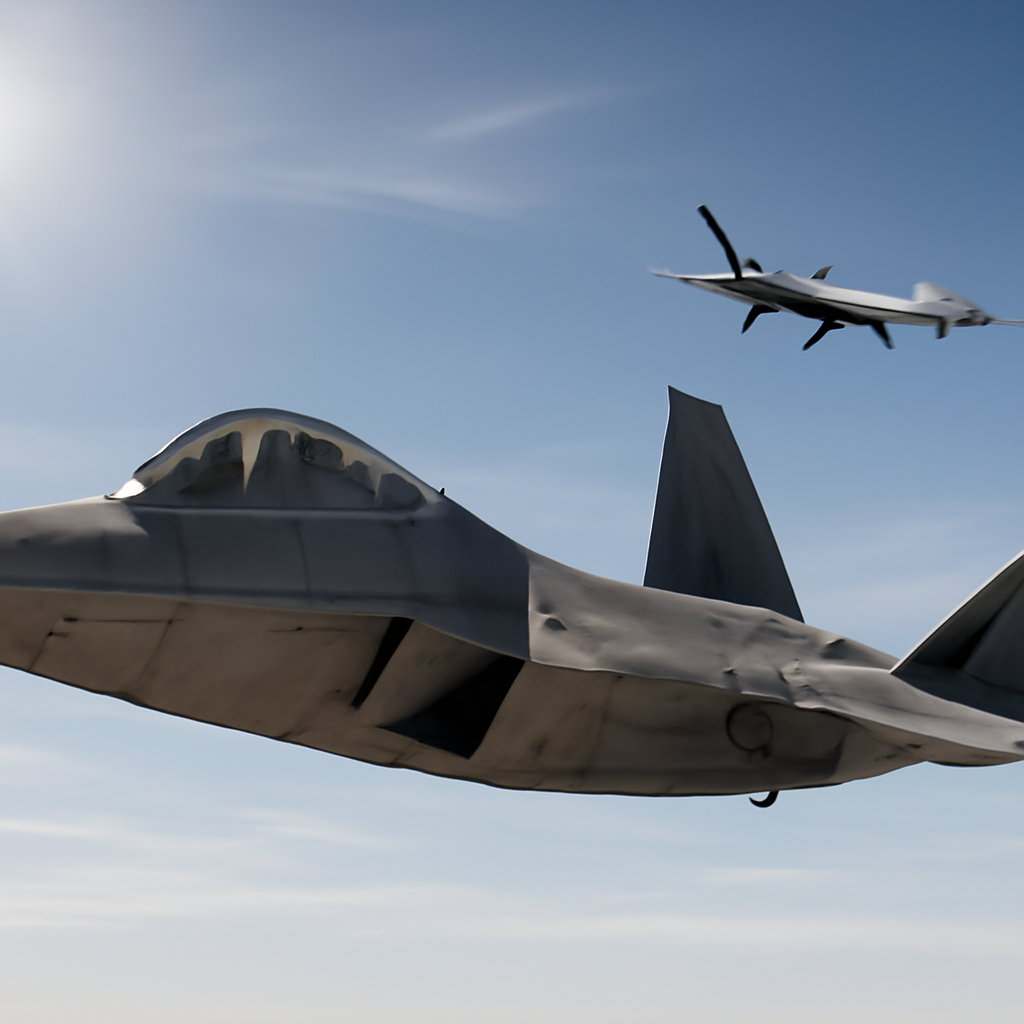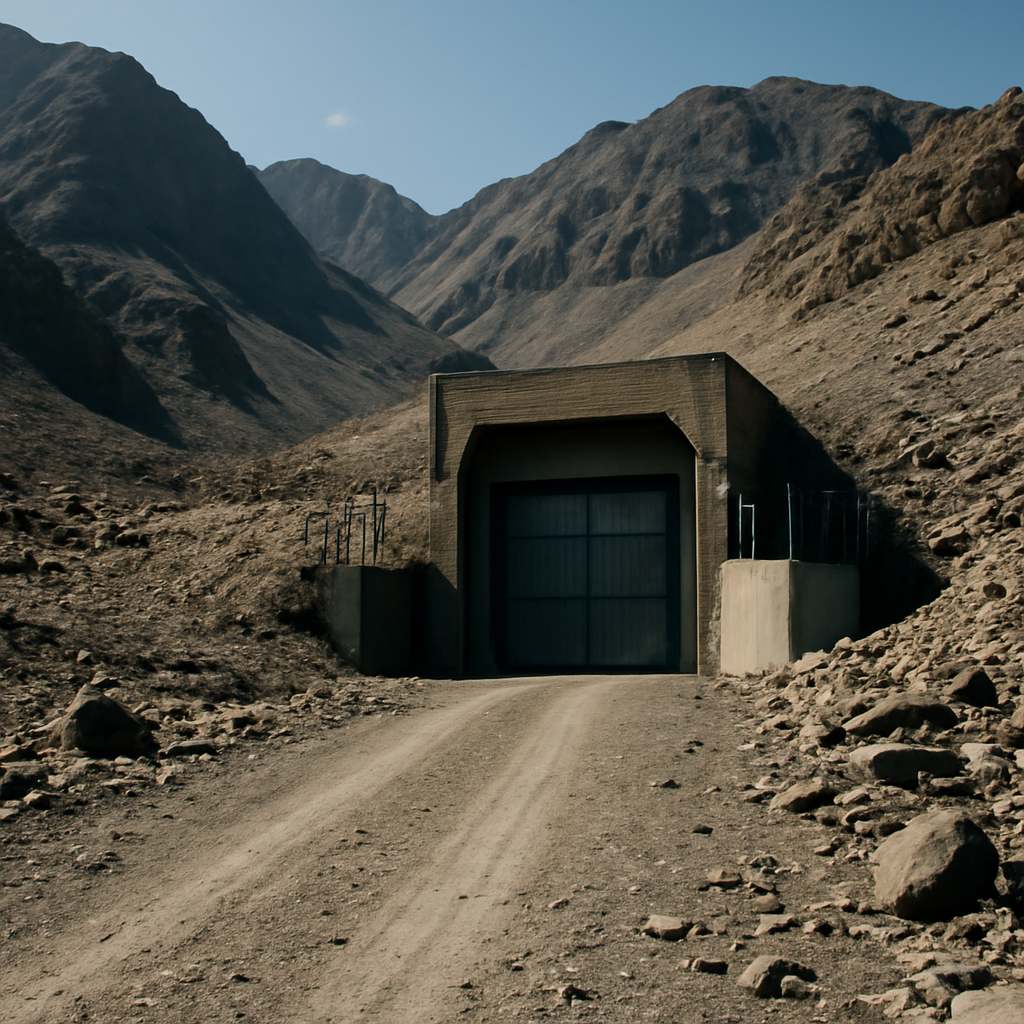
"Pickaxe is a possible target for a nice big fat shot right near the front door, and I think that maybe you’ll see that," U.S. President Donald Trump said in a phone interview with Hugh Hewitt, underscoring a renewed focus on an especially hardened Iranian complex tied to the country’s nuclear program.
What Pickaxe Mountain is and where it sits
Pickaxe Mountain — also called Kuh-e Kolang Gaz La in available reporting — is an underground complex immediately southwest of Iran’s Natanz nuclear facility. Satellite imagery obtained from Vantor and reviewed by TWZ shows a single large security perimeter enclosing two independent tunnel networks: one built circa 2007 and a newer network whose construction began around 2020. The newer network has at least two western portals and two eastern portals visible in recent imagery.
Iran has publicly discussed producing centrifuges at the newer facility, and analysts estimate the complex could be large enough to house enrichment or related nuclear infrastructure. That assessment, however, remains unconfirmed because international inspectors have not been allowed access to the site to date.
How Pickaxe Mountain was treated during prior campaigns
Pickaxe Mountain was left untouched during Operation Midnight Hammer (June 2025) and was not struck in Operation Epic Fury this year, either. By contrast, Natanz was among the sites struck during Operation Midnight Hammer. The MOP (GBU-57/B Massive Ordnance Penetrator) was heavily employed in Midnight Hammer: TWZ reporting notes 12 MOPs were dropped on Fordow and another two on Natanz. A wide sortie package supported that campaign — 125 aircraft, including seven B-2 bombers, plus fighters, tankers and naval Tomahawk strikes.
ISIS (Institute for Science and International Security) analysts have documented Iranian steps to harden and partially seal tunnel entrances at Pickaxe Mountain and at other sites. TWZ reporting and ISIS assessments note that efforts to partially block the eastern portals of the newer Pickaxe network would significantly hinder rapid vehicle ingress and would require heavy earth-moving equipment to clear. In contrast, imagery at the time did not show similar blockage of two western portals.

The cyber insurance questionnaire just landed. Now what?
SOC 2, HIPAA, insurance renewals - someone has to own security strategy. Nubivance provides fractional CISO leadership without the full-time salary.
Get a security leadWeapons and the limits of conventional bunker-busting
Experts have long questioned whether even the largest conventional penetrators can reach the main caverns beneath Pickaxe Mountain. The MOP was developed in part to threaten deeply buried Iranian facilities, yet TWZ notes that main caverns at Pickaxe Mountain may be beyond the reach of the MOP. The U.S. does possess B61-11 gravity bombs in its nuclear stockpile intended for extremely deeply buried targets, but TWZ also reports there is "next to no chance" the U.S. would use nuclear weapons absent a proportionate, imminent threat — a step the article says would be a "beyond massive escalation" and is not being considered by American authorities.
Operationally, previous MOP employment at Fordow shows the technique of placing multiple bombs on the same impact point to burrow deeper — at Fordow, six MOPs targeted two ventilation shafts so each successive weapon penetrated deeper. TWZ highlights that plunging more munitions into a single location, or striking entrances and shallower tunnels, are among the non-nuclear options planners might consider if attempting to degrade Pickaxe Mountain’s usefulness.
Surveillance, fuze technology, and alternative tactics
Trump told Hugh Hewitt that Pickaxe Mountain is under heavy surveillance, including "eyes with Space Force," and TWZ confirms regular spy-satellite passes are the current tactic at comparable hardened sites such as the mountain bunker in Isfahan. TWZ also emphasizes the importance of advanced, void-sensing fuzes for bunker-buster weapons — fuze technology that detects when a munition has entered a sufficiently large cavity or can ‘count’ floors to time detonation to maximize internal damage.
TWZ further notes experimental or proposed tactics: near-horizontal strikes, ‘skipping’ munitions into entrances, and enhancements to 2,000-pound-class JDAM-ER weapons under the Pentagon’s 2027 budget proposal. If funded, that work would be led by the Defense Threat Reduction Agency (DTRA), which TWZ says played a critical role in MOP development.
What this means for the IAEA, the U.S. military, and Iran
- IAEA: International inspectors do not currently have access to Pickaxe Mountain; Trump asked whether the IAEA should be allowed "down into that deep, deep, deep tunnel" to determine what is inside, underscoring renewed calls for on-site verification.
- The U.S. military: TWZ reporting highlights a suite of options short of nuclear use — surveillance, repeated strikes on access points and shallower tunnels, and investments in next-generation penetrators and void-sensing fuzes — while also noting the logistical and risk-intensive scale required for a follow-on campaign or a ground raid.
- Iran: Imagery on June 21 showed dump trucks and other vehicles moving in and out of a western portal of the newer network; ISIS and TWZ have documented efforts to harden and partially seal entrances at Pickaxe and other facilities. Iranian declarations, per TWZ, include re-closing the Strait of Hormuz in the current escalation and moving to adjust maritime access amid renewed fighting.
Analysts quoted in TWZ remain circumspect: David Albright of ISIS wrote that "It remains unclear when it could be operational" and noted prior assessments that Pickaxe Mountain was not attacked because "nothing of sufficient value was inside it." He added, "Perhaps that assessment has changed." President Trump’s public focus on a "front door" strike signals both an urgency in the current administration and a recognition of the technical and operational difficulties documented in prior campaigns.
The practical reality, as laid out by TWZ reporting, is blunt: destroying or definitively neutralizing a deeply buried, recently hardened complex like Pickaxe Mountain would be an extremely tall order. Surveillance and targeted strikes on access and shallower tunnels can complicate Iran’s use of the site in the near term, but the question of what — if anything — lies in the main caverns remains central to whether planners will accept the risks and resources such an operation would demand.