"We designed a surface-launch Rusty Dagger to be the foundation of U.S. and allied mass-produced affordable precision deep strike weapons," Tom Kanewske, chief strategy officer at Zone 5, told TWZ in a statement.
Zone 5 Technologies and the Block 40 conversion
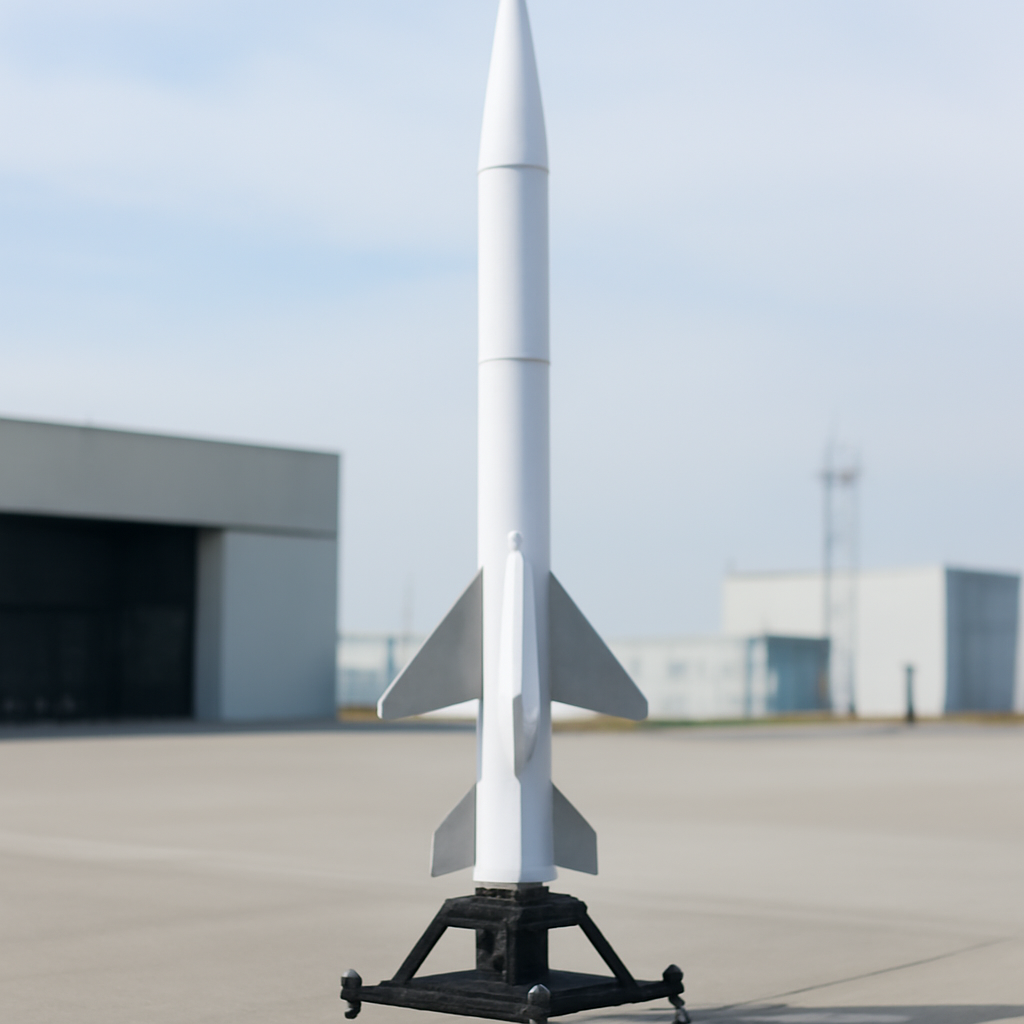
Zone 5 Technologies released the first photos made public of a Block 40 Rusty Dagger cruise missile configured for surface launch. The company — which has not disclosed where or when the pictures were taken or the specific programs under which ground-based launches were conducted — confirmed versions of Rusty Dagger have been selected for separate U.S. Army and Navy programs in addition to its initial U.S. Air Force development track.
Zone 5 says the Block 40 was adapted from an air-launched design and fitted with a solid-fuel booster at the tail to enable launch from ground and sea platforms. The company’s president, Kyle Maxhimer, told TWZ: “Our team went from design to demonstration in less than three months, bringing Rusty Dagger from pylons and pallets to ground launcher and shipping containers.”
How Rusty Dagger sits inside U.S. acquisition efforts: LCCM, CHAOS, ERAM, FAMM
In May, Zone 5 — together with Anduril, CoAspire, and Leidos — received framework agreements under the Pentagon’s Low-Cost Containerized Missile (LCCM) program. The U.S. Army’s Portfolio Acquisition Executive Fires (PAE Fires) is running LCCM with the Office of the Under Secretary of War for Research and Engineering (OUSW R&E). LCCM aims to procure more than 10,000 low-cost cruise missiles over three years beginning in 2027.
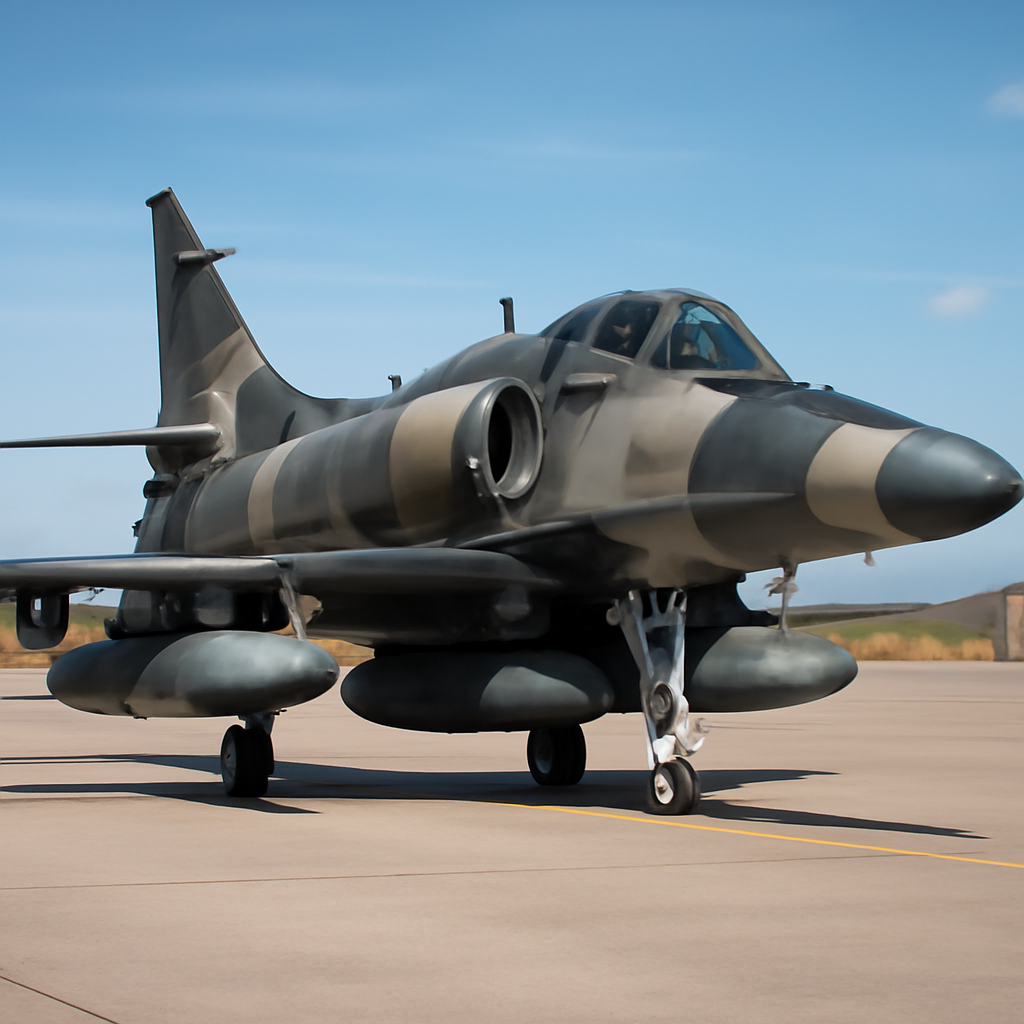
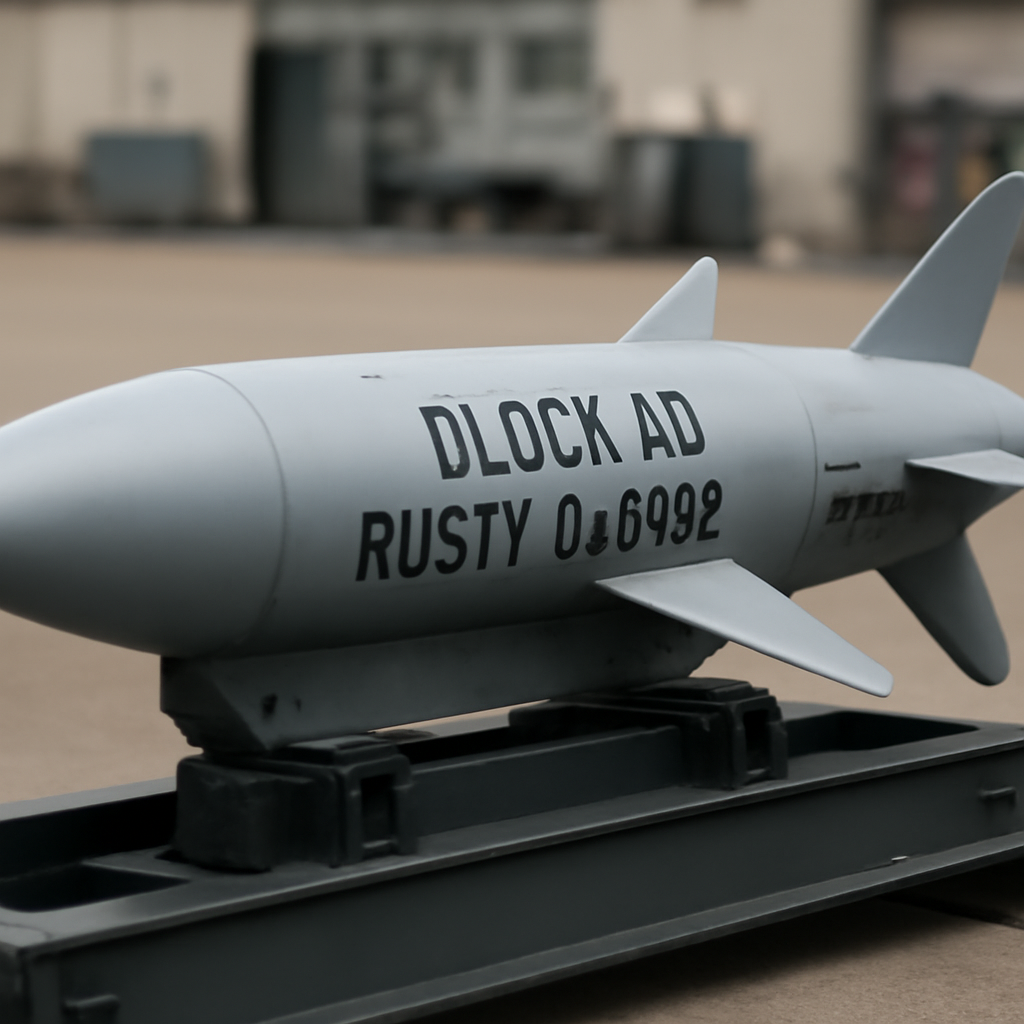
The Navy’s Consolidated Affordable Ordnance System (CHAOS) program, run by the Navy’s Portfolio Acquisition Executive for Munitions (PAE Munitions), focuses on low-cost anti-ship cruise missiles for allies and partners. CoAspire is on contract for CHAOS with a RAACM-ER design. Separately, the Air Force’s Extended Range Attack Munition (ERAM) program has included the initial air-launched Rusty Dagger — now designated AGM-188A — and ERAM work is feeding into the Air Force’s Family of Affordable Mass Missiles (FAMM), which seeks 28,000 pylon-launched and palletized munitions over the next five years.

This site is the portfolio.
OSINTSights runs on Cloudflare Workers, D1, R2, and Vectorize, with an AI pipeline on Hetzner ARM. Nubivance designed, built, and operates it. We do the same for clients.
See what we buildCapabilities and visible differences between Block 20 and Block 40
Zone 5 says the Block 40 can accept warheads in the 100-to-250-pound class and retains air-launch options (pylons and palletized systems) alongside surface-launch capability. Earlier reporting cited in the source placed Rusty Dagger’s range at roughly 300 nautical miles when delivered at low altitude and about 500 nautical miles when launched from aircraft at medium altitudes and higher speeds; the source notes that surface-launched versions generally have shorter maximum ranges than air-launched variants.
The publicly released images show outward similarity to earlier air-launched versions, though tail-fin shaping looks more rounded on the Block 40. The pictures are low resolution and do not clearly reveal the launcher configuration, so some visual details — including whether the arrangement is cruciform or a different geometry — remain ambiguous in the imagery.
Kongsberg, U.S. production sites, and scale targets
Norwegian defense firm Kongsberg acquired a 90 percent stake in Zone 5 and has positioned Rusty Dagger alongside its Joint Strike Missile (JSM), with Rusty Dagger described as the affordable, mass-production element of a complementary pair of weapons. Zone 5 says it is expanding U.S. manufacturing: production is established in San Luis Obispo, California, has begun in the Dallas–Fort Worth area of Texas, and a franchised facility is being developed in Miamisburg, Ohio, with Hawthorn Aero.
Zone 5’s stated manufacturing goal is to have each site reach capacity of more than 2,500 missiles annually by the end of 2027; if all three reach that level, combined annual capacity would exceed 7,500 missiles.
What this means for the U.S. Army, the U.S. Navy, and Ukraine
- U.S. Army (LCCM): LCCM’s stated aim to buy more than 10,000 low-cost cruise missiles from 2027 creates a procurement pathway where a surface-launched Rusty Dagger could be fielded in containerized, launcher, or massed-launch roles.
- U.S. Navy (CHAOS): CHAOS’s focus on low-cost anti-ship cruise missiles for allies and partners links Rusty Dagger’s surface-launch conversion directly to the Navy’s effort to supply affordable anti-ship options to partners.
- Ukraine: Zone 5 told TWZ that Rusty Dagger remains the only publicly reported operational missile in its class fielded by the Ukrainian military. The reporting also notes that images published by Russian sources indicate the AGM-188A may have undergone field testing in Ukraine.
The ground-launched Block 40 photographs mark a clear evolution of a weapon that began as an air-launched design. With multiple U.S. acquisition programs engaged, expanded U.S. production sites, and an asserted operational presence in Ukraine, Rusty Dagger is moving from a niche air-launched munition toward mass-producible, surface-launchable options — a trajectory that aligns explicitly with the Pentagon’s stated push for affordable, high-volume precision strike munitions. Original reporting at TWZ