Timeline and university directives
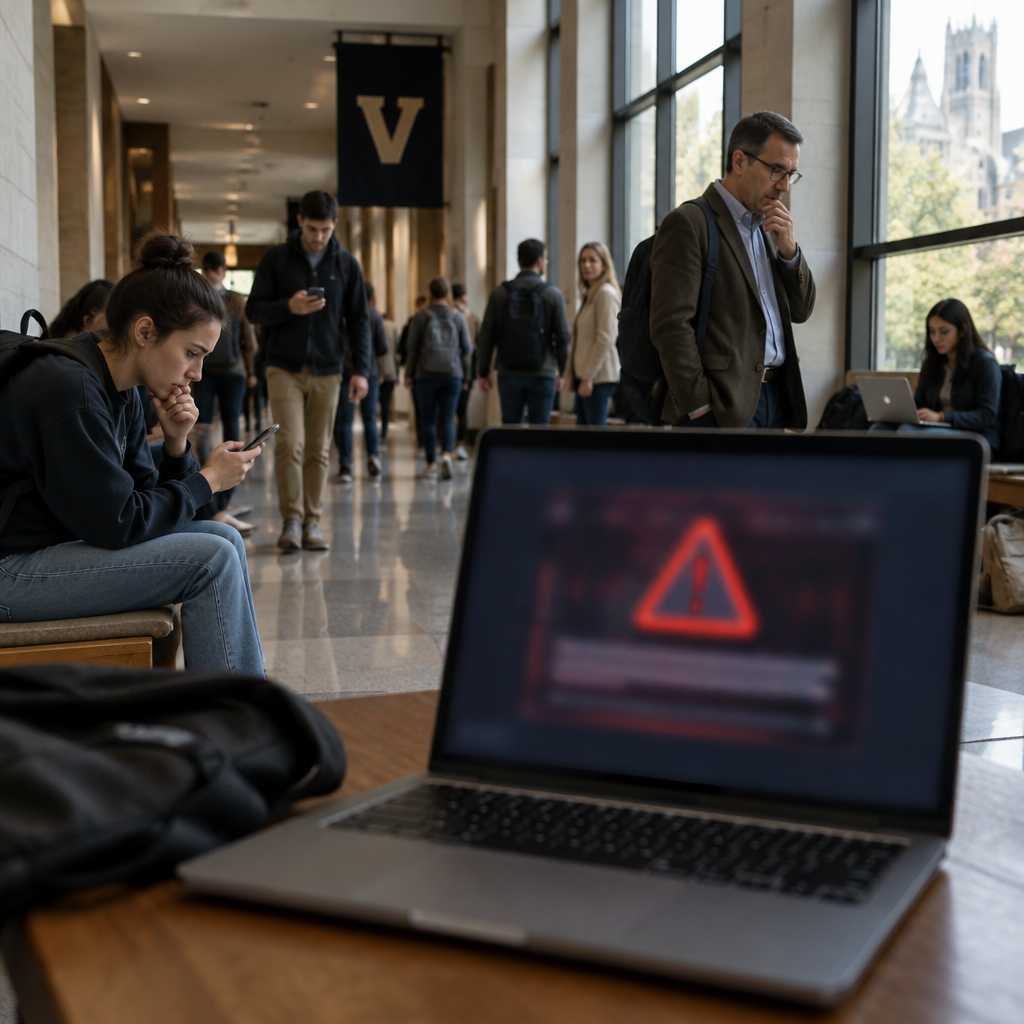
Vanderbilt University disclosed it was "responding to an active incident" at 10:45 a.m. CST on November 9. The immediate, public directive from the university asked community members to power down university devices, disconnect from campus WiFi and to watch for signs of compromise. The university listed examples of suspicious activity that should prompt urgent attention: unexpected pop-ups, warnings or security notifications; unusual changes to files, folders, or permissions in cloud storage platforms; and unexpected requests to enter passwords or approve authentication requests.
Claims of data theft and the BYOD listing
The university did not provide technical details or identify an alleged perpetrator in its public updates. Independently, cyber intelligence firm Venarix posted on X that the BYOD ransomware gang had listed Vanderbilt University on its data leak site. According to Venarix’s report of the listing, the group claimed to have locked the university’s databases and accessed a large corpus of data, including research data and — the listing alleges — "over one million social security numbers," full names, emails, phone numbers, student and employee records, and a "full takeover of the university’s domain controller." Those claims are presented as the content found on the ransom group's site and in Venarix’s reporting; the university’s public statements did not corroborate or deny those specific assertions.

Audit-ready is a season. It shouldn't be.
Evidence in spreadsheets, controls drifting between audits, frameworks multiplying on flat headcount. Nubivance runs continuous compliance on Rapid7 Cyber GRC - SOC 2, HIPAA, ISO 27001, PCI, CMMC.
End the scrambleImmediate operational impacts on campus
Vanderbilt’s evening update at 7:15 p.m. CST on November 9 said that classes would proceed on a normal schedule beginning November 10 and that student services would also be operating normally; campus WiFi was confirmed to be available. At the same time, the university warned that access to most Vanderbilt systems and applications remained restricted while the response continued. Vanderbilt Information Technology said it was "working with government agencies and other partners to manage this situation," indicating an ongoing coordinated response.
On the ground, the Vanderbilt Hustler — the university’s student newspaper — reported that IT staff entered classrooms across campus to alert students and faculty that school-issued computers were not safe to use, an action consistent with the university’s broader shutdown and containment steps.
Connection to the University of New Mexico Health Sciences Center incident
The public reporting placed the Vanderbilt incident in a recent pattern of claims by the same named ransomware gang. BYOD had claimed an attack on the University of New Mexico Health Sciences Center (UNM HSC) at the end of October 2026. That earlier incident, as reported, resulted in the cancellation of surgeries and diversion of ambulances. UNM publicly stated it "did not make any concessions with any group behind the threat" and subsequently reported that all clinical operations across the institution were fully functional following the disruption.
What this means for technologists, students, and government agencies
- Technologists and security teams: Vanderbilt Information Technology’s shutdown of systems and ongoing restrictions on applications underline containment as the immediate priority; the university’s public checklist of suspicious behaviors indicates the operational focus is both endpoint and cloud hygiene.
- Students and university employees: The university’s classroom alerts and the instruction to power down school-issued devices signal an immediate need for users to follow institutional guidance; despite restrictions on many systems, in-person classes and student services were reported to resume normally on November 10.
- Government agencies and partners: Vanderbilt confirmed it was working with government agencies and other partners, suggesting an interagency and external coordination posture as the response continues and as third-party intelligence (such as Venarix’s reporting) circulates in public channels.
The public record for now contains two parallel threads: Vanderbilt’s confirmed operational containment measures and limited public updates, and third-party reporting that a known ransomware group has claimed an extensive data seizure. Vanderbilt’s statement that it is coordinating with government agencies frames the near-term response, while Venarix’s reporting on the alleged listing by BYOD raises questions about the scope and sensitivity of any data exposed. The university has restricted access to most systems and applications while investigations and remediation continue; the coming days should make clearer whether the claims on the data leak site are substantiated and what recovery steps the university and its partners will take.
https://www.infosecurity-magazine.com/news/vanderbilt-university-cyber/