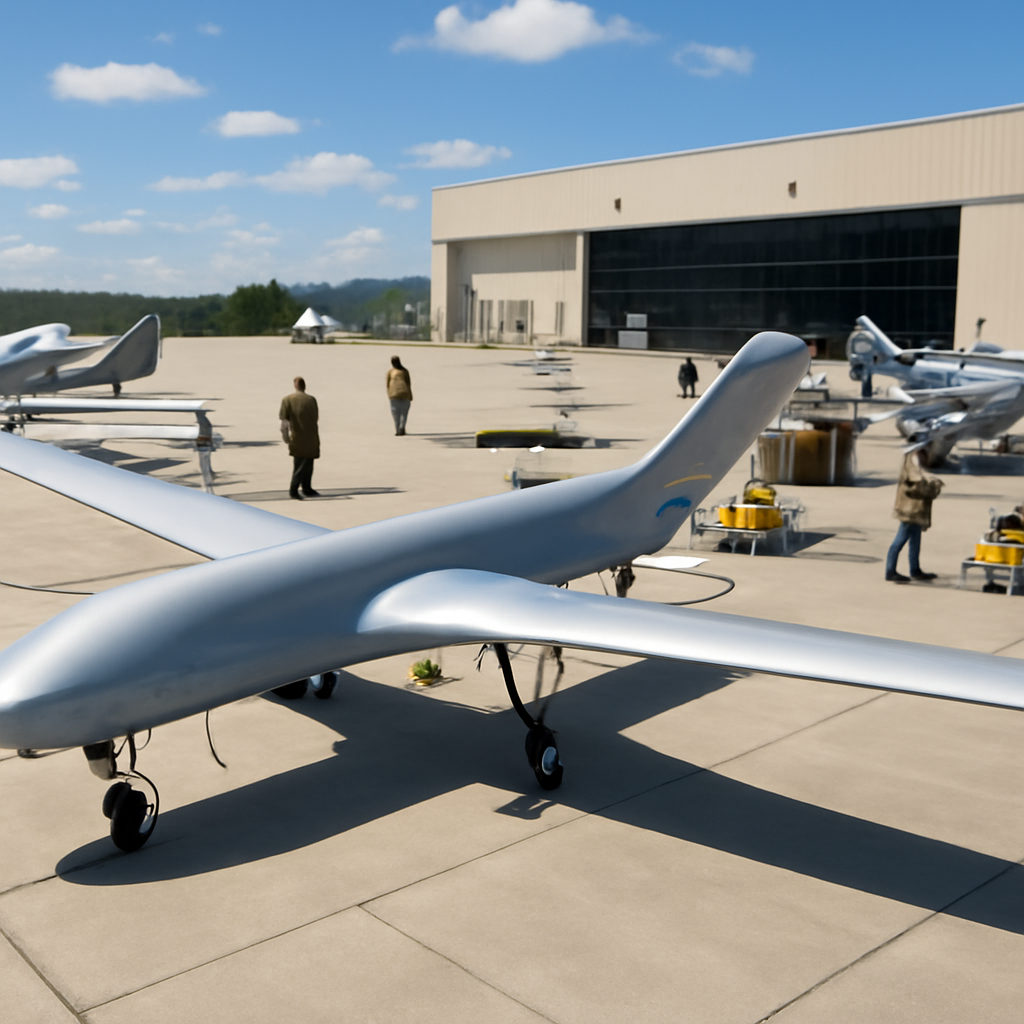
“By moving fast from competitive selection into full-scale manufacturing, we position ourselves to field highly credible and combat-ready semi-autonomous systems to stay ahead of the pacing challenge,” Secretary of the Air Force Troy Meink said in a statement today.
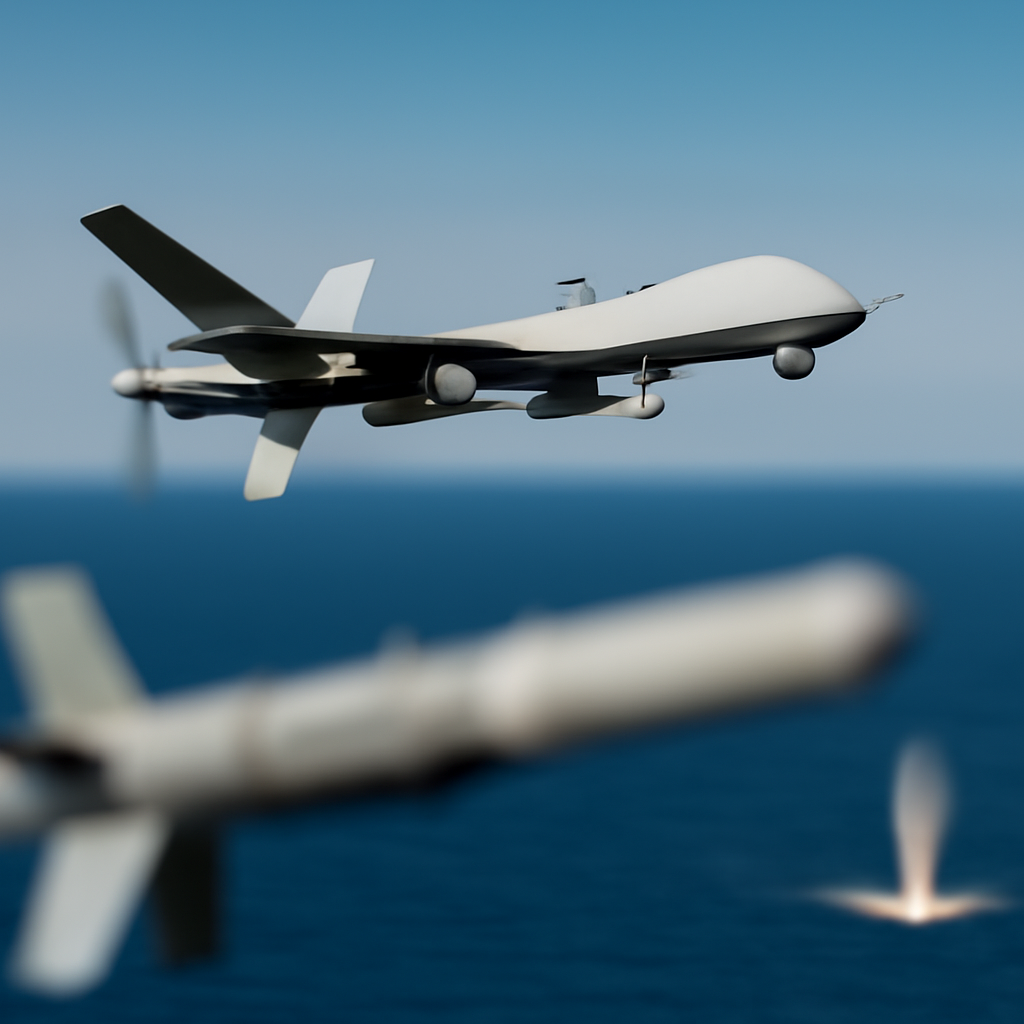
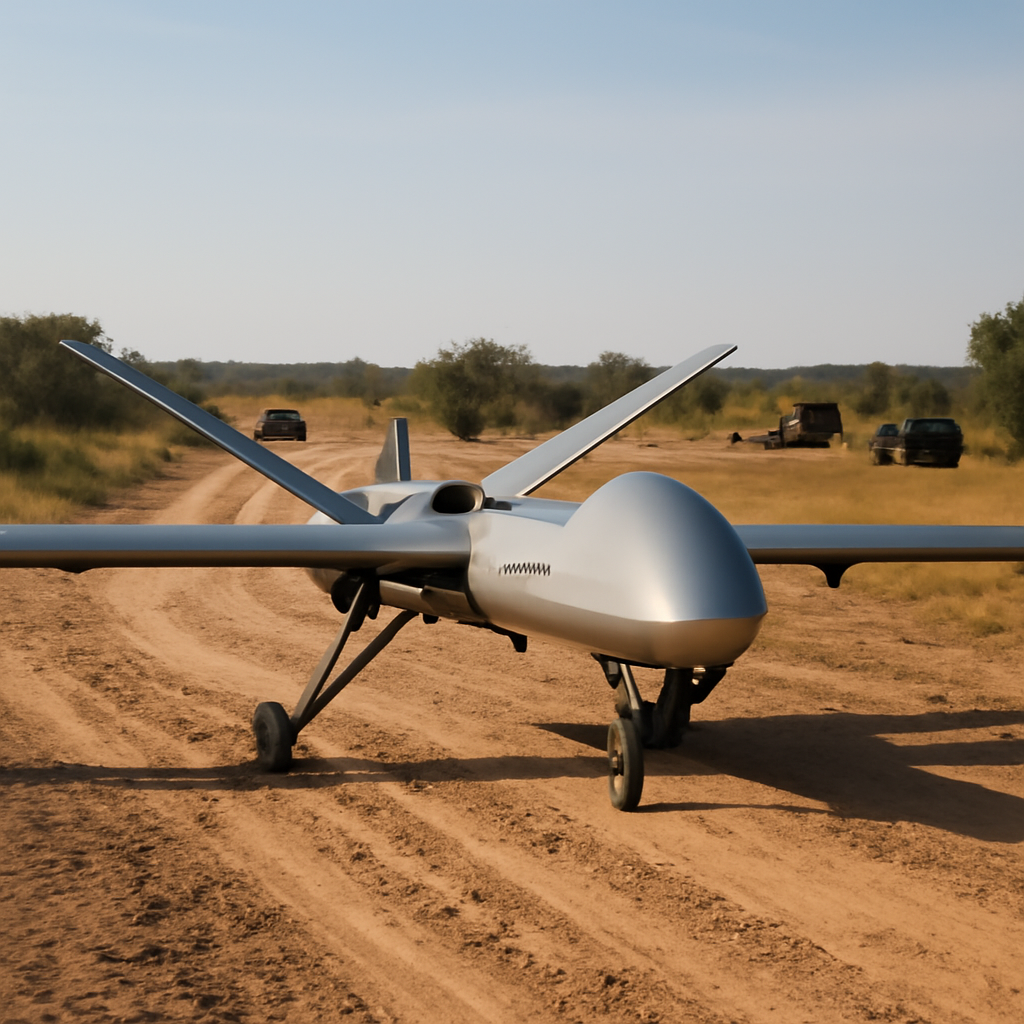
General Atomics FQ-42A Dark Merlin and Anduril FQ-44A Fury enter production
The U.S. Air Force has awarded production contracts for General Atomics’ FQ-42A Dark Merlin and Anduril’s FQ-44A Fury, creating a split initial fleet of Collaborative Combat Aircraft (CCA). The two designs were down-selected during Increment 1 in 2024 and first flew as prototypes — the YFQ-42A in August 2025 and the YFQ-44A in October 2025 — before entering further testing. Dark Merlin testing was paused this year after a crash but has since resumed.
Both contractors issued statements alongside the award. Anduril’s Mark Shushnar said the contract will deliver an initial set of production FQ-44 aircraft to support continued testing, validation, and operational fielding, and establishes a path to buy additional lots over the coming years. David Alexander, president of General Atomics’ Aeronautical Systems, Inc., said manufacturing for the FQ-42A is already well underway.
Air Force schedule, targets, and funding posture
The service said the awards were handed out four months ahead of schedule, reflecting that the FQ-42 and FQ-44 meet rigorous mission requirements and are ready for full-scale manufacturing. The Air Force has said in the past it hopes to have the first examples in operational service toward the end of the decade and Secretary Meink said the contracts reaffirm confidence in procuring over 150 combat-capable CCA by the end of the decade.
The Air Force has requested nearly $1 billion in its 2027 Fiscal Year budget submission to begin procurement of these drones. At the time of writing, the service had not provided an updated delivery timeline for the first production CCAs.

This site is the portfolio.
OSINTSights runs on Cloudflare Workers, D1, R2, and Vectorize, with an AI pipeline on Hetzner ARM. Nubivance designed, built, and operates it. We do the same for clients.
See what we buildMission autonomy competition, A-GRA compliance, and contracting approach
The CCA program is split between hardware (airframes) and software (mission autonomy). The Air Force awarded additional mission autonomy contracts to Anduril, Collins Aerospace, and Shield AI, keeping a multi-vendor competitive pool that also includes Lockheed Martin, Northrop Grumman, and RTX Collins Aerospace for the software side.
The new software awards fund the first of two six-month competitive phases intended to accelerate operational software delivery, with a primary mission autonomy provider for CCA Increment 1 planned for selection by summer 2027. The Air Force described a “first-of-its-kind award fee exposure strategy” that ties payment to operator feedback and combat performance, and a licensing approach that allows the service to license autonomy software from any of the six vendors over the next six years.
Anduril’s Lattice for Mission Autonomy is touted as fully compliant with the government-owned Autonomy Government Reference Architecture (A-GRA), which the Air Force says enables integration across Increment 1 CCA and future A-GRA-compliant platforms. Shield AI’s Hivemind is already flying on a number of drones and, the source notes, was recently selected by the Pentagon to provide swarming capabilities for LUCAS kamikaze drones.
Why a split-buy and vendor pool are central to the plan
The Air Force framed the split buy — two different airframes from separate vendors — as a risk-reduction and capability-expansion move. TWZ has previously highlighted that a mix of uncrewed platforms with different attributes is necessary to realize the CCA concept; the service’s decision to proceed with two divergent designs while development continues underscores the critical priority the Air Force places on fielding CCAs.
Officials also emphasized acquisition changes: treating mission autonomy as “software sold separately” to decouple hardware from software, and increasing government ownership over key intellectual property. The Air Force says these choices reduce vendor lock-in, allow continued competition for follow-on contracts, and help diversify supply chains as the program scales.
What this means for the Air Force, General Atomics, Anduril, and autonomy vendors
- The Air Force — advancing Increment 1 with both airframes in production and a multi-vendor autonomy competition, and planning to select a primary autonomy provider by summer 2027.
- General Atomics and Anduril — moving from prototype testing into full-scale manufacturing; Anduril holds contracts on both hardware and software sides, uniquely positioning it in the program.
- Autonomy vendors (Collins, Shield AI, Lockheed Martin, Northrop Grumman, RTX Collins Aerospace) — competing in two six-month phases for operational software work and subject to a performance-linked award-fee model and licensing opportunities over six years.
The Air Force’s decision advances a dual-path approach: fielding two distinct CCA airframes while running a performance-focused, competitive autonomy process. The next milestones to watch in the record are the completion of ongoing production deliveries, the outcome of the two six-month software competitions, and the planned selection of a primary mission autonomy provider by summer 2027.