“The project could take 50 years and cost $200 billion.”
GAO’s central findings on SIOP: cost and schedule balloon
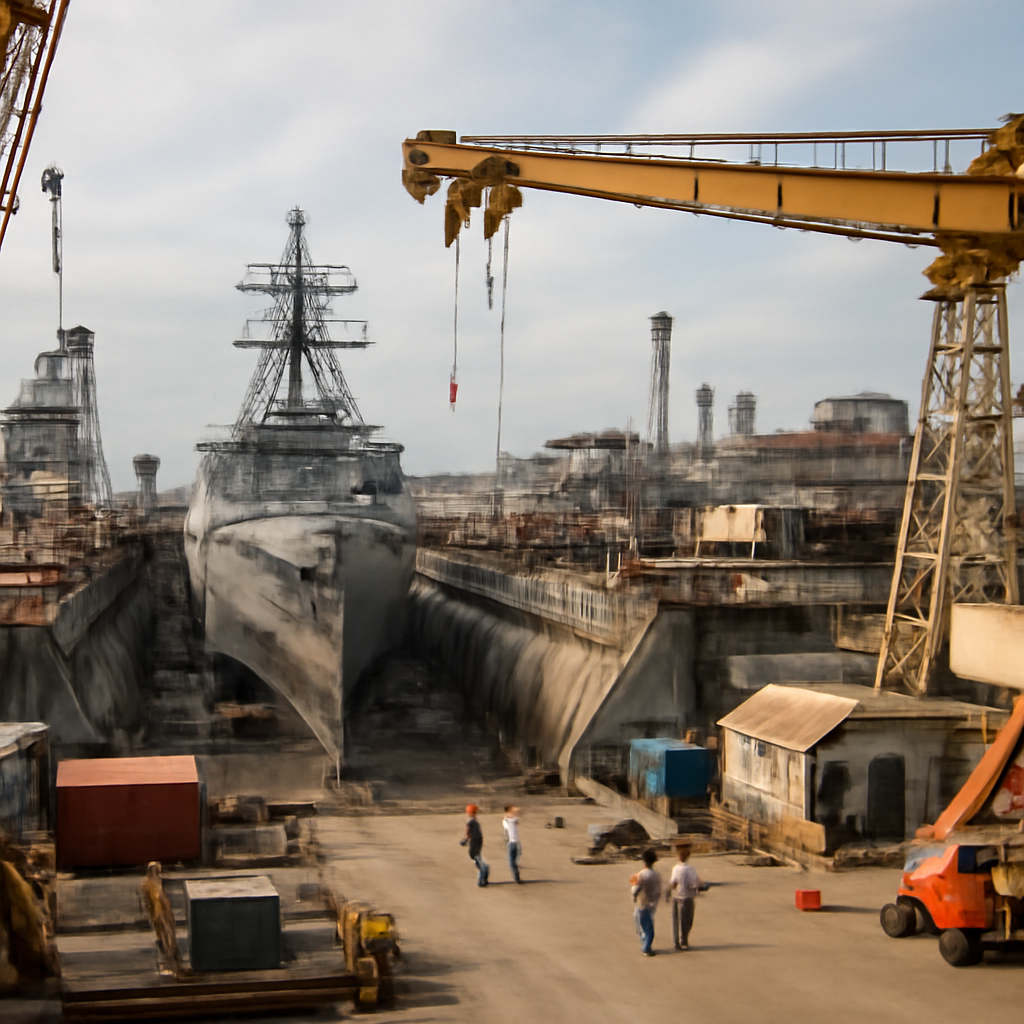
The Government Accountability Office (GAO) report released today says the Navy’s Shipyard Infrastructure Optimization Program (SIOP) — launched in 2018 to rebuild drydocks and standardize equipment at the four public shipyards in Virginia, Maine, Washington and Hawaii — may take roughly 50 years and cost about $200 billion. That stands in sharp contrast to the Navy’s original projection of roughly 20 years and approximately $21 billion.
GAO concluded the initial estimate “omitted key costs” and that the program has taken years longer to develop than the Navy had anticipated. The report frames the discrepancy as the product of multiple challenges and changes involved in the program: not a single failure but a set of evolving inputs and design decisions that have expanded scope, schedule and price.
Drivers of rising costs: commodities, seismic work, and added scope
The GAO identified several forces pushing SIOP’s costs upward. Commodity price increases are elevating construction and equipment bills. Seismic concerns at Puget Sound Naval Shipyard require “needed retrofits and construction,” adding both time and expense. And since SIOP began in 2018, more shipyard construction and repair projects have been folded into the program’s portfolio.
The report also notes that design changes have been implemented based on “lessons learned from projects already underway,” a factor that raises upfront costs even as it aims to reduce risk on later work.

This site is the portfolio.
OSINTSights runs on Cloudflare Workers, D1, R2, and Vectorize, with an AI pipeline on Hetzner ARM. Nubivance designed, built, and operates it. We do the same for clients.
See what we buildConcrete cost growth: Portsmouth and Pearl Harbor dry-docks
GAO provides specific examples of cost growth inside the program. For instance, “the costs for the dry-dock projects in Portsmouth and Pearl Harbor in total grew by more than $2.5 billion since funding was originally requested from Congress.” That local escalation illustrates how individual projects within SIOP have already exceeded Congressional funding requests, compounding the aggregate budget outlook.
Reporting, oversight, and GAO’s recommendation to Congress
The GAO flagged an oversight gap: the Navy is not required to submit a consolidated report to lawmakers on SIOP program costs and associated risks. Instead, the service provides updates on “various aspects” of SIOP. GAO urged Congress to change that arrangement, recommending lawmakers require the Navy to deliver an annual, standardized report detailing program cost, status and risks.
GAO warned that “without a full picture of how much has been spent, what remains to be funded, and what risks may affect SIOP progress, Congress could make consequential decisions for SIOP based on incomplete information, thus risking billions in taxpayer dollars and a lack of program oversight for the decades to come.”
What this means for the Navy, Congress, and President Donald Trump
- The Navy: Navy officials previously told Breaking Defense in 2025 that they expect SIOP, once complete, to yield roughly a 10 percent improvement in aircraft carrier maintenance and a 15 percent improvement for submarine maintenance; reductions in submarine maintenance availability were estimated at roughly three months from typical availabilities that last 25 to 36 months. Those operational gains are the explicit payoff the Navy anticipates even as GAO documents dramatically larger costs and schedules.
- Congress: Lawmakers face the choice GAO highlights: continue to receive piecemeal updates on “various aspects” of SIOP or adopt GAO’s recommendation for an annual, standardized accounting. GAO frames that change as necessary to avoid “consequential decisions” made without a “full picture” of spending, remaining requirements, and program risks.
- President Donald Trump: The president is pressing for a fifth public shipyard to bolster aircraft carrier and submarine readiness. That proposal joins the SIOP conversation at a moment when GAO reports the program could require decades and hundreds of billions of dollars to complete, raising questions about how additional infrastructure proposals will be funded and prioritized.
GAO’s assessment reframes SIOP from a two‑decade modernization program with a modest multibillion-dollar price tag into a multigenerational undertaking with a price potentially approaching $200 billion. The report leaves a clear administrative question for Congress and the Navy: will oversight evolve to match the program’s scale? And will proposals such as a fifth public shipyard be pursued alongside, or in addition to, the expansive rebuild GAO now warns could last half a century?